I am at the United Astrology Conference, the largest professional gathering of astrologers in the world, in downtown Chicago. Around me, vendors are hoping to excite the 1,500 attenders, flogging books, tracts, affiliations, proprietary apps and various software programs that have replaced the laborious chart-drawing of yore. I admit, I had come expecting a crowd flaunting amulets and sweeping cloaks.
But apart from the occasional streak of purple hair and wispy wizard beard, what I encountered was an even weirder normcore of podiatry-sensible footwear and Oxford button downs. At a glance, it could almost have been a trade convention of insurance adjusters: experts gathered to contemplate the future, assess risk, gauge the impact of events beyond our control. In that sense, the room reflected astrology’s broader transformation.
Astrology is now a $15bn industry. From the marginal, it has crept into the mainstream. A 2025 Pew Research report found that 30% of American adults consult astrology, tarot or a fortune teller at least once a year, and 43% of women under 50 claim to “believe in astrology”.
But its influence on the zeitgeist has hardly made astrology more settled. As I sat down with my interlocutor, her companion Alan Clay, founder of Dwarf Planet University, tells me the mainstays of the solar system can only get you so far. Recent astral discoveries, he said, have enriched the picture, offering a view into the unconscious through bodies drifting in the Kuiper belt, billions of miles beyond the sun.
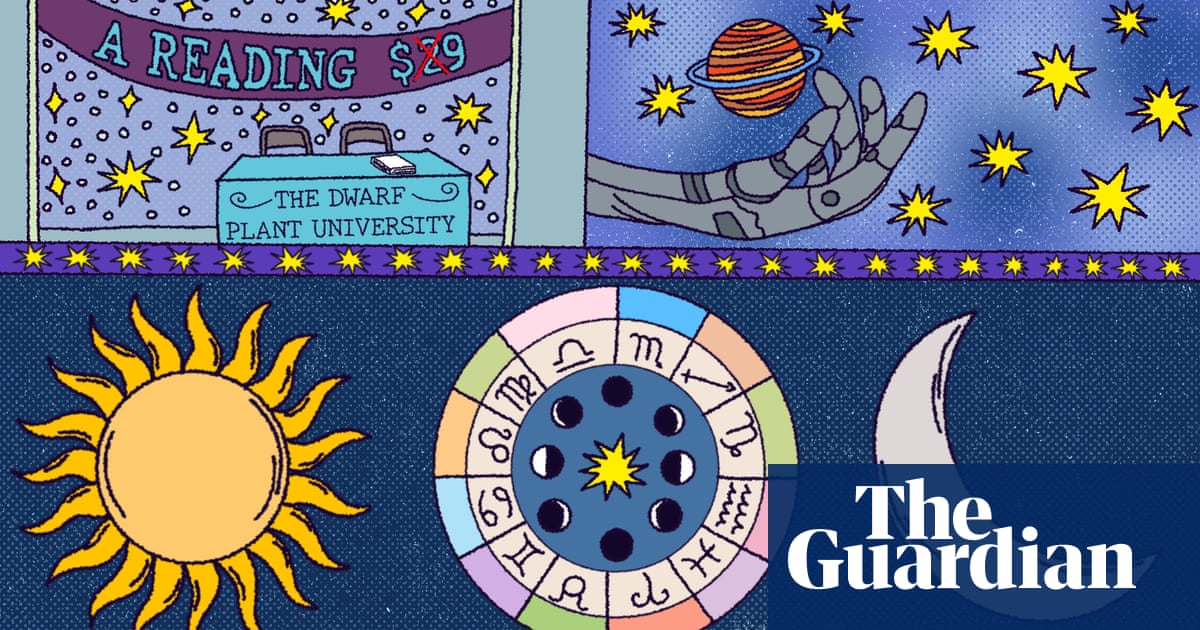
On the wall behind his booth, the price of a reading has been slashed from $29 to $9. He pulled my chart, a term that I learn carries tremendous weight, something between destiny and the template of my very being. There is the dwarf planet Makemake in my fifth house (I too, had to look this up), which carries bold implications for creative expression and, less attractively, secret or potentially bruising sexual affairs.
And therein lies the problem. Part of astrology’s current appeal is how quickly it can make itself feel personal – and persuasive. Like any sufficiently established field, modern astrology has developed its own hierarchies, factions and grudges.
Extract — continue reading at the source.


