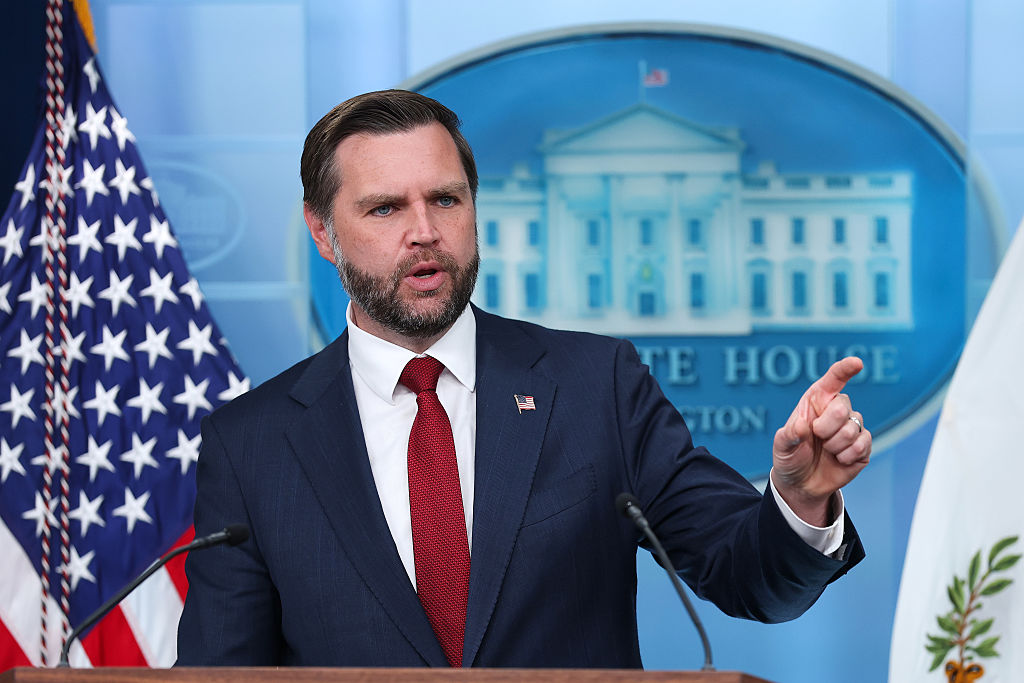
Vance said Thursday that he would not characterize the United States as being at war with Iran, even as the two countries have exchanged strikes in recent days and the Trump Administration has declined to say when a conflict now stretching beyond six months might finally end. But it echoed an argument that President Trump and other Republicans made in the earliest days of the conflict: that the United States was carrying out a limited military operation rather than embarking on another prolonged Middle Eastern war, which, under the Constitution, would require congressional approval. More than six months later, that distinction has become increasingly difficult to sustain.
The United States has repeatedly bombed targets inside Iran as Tehran attacks commercial shipping vessels through the Strait of Hormuz, contributing to higher energy prices. Vance acknowledged what he called a recent “flare-up” but argued that the most intensive phase of the American campaign had ended long ago. He said Operation Epic Fury, the large-scale campaign that followed last year’s Operation Midnight Hammer, lasted roughly six weeks.
The earlier operation, he said, destroyed Iranian nuclear facilities, while Epic Fury severely damaged Iran’s conventional military and its ability to produce weapons and rebuild its nuclear program. But Vance offered little indication of when the broader confrontation might end, saying the Administration would not commit itself to a timeline while Iran continued threatening commercial shipping and global energy supplies. Asked whether the conflict would be over before November’s midterm elections, Vance said he did not know.
As recently as Wednesday, the President said he did not believe it would last “much longer.” But his Administration is simultaneously intensifying economic pressure on Iran, maintaining a naval blockade, and reserving the option of further military strikes if Iran attacks American interests or interferes with commercial shipping. Presidents have long resisted the “war” label in conflicts undertaken without a formal declaration of war. Harry Truman called the American intervention in Korea a United Nations “police action,” while Bill Clinton avoided describing NATO’s bombing campaign in Kosovo as a war.
Barack Obama similarly argued that the 2011 intervention in Libya did not constitute a “war” requiring congressional authorization. In March, Trump openly acknowledged that referring to the conflict as “war” carried legal significance because Congress had not authorized it. Those efforts have failed largely along party lines.
The dispute has revived a decades-old argument over presidential war powers and the extent to which a president can sustain military operations abroad without explicit approval from Congress. Vance said Thursday that the administration would not rely on Iran to negotiate in good faith and would instead use whatever tools it considered necessary to prevent Iran from obtaining a nuclear weapon and to protect global energy markets. He argued that Iran’s grip on the Strait of Hormuz was “effectively gone” and that oil traffic through the crucial waterway was nearing its pre-conflict level.
Extract — continue reading at the source.