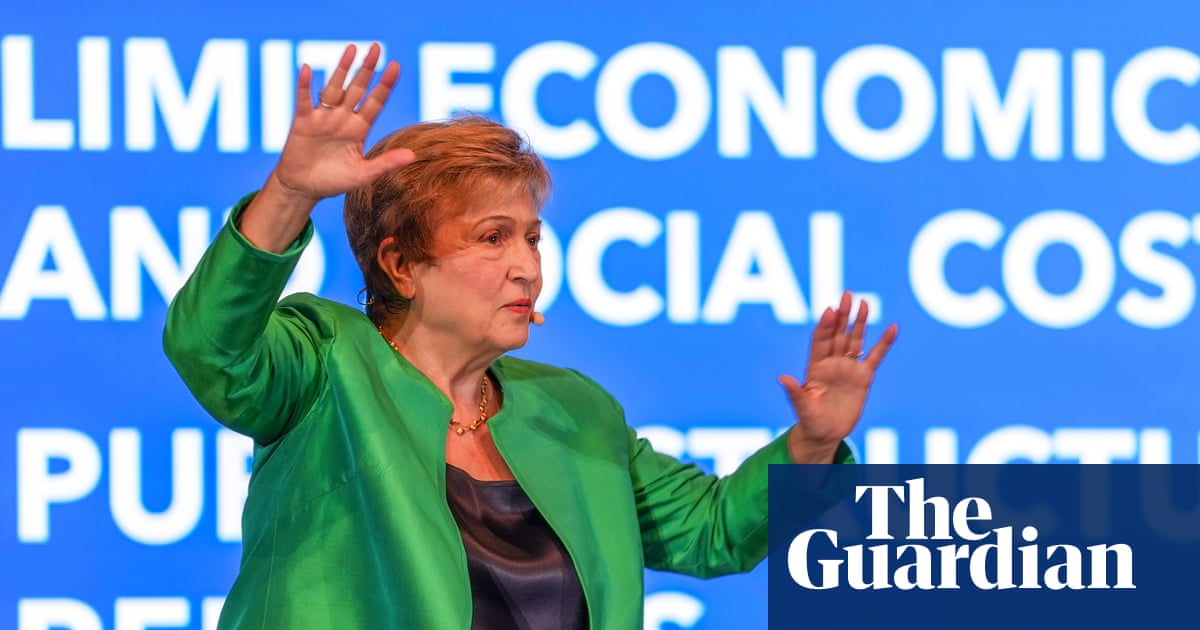
The head of the International Monetary Fund has called on governments across big economies to tighten their belts as soaring bond yields hit budgets. Speaking in Singapore, the IMF’s managing director, Kristalina Georgieva, said global debt-to-GDP ratios were at their highest level since the second world war and on course to hit 100% in the coming years. She said governments could not rely on rapid economic growth to lift the burden of debt – and instead would have to make “very tough political choices”.
Georgieva was speaking ahead of the IMF and World Bank annual meetings which are to be held in Bangkok next week. Bond yields – effectively the interest rate on the debt – have jumped in recent weeks, raising the cost of borrowing for many governments to multi-decade highs as markets adjust to the prospect of higher inflation as a result of the war in the Middle East. The Bulgarian economist suggested central banks should be prepared to raise interest rates to see off resurgent inflation.
The ECB, US Federal Reserve and Bank of Japan have already tightened policy in the face of rising inflation – moves Georgieva said were “highly appropriate” – but the Bank of England has so far left rates on hold at 3.75%. She also stressed the importance of tackling some of the risks of AI, which has buoyed the US stock market but raised fears of mass layoffs. She highlighted IMF research predicting that the adoption of AI could add half a percentage point to global economic growth if carried out effectively.
However, she urged policymakers to “help manage AI’s substantial perils, including large-scale labour market fallout, serious cyber and stability risks and frontier models threatening to escape human control and run amok”. The Bank of England governor, Andrew Bailey, who is also chair of the Financial Stability Forum that brings together the world’s central banks, recently warned of the “real and significant” risks posed by frontier AI models and called for the “right to intervene”. In the UK the chancellor, John Healey, has said he will stick with his predecessor Rachel Reeves’s plans to balance day-to-day spending with tax revenues – borrowing only to invest – and bring the debt-to-GDP ratio down over time.
Extract — continue reading at the source.