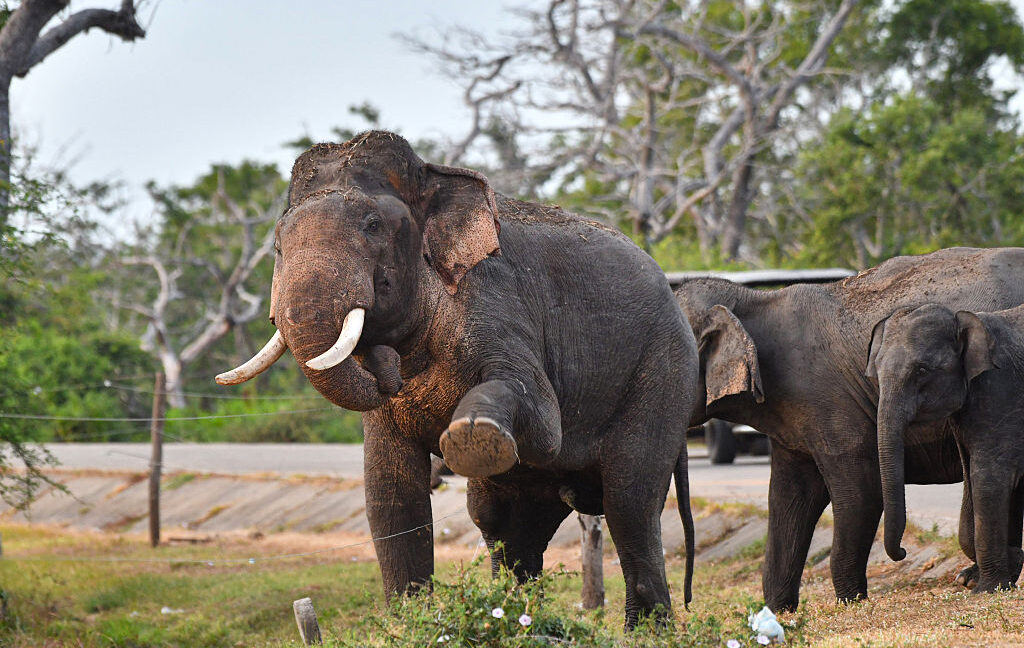
Elephants live in some of the most complex and resilient societies in the animal kingdom. Individuals die or move away, calves grow up, and newcomers join, but the local communities as a whole usually hold together. Long-term studies of African savanna elephants have shown that, even after poaching or other spikes in deaths, survivors tend to rebuild their lost connections over time.
But a new study suggests that resilience may not keep the community intact when steady losses accumulate over time. Anastasia Madsen, a behavioral ecologist at the University of California, San Diego, and her colleagues analyzed 12 years of observations of wild Asian elephants in Sri Lanka. They found that, once losses began to outpace newcomers, the elephants’ society didn’t just get smaller.
Udawalawe National Park in southern Sri Lanka was created in the 1970s around a reservoir on one of the country’s four major rivers. The reservoir had brought farming and settlers, some of whom lived inside what later became the park. When they were moved out, the land they had cleared for their crops turned into grassland that, according to de Silva, looks very much like an African savanna.
With far more food than the original forest offered, the park became famous for its big elephant herds. But the savanna was only a stage in the forest’s comeback. Without fires and clearing, invasive plants like lantana took over.
Not even elephants really like to go there because there’s no food for them,” de Silva said. This is a problem because elephants tend to move where the grass is. A park with less forage, the team says, stops attracting elephants from outside while, due to limited food, fewer calves reach adulthood.
Extract — continue reading at the source.