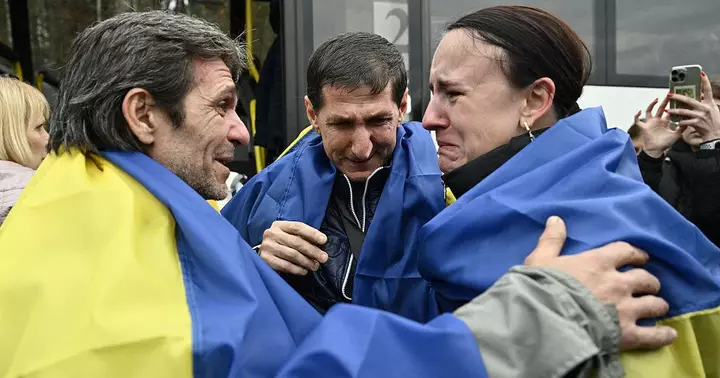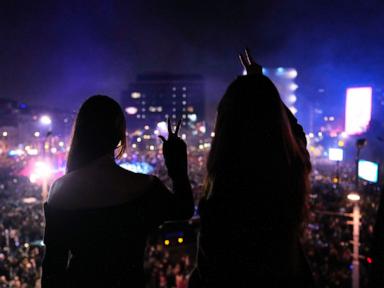
Serbia has seen a dramatic shift after President Aleksandar Vucic conceded defeat to student-backed candidates BELGRADE, Serbia -- For over a year, residents of Serbia's capital were blocked from entering one of the city's most prominent parks, nestled between Parliament and the offices of the powerful right-wing leader, Aleksandar Vucic. The reason: the park in Belgrade had been cordoned off and occupied by throngs of Vucic's most ardent — and violent — supporters, an effective enforcer squad for the authoritarian leader tasked with intimidating and sometimes assaulting members of a growing anti-government student movement. But after Vucic stunned the Balkan country Sunday evening by conceding defeat in an election against student-backed candidates, ecstatic young revelers filled the streets of Belgrade and ripped down the cordons around the encampment known as Caciland.
Before long, the barricades lay tossed aside and the tents within went up in smoke, along with Vucic's power. The seismic shift came after two years of relentless organizing and sustained protests by the student movement, which accused the Kremlin-backed Vucic of increasing authoritarianism, connections to organized crime and runaway corruption. It also echoed other bottom-up, youth-led protest movements that have recently challenged what they see as entrenched, unresponsive power structures in Europe and beyond.
Close to home, in neighboring Hungary, they succeeded in ousting another entrenched leader. Serbia's popular student movement grew out of anger at Vucic and his government since 16 people were killed in 2024 when a concrete canopy collapsed at a train station in Novi Sad. That set off the wave of youth protests that blamed the collapse on high-level corruption and cronyism during renovation work at the station.
When Vucic conceded defeat on Sunday and tens of thousands took to the streets to celebrate, the scenes bore remarkable resemblance to the ouster of pro-Russian Prime Minister Viktor Orbán in Hungary just six months earlier. Where the far-right Orbán's 16-year grip on power had once seemed unshakable, growing anger over corruption and capture of the country's institutions coalesced around a political newcomer, Péter Magyar, who — like Serbia's students — spent two years relentlessly touring the countryside where Orbán was strongest. Magyar campaigned heavily against corruption and in favor of bringing Hungary back into the fold of European Union democracies.
When his center-right Tisza party won a landslide in the election, it was largely thanks to a groundswell of youth participation that delivered the highest electoral turnout in Hungary's post-socialist history. Like Serbia's student movement, Magyar's activists and supporters offered a vision of restoring Hungary's institutions that had been hollowed out by Orbán, building a functioning state that responded to citizens' needs and adhered to the rule of law. Both in Serbia and Hungary, many have expressed hope that ousting their autocratic regimes would open up a chance for a new generation of political representation and genuine democratic participation.
In social media posts on Sunday and Monday, Magyar congratulated Serbia's students, saying he was “delighted to hear how much strength our victory in April had given them during this difficult struggle.” “Surely I wasn’t the only one feeling nostalgic when I saw those pictures coming out of Serbia last night?” he wrote, alluding to the joyful celebrations in Belgrade and Budapest six months apart. Since he came to power, Magyar has used his party's two-thirds parliamentary majority to gradually deliver on his promises to free the media, bring Hungary back into the EU sphere and punish members of Orbán's regime and their allies who had accumulated wealth under his patronage. Serbia's youth movement now faces their own daunting task of restoring a ravaged democracy and institutions, but without the benefit of the constitutional majority that Magyar enjoys in Hungary.
Extract — continue reading at the source.