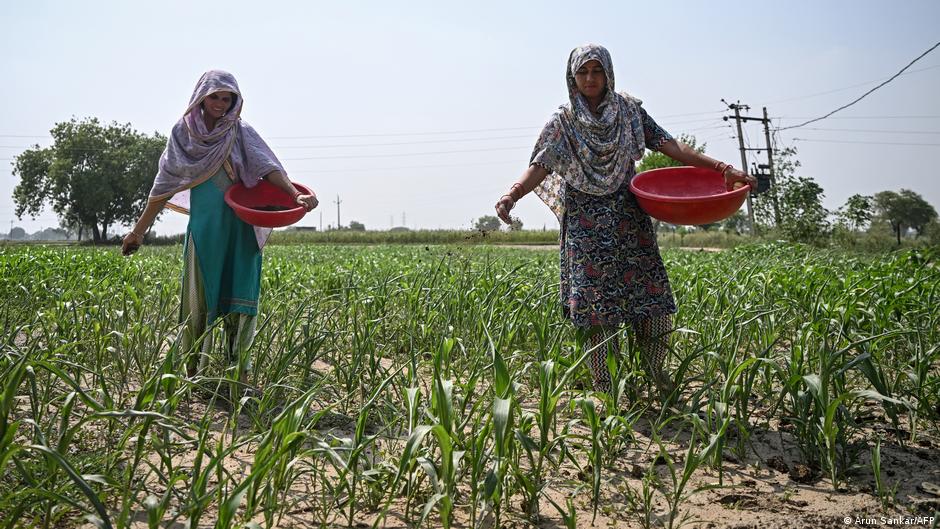
Ramesh Reddy, 44, put everything he had into his 3.5 acre tomato farm in June. The farmer from Kolar district in the south of the state of Karnataka invested 320,000 rupees (€3,000, $3,357), borrowing 250,000 rupees at 24% annual interest and pledging his wife's wedding jewelry as collateral. The harvest was meant to repay the loan and cover his son's overdue college fees.
But then the farm's irrigation well ran dry. Within three weeks, the tomato plants had turned brown and Reddy could not salvage a single crate. "I have lost everything I invested," he told DW.
"I have no money left for the next crop and I don't know how I will repay the loan." He is now negotiating a job as a security guard in the state capital, Bengaluru, and preparing to leave his farmland behind. ForIndia, the monsoon is more than just a four-month rainy season. It replenishes reservoirs, supports agriculture and helps sustain water supplies and power generation across much of the country.
Nearly half of India's workforce depends on farming for their livelihood, doing jobs that are both tough and economically insecure. This year, the country received 759.4 millimeters (ca. 30 inches) of rain between June and September, against a long-term average of 868.6 millimeters. The 12.6% deficit made it the country's driest monsoon in 11 years and the fourth driest this century.
Madhavan Nair Rajeevan, a climate scientist and former secretary in the Indian Ministry of Earth Sciences, said the main factor behind the poor monsoon was a severe El Nino. He had warned earlier that this global climate phenomenon would posed a serious risk to rainfall. "As far as the Indian monsoon is concerned, El Nino is the most important influencing factor, which we should consider very seriously,” Rajeevan told DW.
The effects are now hitting India's water and energy systems. The country's major reservoirs ended the monsoon with less water than usual, leaving both farmers and the power sector with less of a buffer going into the months ahead. Combined storage in the 178 reservoirs monitored by the Central Water Commission stood at 132.7 billion cubic meters, below the 10-year average of 151.1 billion cubic meters.
Extract — continue reading at the source.