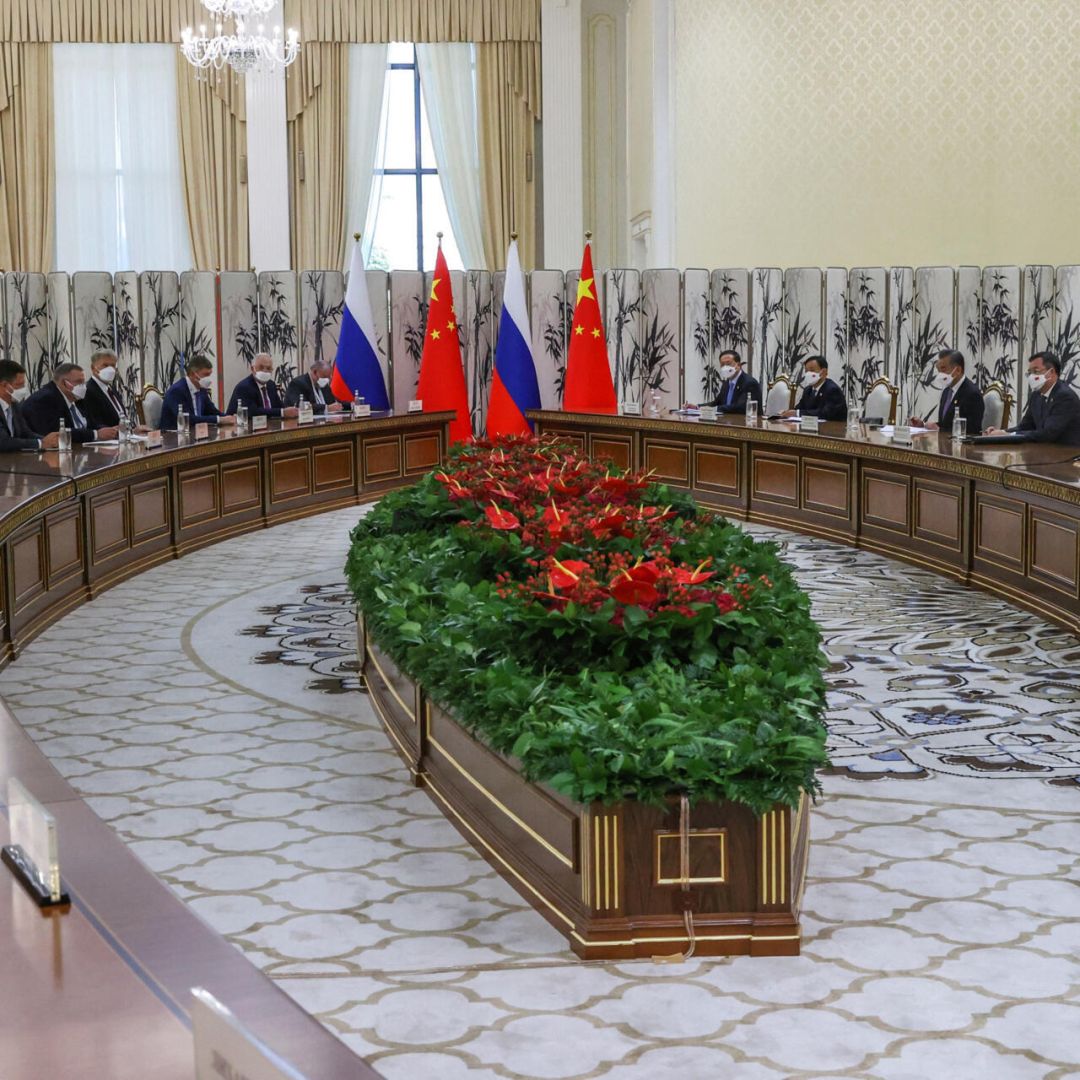
Russian President Vladimir Putin is preparing for an unusually busy round of bilateral diplomacy on the sidelines of the Shanghai Cooperation Organisation summit in Bishkek, as Moscow seeks to maintain relationships with major Asian powers and other regional governments amid growing geopolitical pressure on Russia. Putin is scheduled to hold nine bilateral meetings during the summit, according to presidential aide Yuri Ushakov. The agenda includes talks with Chinese President Xi Jinping, Indian Prime Minister Narendra Modi, Turkish President Recep Tayyip Erdogan, Tajik President Emomali Rahmon, Mongolian President Ukhnaa Khurelsukh, Kyrgyz President Sadyr Japarov and Kazakh President Kassym-Jomart Tokayev.
The concentration of meetings gives the summit significance beyond the formal SCO agenda. For the Kremlin, the gathering provides an opportunity to engage several governments whose economic, security and diplomatic relationships with Russia have become increasingly important as Moscow faces pressure from Western countries. China and India are particularly significant.
Both maintain extensive ties with Russia while pursuing their own strategic interests, and their relationships with Moscow are closely watched as the war in Ukraine continues to reshape Russia’s position in the international system. Turkiye also occupies a sensitive position in Moscow’s regional estimates. Ankara maintains channels with Russia while simultaneously pursuing its own foreign-policy agenda across the Black Sea, the South Caucasus and Central Asia.
The planned meetings with the leaders of Kazakhstan, Kyrgyzstan, Tajikistan and Mongolia point to another dimension of Putin’s summit diplomacy: maintaining Russia’s political and economic influence across a region where China and other external powers are expanding their presence. The Kremlin delegation accompanying Putin will include Foreign Minister Sergei Lavrov, Deputy Prime Minister Alexei Overchuk, Presidential Executive Office Deputy Chief of Staff Maxim Oreshkin, Kremlin spokesman Dmitry Peskov, Russia’s national coordinator at the SCO Bakhtiyor Khakimov and Russian Ambassador to Kyrgyzstan Sergei Vakunov. The SCO brings together 10 member states, including Russia, China, India, Iran, Kazakhstan, Kyrgyzstan, Pakistan, Tajikistan, Uzbekistan and Belarus, and formally focuses on regional security, economic cooperation and counterterrorism.
But behind the official agenda, the summit offers Moscow something more consequential: a concentrated diplomatic platform for testing how far its relationships with major Asian and neighbouring states can be sustained or expanded while Russia remains increasingly isolated from much of the Western-led international system. The question for Putin is therefore not simply how many meetings he can fit into the summit schedule, but what commitments, economic links and political support Moscow can secure from governments that are themselves balancing relations with Russia, China, the West and one another. Here we are to serve you with news right now.
It does not cost much, but worth your attention. Choose to support open, independent, quality journalism and subscribe on a monthly basis. By subscribing to our online newspaper, you can have full digital access to all news, analysis, and much more.
Extract — continue reading at the source.