Just outside of London sits Maidstone, a quiet country town in a peaceful corner of southern England. But around 400 years ago, Maidstone was the scene of witch hunts in the literal sense of the phrase. Records show that more than 20 women convicted of witchcraft were hanged in Maidstone.
Witch hunts reached their peak in England in the 1600s. In total across England and Scotland, around 5,000 women convicted of witchcraft were executed, some by hanging and some by burning. "They were usually single women, spinsters, or widows, usually without a man to stick up for them," Claire Kehily, a member of the Maidstone Borough Council, told CBS News.
They were easier to target." Inside Maidstone's town hall, Kehily showed CBS News a prison cell, reconstructed from an earlier medieval building where accused witches were held before trial. Now Kehily and her fellow councilors are lobbying the U.K. government and planning to petition King Charles III for an official pardon for all of Maidstone's convicted witches. "It matters because it was a miscarriage of justice," Kehily said.
"The crimes they were accused of they couldn't have been guilty of. And they had no way of being found innocent in many of the cases. But there are still miscarriages of justice.
There are still, to these days, people being scapegoated for things." America's most famous witch trials were in the 1690s in Salem, Massachusetts. Their memory was revived by Arthur Miller's play "The Crucible," an allegory for the political witch hunts led by Sen. Joseph McCarthy in the 1950s.
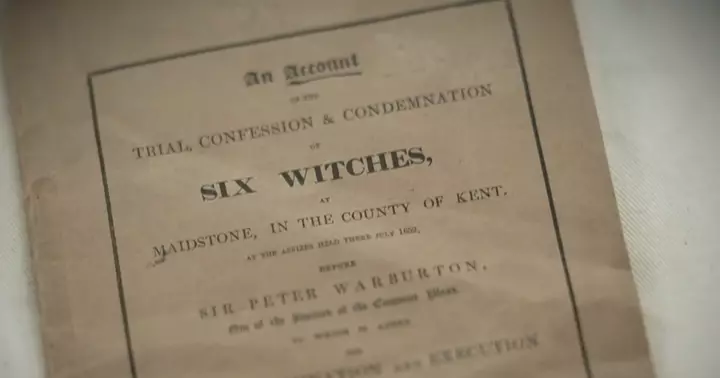
All of the falsely accused witches in Salem have since been pardoned. But in the U.K., not a single convicted witch has been exonerated. Samantha Harris, the collections manager at Maidstone Museum, showed CBS News the official record of a witch trial in the town in 1652.
Extract — continue reading at the source.