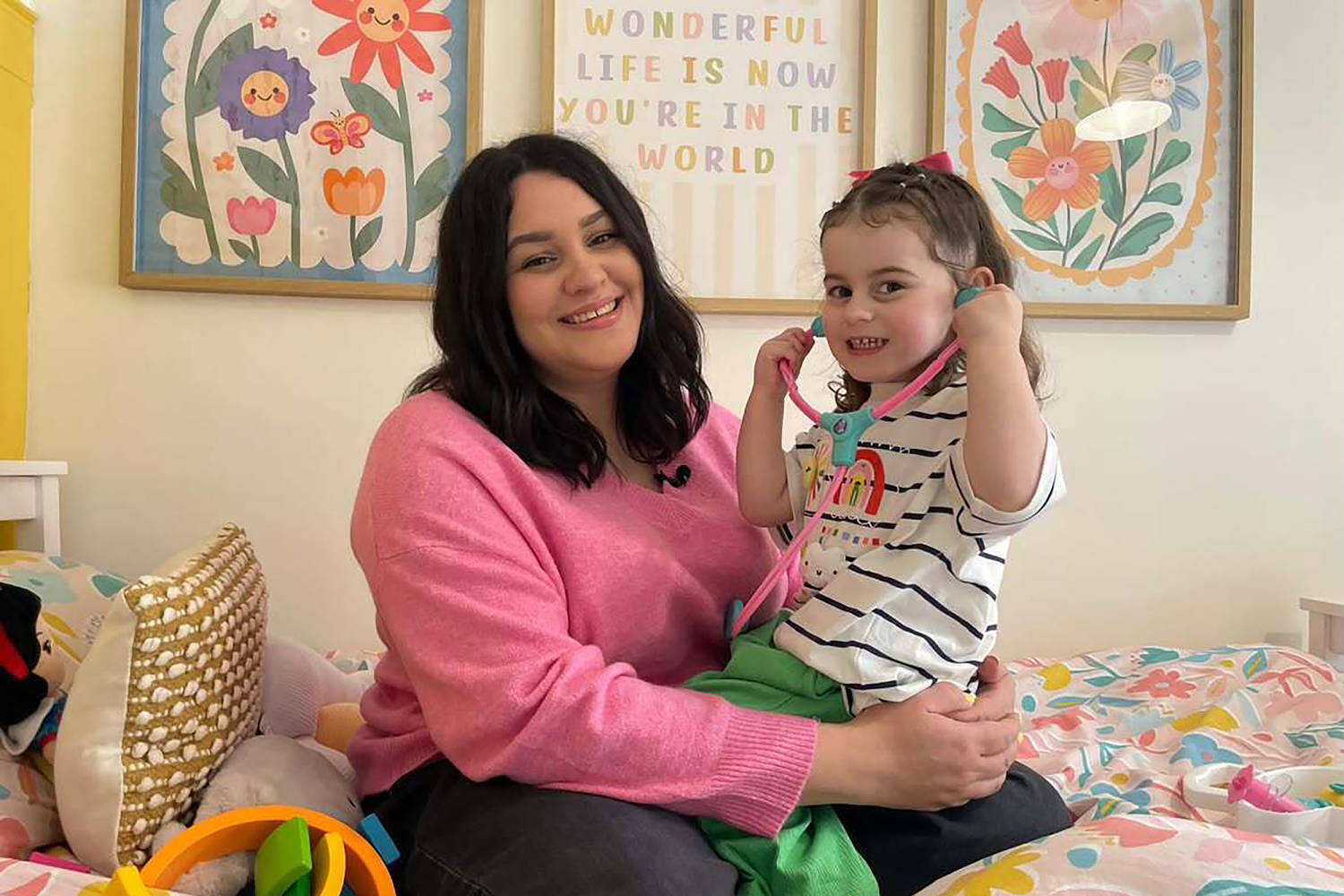
LONDON — Sofii Lewis knew something was deeply wrong within days of giving birth to her first child, Evie, in January 2023. At night, a beeping sound — like that of a checkout till — haunted Lewis. She began to fear that someone was going to “buy Evie,” and she became “very suicidal,” said Lewis, who is now 27.
She also began to have thoughts of taking Evie’s life, in addition to her own. Lewis believes that had she not received treatment within the U.K.’s trailblazing maternal mental healthcare system after being diagnosed with “tendencies of postpartum psychosis,” both she and Evie might not be alive today. Lewis and other mothers she knows who have experienced maternal mental health struggles have been closely watching the case of Lindsay Clancy, who has been on trial for killing her three children after strangling them in their Duxbury, Massachusetts home in January 2023.
Clancy’s defense team has argued that she should not be held criminally responsible for her actions because she was suffering from postpartum psychosis at the time. MBUs are specialist, inpatient units that treat women suffering from mental health issues during pregnancy and after the birth of their children in the U.K. That the service allows mothers to remain with their babies as they receive care instead of being separated deserves to be emulated elsewhere, experts and mothers say.
Veerle Bergink, a psychiatrist, said she agreed that Clancy’s case might have ended differently had she been treated at one of the U.K.’s National Health Service MBUs. According to Bergink, Britain’s MBU approach is “without a doubt” the best way to treat postpartum psychosis. According to the National Health Service, or NHS, up to 26% of new and expectant mothers experience perinatal mental health illness, which covers a wide range of conditions.
In 2025 alone, it says on its website that more than 66,000 women accessed specialist community-based care and support for perinatal mental health issues. Symptoms of postpartum psychosis, which falls under that umbrella, can start within the first two weeks after birth, or later. Symptoms and their severity can vary widely and include delusions, hallucinations, mania, confusion and other signs.
Suicide linked to the condition is rare and infanticide is even rarer, emphasizes Action on Postpartum Psychosis, or APP, a British charity. Of around 1,200 cases of postpartum psychosis identified in the U.K. each year, around 1 to 5 are linked to cases of suicide, according to the organization. In the decade up to 2021, less than 0.05% resulted in infanticide, it said, though it noted that the exact numbers can be difficult to quantify.
Extract — continue reading at the source.