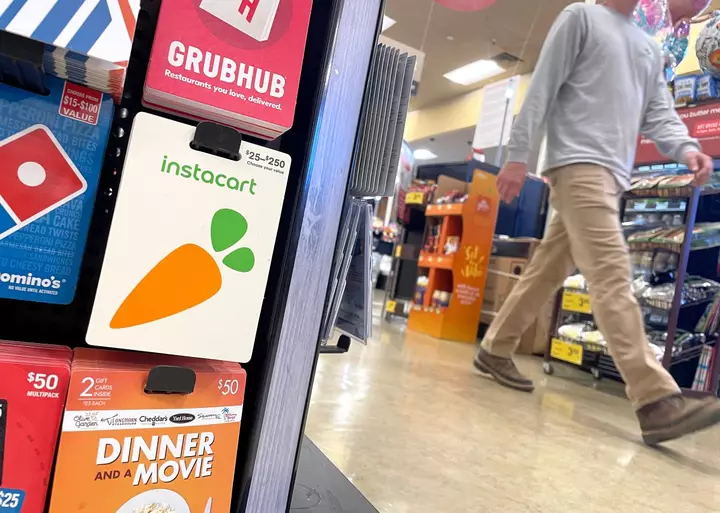
Instacart is set to pay out millions to American workers allegedly affected by the way it advertised roles linked to the H-1B visa to green card pathway highlighted in a Newsweek report last year. The $5 million settlement comes after OpenAI agreed to a similar deal in August over its job postings that the Department of Justice (DOJ) said were hard to find for U.S. workers, allowing the company to say positions could only be filled by temporary visa holders. The agreement, linked to the H-1B PERM process that sees temporary workers granted permanent residency, stems from allegations Instacart was only accepting paper applications for roles linked to green cards, while electronic applications were accepted for others, creating barriers for U.S. workers.
Alongside the OpenAI and Instacart cases, the Trump administration has been taking a tougher stance on the PERM process, with Vice President JD Vance and other officials recently announcing Microsoft, Adobe and other employers were having their access to the program suspended over alleged fraud. In August 2025, Newsweek reported that companies seeking green cards for their foreign workers on the H-1B visa may have been using the program's loopholes to avoid hiring American workers who might also be able to fill that role. Under the Department of Labor's rules on the PERM process—the system used to convert H-1B holders to permanent residents—companies must advertise the roles visa holders have, to prove that these positions can only be filled by the immigrant worker before a green card is granted.
The rules say a job must be listed in at least two major Sunday newspapers, as well as on a state workforce agency site, internally at the company itself, and through two other advertising methods of the company's choice. OpenAI and Instacart were two of the main employers highlighted in the report, with the grocery delivery company asking applicants to mail resumes to a global mobility department. At the time, a new website Jobs.Now was searching for and highlighting these ads, arguing Americans were being discriminated against because listings were not highly visible and appeared to be aimed at immigrants only.
"We were shocked when Instacart threatened legal action against us simply for publicizing their job ads to the world, under the pretense that we were violating their copyright for the name "Instacart," and maintain that it is our first amendment right to republish job ads so Americans can finally have the chance to apply," Jobs.Now told Newsweek Tuesday. The DOJ said Tuesday that its Civil Rights Division, along with the U.S. Equal Employment Opportunity Commission (EEOC), had been investigating allegations Instacart had discriminated against U.S. and American workers based on their citizenship status and national origin.
The agencies said they had uncovered evidence that the company's hiring and recruitment practices during the PERM process "intentionally discriminated" against U.S. workers by preferring candidates with temporary visas. Because of the mail-in aspect of the application process for the H-1B-linked roles, as highlighted in Newsweek's reporting last year, "additional burdens" were placed on American workers whose applications were not reviewed in a timely manner, the DOJ said. "Today’s settlement makes clear that when employers erect unlawful barriers that harm American workers, the EEOC will act decisively," EEOC Chair Andrea Lucas said in a press release.
"The EEOC is committed to holding companies accountable when they deny equal work opportunities to U.S. workers by preferring temporary visa holders for jobs. Discrimination against workers based on their American national origin has no place in our economy." American workers affected by the practice between December 2023 and February 2026 will now receive a payout, the DOJ said, with $4 million from the total settlement dedicated to this fund. Eligible claimants will have the opportunity to apply for their share, the DOJ said.
Extract — continue reading at the source.