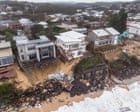
An Australian government snapshot of life in 40 years has been sharply criticised for underplaying the economic and social damage expected due to the worsening climate crisis. The government’s seventh intergenerational report, which projects out to 2066, finds the effects of global heating four decades from now are “highly uncertain”, pointing to the pace of the global energy transition as a key source of unpredictability. The report finds sea level rise from global heating will have the greatest effects on coastal and low-lying areas, while hotter temperatures could reduce productivity of workers, affect agricultural crop yields and damage tourism.
The deputy director of Melbourne Climate Futures at the University of Melbourne, Assoc Prof Ben Neville, said that while the report “connects demographic trends with threats on the horizon, it is negligent in ignoring the economic damage that the changing climate already is and will increasingly bring in the next 40 years”. The report mentions treasury modelling which finds that a disorderly approach to the net zero transition result in a cumulative $2tn hit to the economy by 2050. What use is a report forecasting the next forty years by a government failing to tackle the greatest challenge of our time?” However, the report does highlight the benefits of embracing renewable energy.
Prof Frank Jotzo, director of the Centre for Climate and Energy Policy at the Australian National University, said it “correctly points out the many economic advantages that Australia will reap from the transition to renewable energy, and from future clean energy-based export industries”.
Extract — continue reading at the source.