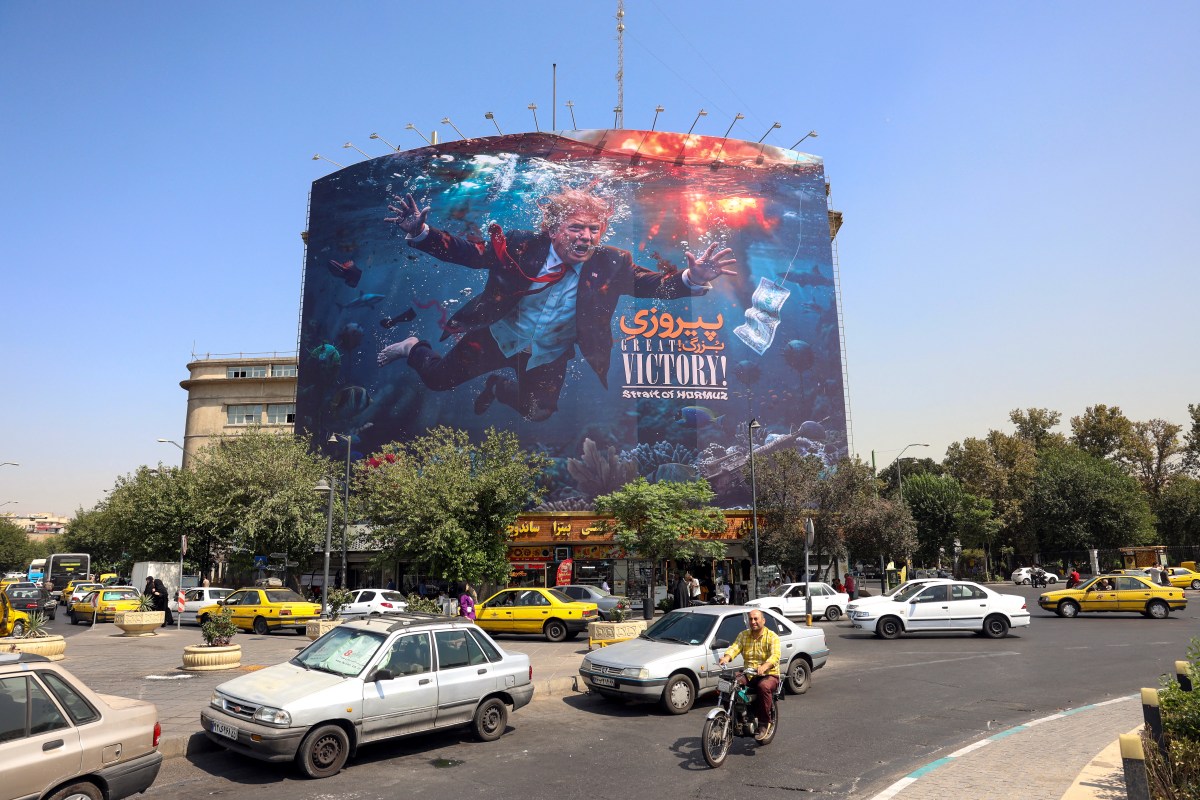
On September 13, 1985, Saudi oil minister Ahmed Zaki Yamani announced that his country would stop propping up the price of crude. Prices collapsed, and the Soviet Union lost roughly $20 billion a year in hard currency—“money without which the country simply could not survive,” in the estimate of Yegor Gaidar, later Russia’s acting prime minister. Gaidar dated the collapse of the Soviet Union to that announcement.
Tehran is now in a weaker position than Moscow was in that autumn. The Islamic Republic is exporting almost no oil, its currency has lost nearly a third of its value since March, and it is rationing water and electricity to its own capital. Treasury Secretary Scott Bessent announced a sweeping new sanctions campaign last week, Operation Economic Outcast, aimed at what remains of the regime’s revenue, with the stated objective of severing “every economic lifeline that sustains this tyrannical regime until Tehran stands alone.” The Soviet case is the best available guide to what that kind of pressure can accomplish against a government already failing, and to how long it takes.
The pressure on Iran is already extraordinary. The rial traded at 2.02 million to the dollar on Sunday, down from 1.53 million in March, a 32 percent depreciation in under six months. Inflation is running near 90 percent by the Iranian government’s own Statistical Center, and the International Monetary Fund expects the economy to contract 5.4 percent this year.
Oil exports have stopped almost entirely: central bank governor Abdolnaser Hemmati has conceded that “we are not exporting oil,” tanker trackers have logged no Iranian supertanker crossing the Strait of Hormuz since July and floating storage has drained from 105 million barrels to fewer than 40 million. The rest of the ledger is no better. Iranians are living with rolling blackouts and water rationing.
Hezbollah is degraded, Hamas is gone, Assad has fallen, and the nuclear program is buried. The supreme leader was killed in February and replaced by his son, a succession that satisfies no faction inside the system and commands no loyalty outside it. Four decades of regional adventurism and economic mismanagement have left the Islamic Republic weaker than at any point since 1979.
What makes this moment different is not the sanctions themselves. Washington has been designating Iranian entities for two decades with modest results. It is the architecture—three pressures applied at once, each closing an exit the others leave open.
Extract — continue reading at the source.