In January 2026, weeks before the US and Israel launched attacks on Iran, thousands of Iranians risked their lives in the largest and most widespread public uprising the regime in Tehran had ever faced. The protests began in December 2025 amid grievances over economic hardship, but soon grew in scope and scale. The regime's security forces, made up of elements from the Ministry of Intelligence, the Basij militia, and the Islamic Revolutionary Guard Corps (IRGC), confronted the protesters on the streets with gunfire and beatings.
The scale of the crackdown drew international condemnation. At one point, US President Donald Trump threatened military strikes against the regime in response, telling protesters "help is on its way." But help never came. As the ensuing war overshadowed the aftermath of the bloody crackdown, support for the Iranian public in standing up against the regime fell off of the agenda.
There are no precise figures for the number of people killed or injured in the January 2026 protests. Iranian authorities have put the death toll at over 3,100. However, Amnesty International stresses that because of the internet shutdown during the protests, the scale of the crackdown, and pressure on victims' families, the actual number of deaths is likely to be much higher.
The US-based Human Rights Activists in Iran (HRANA) confirmed over 7,000 deaths and investigated thousands more. Seven months after the bloody crackdown, victims are dealing with permanent physical disability along with losing the opportunity to work or get an education. Obtaining information from within Iran is both difficult and dangerous, and DW's interview partners chose to use pseudonyms for safety reasons.
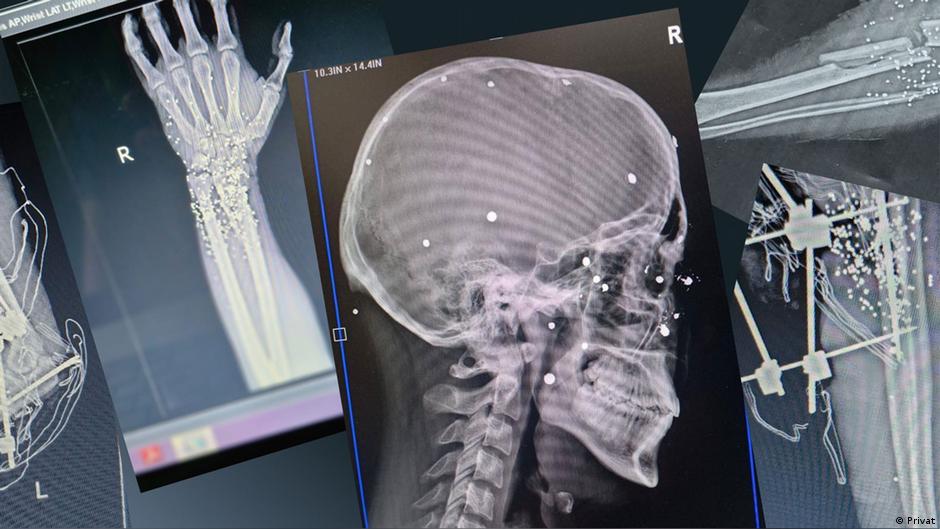
DW was able to contact victims through human rights networks. One protester, Massoud, was buried just days ago, after months of enduring untreated wounds after being injured by hundreds of pellets during demonstrations in a city outside of Tehran. According to relatives, who did not want to reveal their exact location, Massoud was first hit by pellets in the head.
A plainclothes officer then shot him in the thigh and repeatedly kicked the wound, dislocating his femur from the hip joint. Massoud struggled with his injuries for months. His relatives raised money for his treatment at home, and he underwent several surgeries, but the infection kept returning and spreading.
Extract — continue reading at the source.