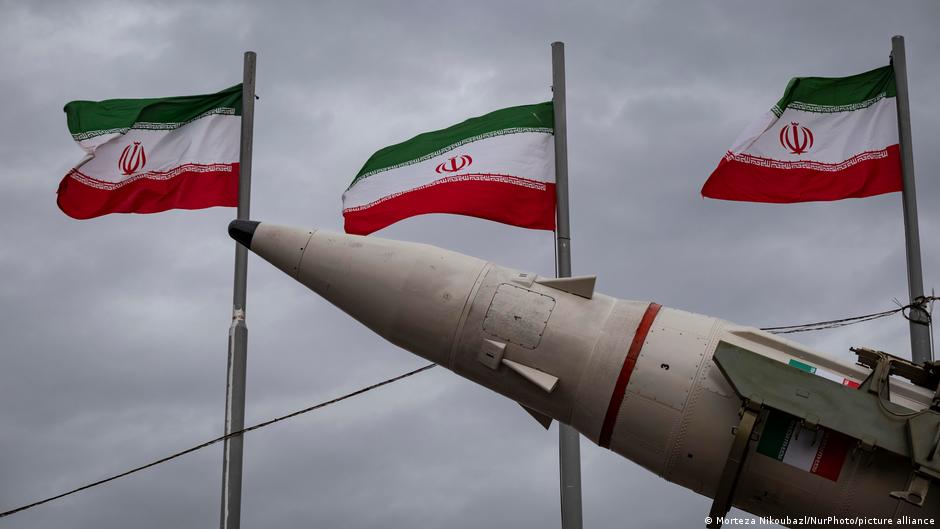
Iran's nuclear program has entered one of the most critical periods in its history. Questions over Tehran's stockpile of uranium enriched to 60% and the International Atomic Energy Agency's (IAEA) declining oversight of Iranian nuclear facilities have only deepened the uncertainty. Yet signs of diplomacy remain.
In an interview last week, Iranian President Masoud Pezeshkian told US broadcaster Fox News that Tehran is prepared to dilute its enriched uranium stockpile and submit its nuclear program for international inspection, provided a comprehensive agreement is reached within the framework of international law and the landmark Treaty on the Non-Proliferation of Nuclear Weapons (NPT). However, in contrast to Pezeshkian's diplomatic rhetoric, statements from military and political figures in Tehran point in a different direction. Mohsen Rezaei, secretary of Iran's Supreme National Security Council, said that US and Israeli actions had created grounds for Iran to withdraw from the NPT, while stressing that no decision had yet been made, according to Press TV, the Iranian government's main English-language satellite TV channel.
On September 19, British newspaper The Daily Telegraph, citing satellite imagery, reported that Iran was actively constructing new facilities and rebuilding damaged ones. These sites include "Taleghan 2" at the Parchin complex southeast of Tehran and a complex burrowed under what is known as Pickaxe Mountain near Iran's nuclear facility in Natanz. Both sites were previously targeted in airstrikes during the US-Israel war with Iran, which the Pentagon dubbed Operation Epic Fury and Israel called Operation Roaring Lion.
Their reported reconstruction has fueled speculation that equipment and enriched uranium may have been moved deeper underground. Washington has maintained a firm stance. Speaking at the UN General Assembly on September 22, US President Donald Trump said: "I will never allow Iran to have a nuclear weapon." Access to military sites and the scope of IAEA inspections have long been among the most contentious issues related to Iran's nuclear program.
The 2015 nuclear agreement known as the Joint Comprehensive Plan of Action (JCPOA) imposed significant restrictions on Iran, in exchange for sanctions relief, to prevent it from developing nuclear weapons. However, provisions for the inspection of military sites drew persistent criticism from opponents in Washington, criticism that contributed to the US withdrawal from the JCPOA under Donald Trump in 2018. John Bolton, former US national security adviser and former US ambassador to the UN, told DW that diplomatic efforts and past agreements on Iran's nuclear program are merely a "cover for an unalterable strategy pursued by Tehran." Arguing that Iran's weapons program was "never" truly halted, Bolton pointed to what he described as the limitations of international institutions, adding that "the IAEA never had access to Iran's military bases, where critical components related to weaponization take place." When asked about the legal implications of a potential Iranian withdrawal from the Non-Proliferation Treaty, Bolton argued that Iran has been in violation of the NPT for more than three decades, meaning a formal withdrawal would make little practical difference.
"The only long-term path to achieving peace and security in the Middle East," Bolton emphasized, "is the overthrow of the regime in Tehran." Amid the US-Israel war with Iran and the subsequent changes in Tehran's command structure after the death of former Supreme Leader Ali Khamenei, fresh developments have emerged. To view this video please enable JavaScript, and consider upgrading to a web browser that supports HTML5 video The IAEA Board of Governors referred Iran to the UN Security Council on September 9 over alleged breaches of its non-proliferation obligations. Meanwhile, the 60-day period for technical talks with the United States under the so-called Islamabad Memorandum of Understanding, which extended a ceasefire between the two sides, expired in mid-August.
Extract — continue reading at the source.