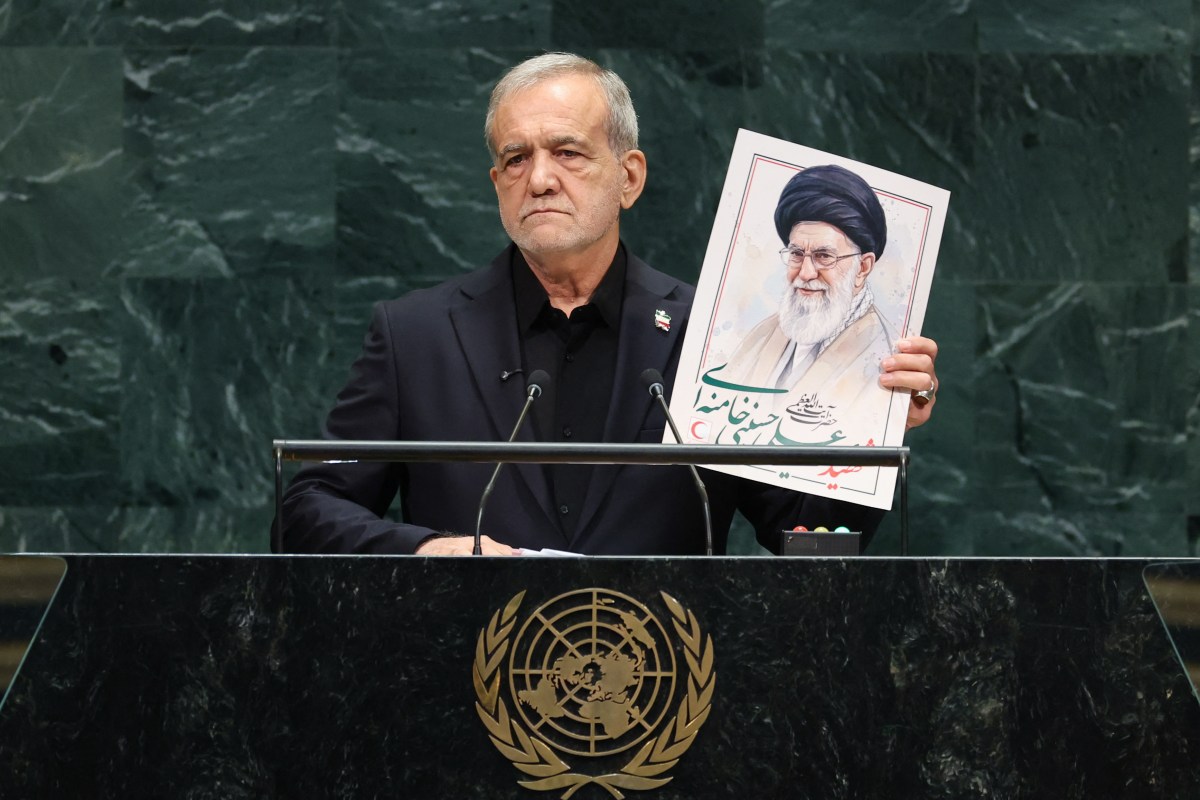
Iranian President Masoud Pezeshkian told the United Nations General Assembly on Wednesday that Iran would not surrender in its war with the United States, while still backing diplomacy to end the conflict. The posture sounded defiant but pointed to a more difficult constraint: Tehran may need negotiations as much as it needs to prove it was never forced into them. Pezeshkian also said Iran was “ready for dialogue and diplomacy and negotiations without accepting the language of force.” The pairing of the two lines illustrates the conundrum: Iran’s public message is resistance, but its strategic need may be a negotiated off-ramp that does not look like submission.
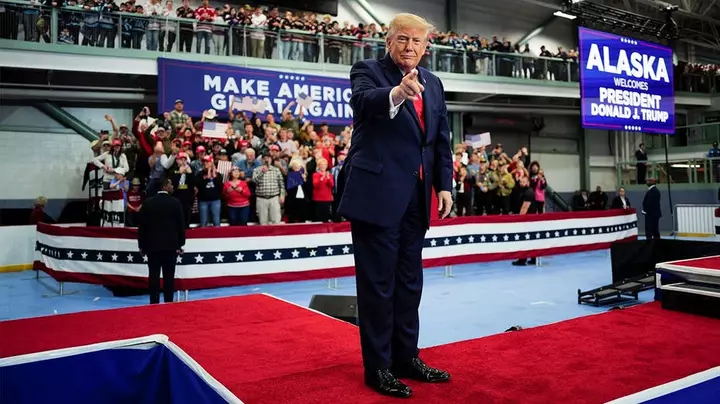
So where does it go from here? Pezeshkian was speaking a day after President Donald Trump used his own U.N. address to defend the war with Iran, accuse Tehran of stalling and warn that he may “annihilate” the Islamic Republic if no deal is reached. U.S. and Iranian officials also held talks around the U.N. gathering, with Trump describing the meeting as “very good” and Secretary of State Marco Rubio saying Trump was open to meeting Pezeshkian while he was in New York.
For Tehran, that creates a familiar bind: Negotiating under pressure can bring relief, but negotiating while U.S. threats are still public can look like capitulation. Pezeshkian’s answer was to make the talks politically usable before they become diplomatically useful. By presenting Iran as battered but unbowed, he was not closing the door to diplomacy but trying to define the terms under which diplomacy could be sold.
The logic harks back to the Iranian state’s modus operandi: Endurance is a source of legitimacy. In wartime especially, compromise has to be framed as proof of resistance, not an admission that pressure worked. The speech clearly displayed Iran’s contradiction.
Pezeshkian said Iran had “only defended” itself and accused the U.S. and Israel of attacking. His claim that Iran had not hit civilian populations was undercut by civilian deaths among mariners and migrant workers in the region. On the Strait of Hormuz, Pezeshkian warned that hostile fleets and the expansion of war would not bring peace.
He said it was unacceptable for others to benefit from the waterway while Iran was denied access to shipping through it. That was more than rhetoric. A senior Iranian official said Tehran could reopen the Strait of Hormuz within seven days if the U.S. eased military pressure and lifted its blockade on Iranian ports.
Extract — continue reading at the source.