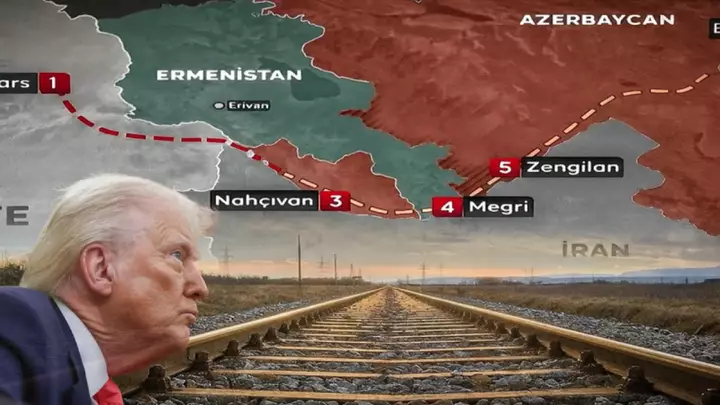
On November 2nd, Armenia's prime minister, Nikol Pashinyan, told parliament that his government would soon start commissioning designs for the railway, highway and power lines of the Trump Route for International Peace and Prosperity, or TRIPP. Parliament had voted on the ratification days earlier. Deputy prime minister Mher Grigoryan went further: delimitation of the border in Syunik, the southern province the route will cross, might be carried out in an "extraordinary" fashion, ahead of the existing schedule, so that the infrastructure can proceed.
Pashinyan's own framing was characteristically grand. We all recognize the project's effectiveness in ending a blockade that has lasted over 30 years. But one neighbour was not celebrating the idea, as always.
The ambassador of Iran in Yerevan, Khalil Shirgolami, said to the press that Tehran recognizes the sovereignty of Armenia but expects above all that there should not be any foreign military forces stationed on the Armenian-Iranian border, nor any threat of Iran coming out of it. Armenian authorities have assured him. However, Tehran seems to need more than assurances.
The shortest border, with the longest worry The Armenia–Iran border spans just 44km, following the Aras River in the Syunik region. The border is the shortest land border of Iran, and as described by its strategists, is its lifeline to the north – the only direct passage to the South Caucasus, Russia, and further on to Europe. The goods pass across the border checkpoint of Agarak and Norduz, and there have been improvements made in their bridge capacities.
Armenia and Iran traded approximately $104.8 million worth of goods in the first two months of 2026, an increase of 6% from the previous year. It is clear for Tehran that this is more than an issue with lines in maps. TRIPP is a highway and railway that is going to pass close to the Iranian border and will be run by Americans in great numbers; the ambassador has cited plans according to which American companies are to have 74 percent share in management of the corridor.
For Iranian strategists, this situation is nothing less than encirclement, despite all assurances of its non-military nature. It is all made worse by the war; the United States and Israel have launched attacks on Iran since February, and Mr Shirgolami has cited them while elaborating his point of view. Well in that point of view, it could easily be said that, perhaps, as tensions around the Strait of Hormuz continue, Iran views the South Caucasus as the next chokepoint.
Extract — continue reading at the source.