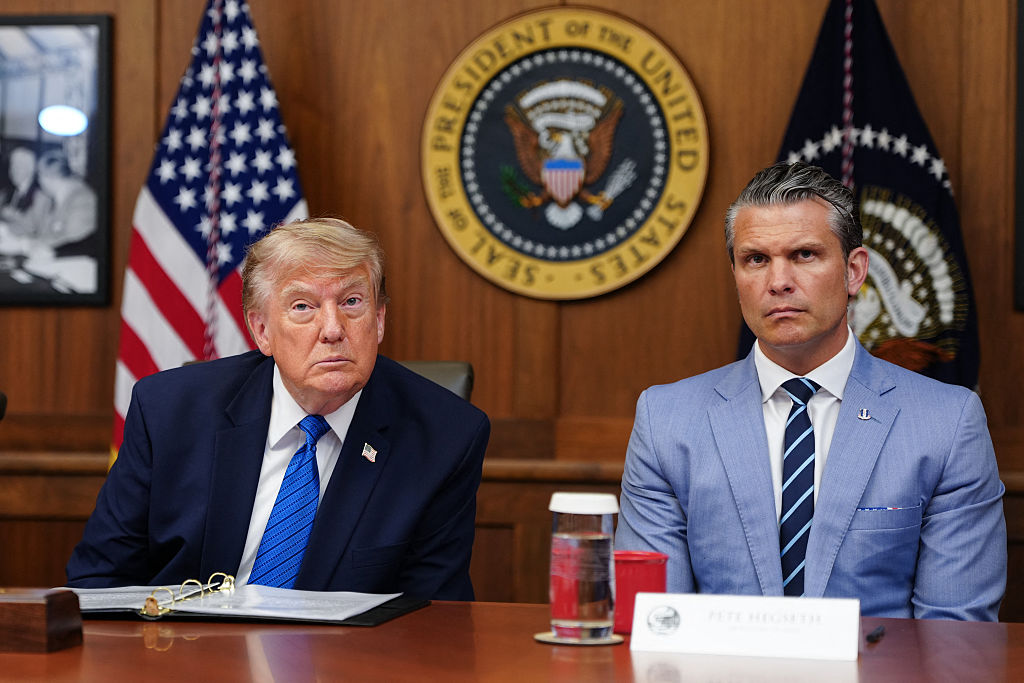
The war with Iran has cost the U.S. government around $38 billion and contributed to growing inflation, according to a new analysis by the Congressional Budget Office, the nonpartisan agency that provides economic and budget estimates to Congress. The estimate, which covers the war’s direct costs through Aug. 1, is in line with the Pentagon’s most recent public accounting from July, when Defense Secretary Pete Hegseth told Congress that the war had cost $37.5 billion. A later report from the Defense Department's inspector general determined that conflict cost an estimated $33.4 billion between February 28 and June 30.
But the new CBO analysis finds that the price of the war is continuing to rise, estimating that the government will spend another $2 billion to $3 billion each month the conflict continues. It also notes that the war has significantly depleted U.S. munitions, including air-defense interceptors, potentially reducing the military’s capacity to respond to another major conflict. Taken together, the reports are a mixed bag for an Administration that has faced mounting questions over the consequences of a war President Donald Trump initially said would be over in a few weeks.
Nearly $40 billion is a substantial sum, Democrats say, particularly at a time when the federal government is carrying more than $40 trillion in gross debt and most Americans consider affordability their top issue heading in the midterms. However, the estimate is considerably lower than some early projections of what the conflict could cost, giving the Administration an argument that the direct military price of the war has so far been more limited than some critics had feared. The bulk of the spending—$21.7 billion—comes from replacing munitions expenditures, the CBO found, including $13.1 billion for missile defense interceptors and $7.3 billion for land-attack cruise missiles.
Other costs include repairing or replacing equipment, increased flying hours for air operations and transportation, and increased fuel costs. However, it does not factor in the cost of damage to U.S. bases and facilities in the Middle East. The separate report from the Defense Department's inspector general, released a day before the CBO’s, estimated the cost of repairing "physical damage from Iranian strikes" to U.S. diplomatic facilities in Iraq, Kuwait, Saudi Arabia, and the UAE at approximately $184 million.
It also determined that throughout Operation Epic Fury the U.S. military has spent $22.3 billion on munitions and has lost around $3.7 billion in aircraft and equipment, including four destroyed F-15 fighter jets, seven KC-135 tanker aircraft, a dozen damaged or destroyed KC-135 refueling aircraft, and the loss of up to 30 MQ-9 Reaper drones. The CBO estimates that replenishing the stockpiles depleted by the war could take five years or longer, suggesting the true cost of the conflict could not be known until the Pentagon spends money to rebuild inventories and restore capabilities that existed before the war. Top Administration officials have repeatedly denied claims of U.S. munitions shortages ahead of the two reports, though the Defense Department urged the defense industry to increase weapons manufacturing last month.
The CBO’s accounting gives members of Congress an independent assessment against which to judge the Trump Administration’s requests to continue funding its military campaign in Iran. As Congress’s nonpartisan fiscal scorekeeper, the CBO’s findings frequently become the benchmark lawmakers use to debate the consequences of tax and spending decisions. However, the CBO report notes that its own estimates “are subject to considerable uncertainty” because it relied on government databases and public reports as the Defense Department did not respond to the CBO’s requests for information.
Extract — continue reading at the source.