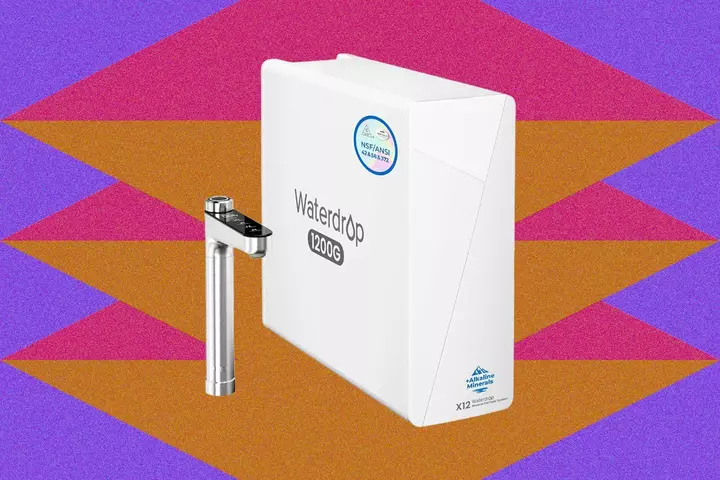
Stand-alone RO systems and pitchers sit on your countertop and generally require manual refilling from the tap. You’ll save space and avoid the hassle of constantly refilling the unit by installing an under-sink or under-counter model that connects directly to your plumbing lines. Either way, RO systems aren’t cheap.
But for some homeowners, they may be an invaluable investment. Osmosis is the movement of molecules—usually water—through a semipermeable membrane that blocks larger particles like salts and sugars from passing through. After osmosis, the concentration of particles on both sides of the membrane ends up in equilibrium.
It’s how plants get water from the soil, and it’s how your kidneys filter junk out of your blood. While osmosis is a spontaneous phenomenon that happens naturally, reverse osmosis requires pressure to force water through a membrane in the other direction, effectively removing all of those compounds from the water to render it pure. It’s how salt is removed from seawater to make it drinkable, and it’s one way tap water can be purified in your home.
RO differs considerably from traditional filtration systems, which rely on physical barriers, typically activated carbon, to manually capture particles that pass through. Eventually, these filters become saturated with sediments and other matter and have to be replaced. While carbon filters are fairly blunt, able to capture larger particles of at least 0.1 microns in size, RO systems have a much finer-grained membrane that captures contaminants on a microscopic level (typically down to 0.0001 microns).
Carbon filters can make your water taste and smell better, but with RO you are getting much, much cleaner water than what that inexpensive Brita filter can muster. (That said, RO can’t capture everything, and carbon filters are still useful for capturing certain volatile organic compounds through adsorption. Most RO systems also have an additional carbon filtration system included.) Note that two types of RO systems are available: Tanked RO systems filter water slowly (albeit passively, without electricity) and sequester it in a (rather large) tank under your sink. Today, tankless RO systems are more popular, processing water on demand but requiring electricity to keep things flowing expeditiously.
Tankless systems are considerably more expensive due to their inherent complexity. What Are the Real Risks of Contaminants in Water Today? The Safe Drinking Water Act requires community water systems to publish an annual report on the quality of water they’re delivering, due by July 1 each year.
Extract — continue reading at the source.