The German economy is showing tentative signs of recovery after a prolonged period of gloom. Europe's largest economy is on track for its strongest GDP growth since 2022, while business sentiment is finally trending upwards again after a lengthy spell in the doldrums. The country's official statistics office reported last week that the economy grew by 0.3% in the second quarter of 2026, beating estimates and building on robust figures for the previous two quarters.
Several others have revised their forecasts upwards. The Ifo Institute, Kiel Institute for the World Economy and the Leibniz Institute for Economic Research are all now predicting growth of 1.3% or more for 2026. Meanwhile, the Ifo business climate index — a key barometer of the country's corporate mood — returned its highest reading in a year for August.
"It's more than a flash in the pan," Clemens Fuest, President of the Ifo Institute, told DW. "It could be a recovery." "The momentum is positive and the economy has shown a better-than-feared level of resilience," Carsten Brzeski, ING's global head of macro, told DW. However, he cautioned against too much cheer, saying some of the economy's fundamental problems remain.
"In order to really transform this into a longer-term recovery story, we still need more," he said. The positive figures come as negative headlines related to Germany's economy continue to stack up. Volkswagen, one of the country's most iconic companies, is in the midst of a bitter downsizing — reflecting a wider restructuring across the country in the face of competition from China and other global headwinds.
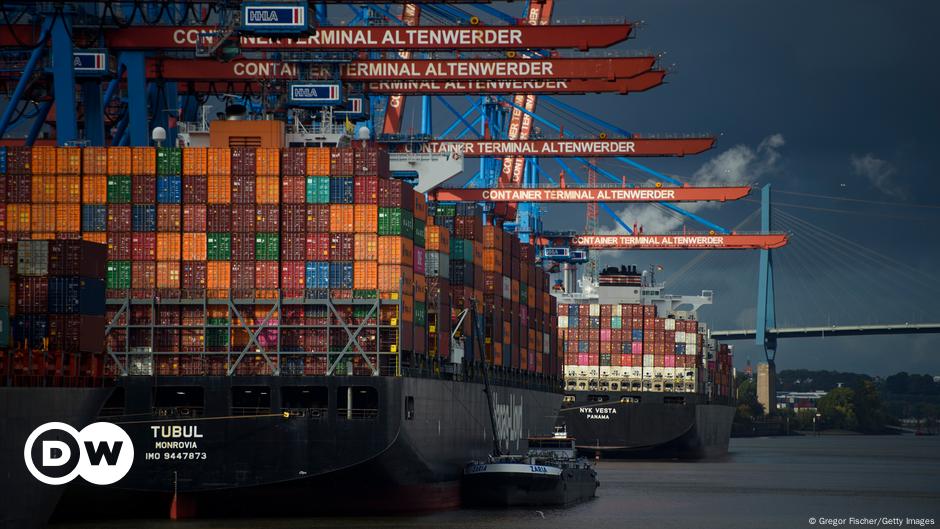
This summer, record low water levels on key German waterways such as the Rhine and Danube significantly disrupted trade and economic activity while the war in Iran continues to drive energy prices upwards. Yet part of the reason for the upturn relates to how the German economy has handled some of those challenges, notably the closure of the Strait of Hormuz as a result of the Iran war. Germany's exports and industrial base have powered GDP growth, with new orders increasing for the third month in a row, leading to the strongest production growth since early 2022.
The VDMA, which represents the German mechanical and plant engineering sector, reported a 2% increase in foreign orders for July year-on-year. Brzeski says many German manufacturing firms, especially in energy-intensive sectors such as chemicals, have benefitted from the closure of the Strait of Hormuz. They have increased orders and taken some market share from Asian suppliers who were more severely dependent on Middle Eastern oil.
Extract — continue reading at the source.