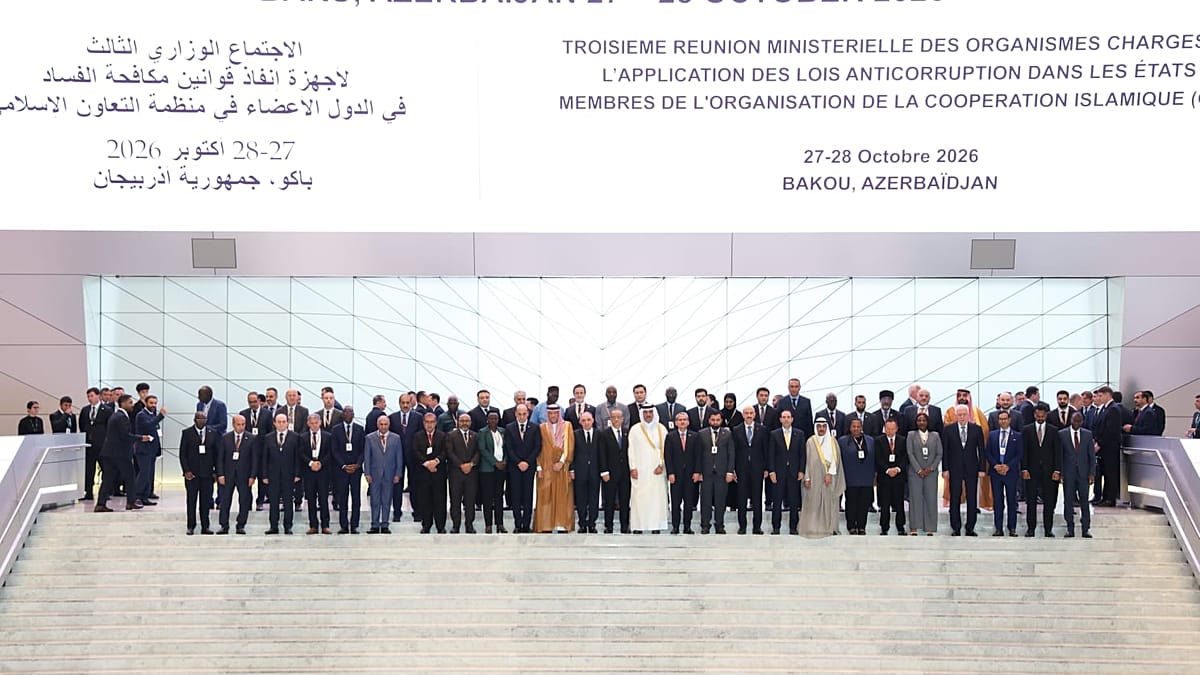
As transnational criminal networks deploy increasingly sophisticated technology to conceal illicit wealth, authorities across the globe are accelerating efforts to dismantle international financial crime. These priorities framed the agenda in Azerbaijan as delegates convened for the Third High-Level Meeting of the Heads of Anti-Corruption Law Enforcement Agencies of Member States of the Organisation of Islamic Cooperation (OIC). At the core of the summit was the implementation of the Makkah al-Mukarramah Convention.
According to the OIC, the landmark treaty represents the first multilateral anti-corruption law enforcement agreement tailored specifically for Islamic Cooperation member states, establishing a unified legal foundation to track illicit financial flows across borders. Cross-border financial investigations often face significant legal barriers, a challenge highlighted alongside Malaysia’s recent asset recovery experience. Abd Halim Bin Aman, Chief Commissioner of the Malaysian Anti-Corruption Commission, detailed his agency’s multi-year effort to trace and repatriate stolen funds following the 1Malaysia Development Berhad (1MDB) case.
"We managed to achieve our goal of tackling the 1MDB matter and as of today we managed to bring back home about 75% to 80% to outside countries, and we managed to bring back about 33 billion Malaysian ringgit worth of loss," he revealed. Originally established in 2009 as a state-owned strategic development fund, 1MDB became well-known for being embroiled in one of the world's largest financial kleptocracy scandals, after billions of dollars were systematically siphoned off through offshore shell companies and international bank accounts. According to the US Justice Department’s website, between 2009 and 2015, money was "laundered through major financial institutions worldwide, including in the United States, Switzerland, Singapore, and Luxembourg" and "misappropriated more than $4.5 billion (approximately €4 billion) in funds belonging to 1MDB through a criminal scheme." The Justice Department stated it "repatriated an additional $156 million (approximately €139 million) in misappropriated 1MDB funds" to people from Malaysia and brought the total of returned funds to approximately $1.4 billion (approximately €1.2 billion).
Bin Aman also shared his views on what typically slows down such international matters. "Bureaucracy is always being an obstacle to any investigation," he said. He said that the summit provides a necessary platform to share legislation and best practices to speed up investigations irrespective of legal backgrounds.
Ivica Bošnjak, Deputy Minister of Security for Bosnia and Herzegovina, outlined the unique structural and geographical pressures facing his country. "Bosnia and Herzegovina is complicated and complex in the political part, and therefore the organization of the entire security system is complex," Bošnjak stated. He noted that national authorities must coordinate "16 police agencies and a whole series of other law enforcement agencies" operating across the security sector.
While the state has adopted extensive legal regulations and action plans, Bošnjak told Euronews that "much still needs to be done to refine a couple of more crucial laws" and operational strategies to tackle cross-border financial crime effectively. Tugay Rahimli, Special Assistant to the Prosecutor General of Azerbaijan, outlined the scale and primary objective of the summit. "Today's event brings together more than 250 participants from 46 member and service states as well as eight international organisations," Rahimli said.
Extract — continue reading at the source.