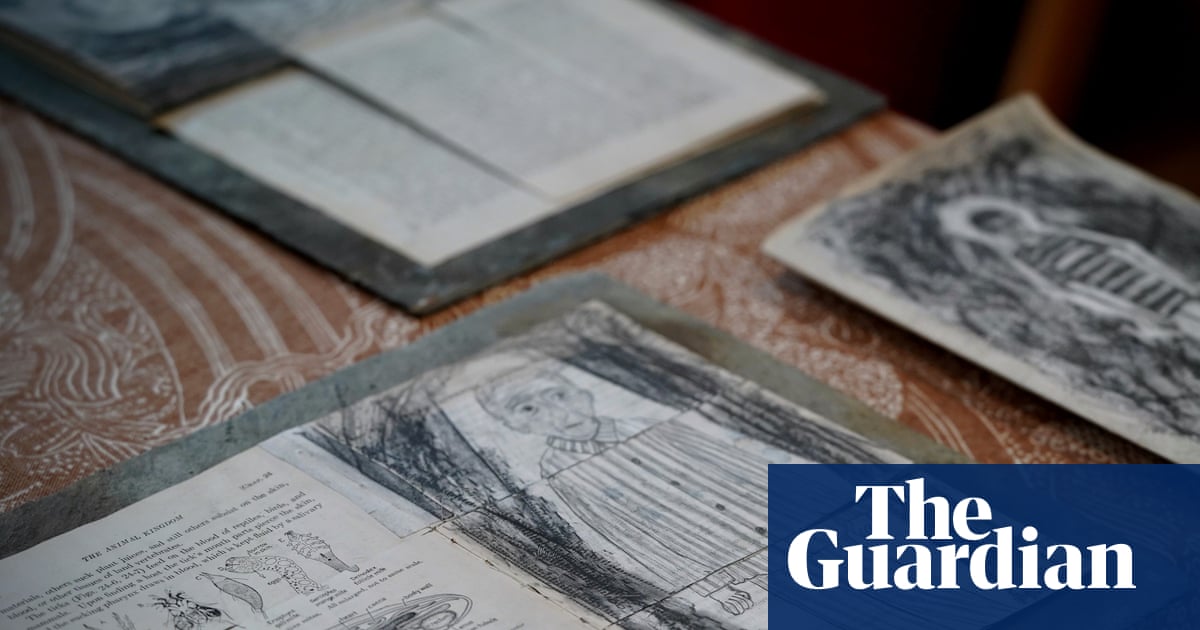
The artist Dana Mashoian Walrath’s new book honours the Jewish victims of the Nazi Holocaust. But she also expects it to get her banned from Israel. That is because The Book of Genocides also contains a chapter that portrays Palestinians forced to live as second-class citizens and watch their homes bulldozed or bombed.
In an experimental blend of anthropology, memoir and visual art, which encourages readers to cut the pages and create three-part interactive figures, she offers 10 case studies ranging from the killing of Indigenous peoples in the Americas and the enslavement of Africans to the Armenian genocide, Holocaust, Cambodia, Rwanda, Bosnia, Palestine and the persecution of the Rohingya. Walrath, 66, an artist, writer and anthropologist, travelled to all 10 places represented in the book and has a personal connection with genocide. She is Armenian-American, the granddaughter of survivors who fled the systematic destruction of the Ottoman empire’s Armenian population during the first world war.
For decades, her family’s survival story was condensed into a single narrative fragment. When she asked her mother about her own mother’s childhood in western Armenia, she replied: “After her parents were killed, she hid during the day and ran at night with Uncle Benny and Aunt Alice from their home in Palu to the orphanage in Aleppo.” It was only recently that deeper, more horrifying layers of that journey were revealed. When her mother, Alice, was diagnosed with dementia and moved into her home, Walrath took a leave of absence from her academic career to engage in full-time creative work, eventually publishing a verse novel about the Armenian genocide, Like Water on Stone.
I also learned that my grandmother, at one point probably after sex, hit her enslaver on the head with a stone and the two of them fled. This is what my aunt told me. I don’t know.” This inheritance of violence and survival has haunted Walrath’s life and given her a personal connection to genocide, wherever it happens.
She reflects: “It’s knowing what it does to people and knowing how it leaves holes inside of you and that you have to figure out how to overcome the desire to get even. Writing the novel let me exorcise a lot of demons and then writing this book was so gratifying because I could literally bring people together.” Walrath committed herself to traveling to every location depicted in the book, seeking out survivors and descendants to sit with them in their grief. She spoke with survivors of Pol Pot’s killing fields in Phnom Penh, met with perpetrators and survivors of the 1994 genocide in Rwanda and visited Rohingya refugees in the sprawling camps of Bangladesh.
This deep exposure to human suffering took a severe toll on her physical health. The 66-year-old recalls via Zoom: “I got physically sick at various times and it would usually take the form of a terrible chest cold. Grief is supposed to live in the lungs and I got very sick after Auschwitz.
Extract — continue reading at the source.