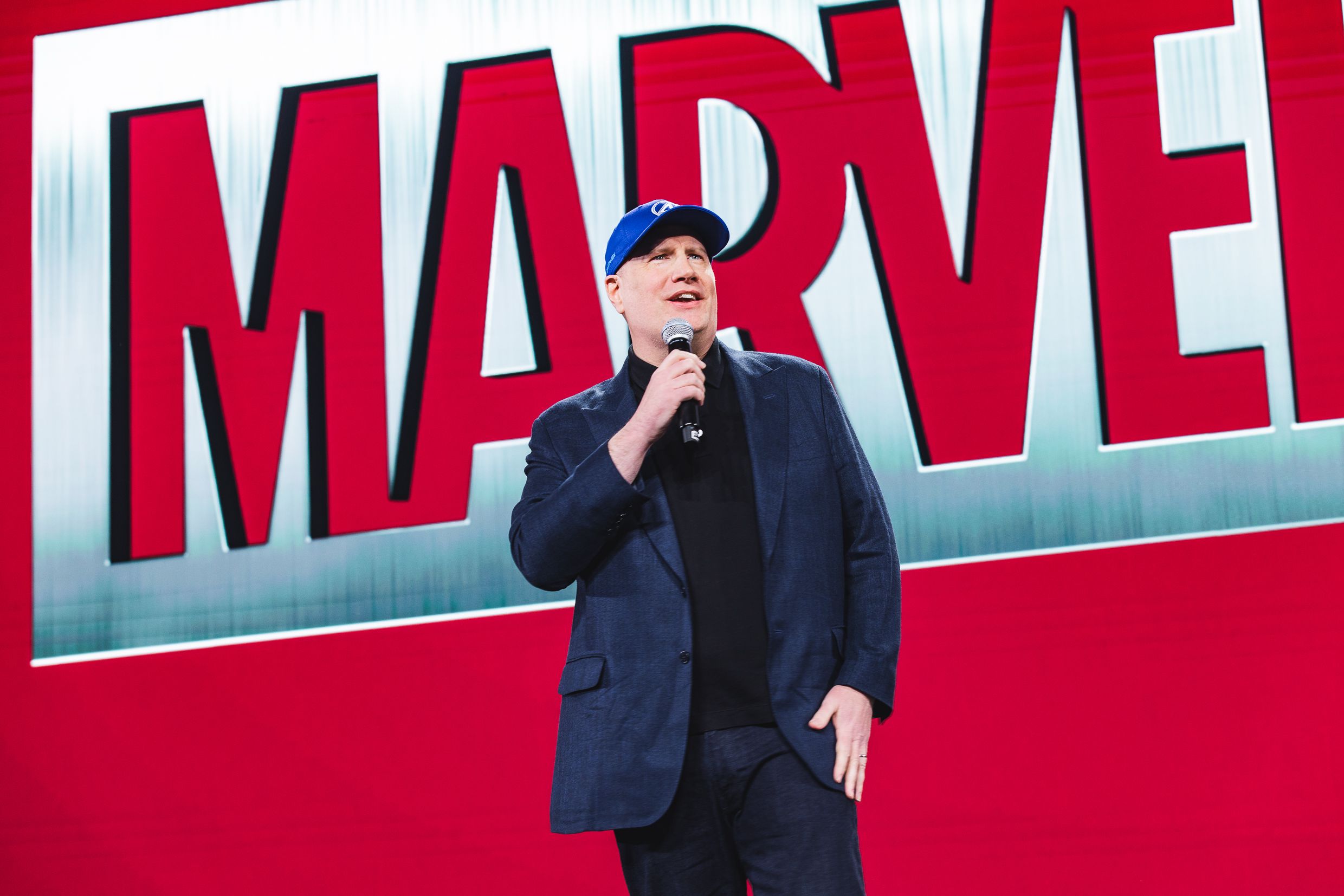
Anyone who pays even a small amount of attention to the superhero movie industry is likely experiencing déjà vu this week. On Monday, Nov. 9, news broke that, after buying Warner Bros. for $110 billion (and DC with it), Skydance CEO and nepo baby supreme David Ellison had fired James Gunn and Peter Safran from their roles as co-CEOs of DC Studios. And so, the cycle begins again.
To paraphrase a classic Warner Bros. movie, "This will be the third time we have rebooted the DC cinematic universe, and we have become exceedingly efficient at it." In the wake of all this chaos — What happens now to Gunn's upcoming Superman sequel Man of Tomorrow? Or Lanterns season 2? — someone else has been getting a lot of praise for keeping his own rival superhero franchise afloat. Marvel Studios boss Kevin Feige was already widely considered to be one of the most successful film producers of the 21st century, but after watching DC crash out yet again, that praise is only getting louder.
One viral social media post this week even called Feige a "generational talent." But is that really the case? Sure, Feige may have a passion for the stories he tells through the Marvel Cinematic Universe, a deep knowledge of the comic book source material, and a knack for the kind of big picture thinking that got us four massive Avengers movies with a fifth rapidly approaching. That all clearly takes talent and hard work, but there's one other thing Feige has that nobody at DC or Warner ever experienced: a stable movie studio without constant turmoil.
Marvel was only two movies deep into the MCU when Disney bought the company in 2009, meaning that for the past 17 years, Feige has been able to run his studio pretty much however he sees fit (although there were some close calls). This freedom allowed him to come up with long-term plans and then execute on them, building his empire piece by piece until we ultimately reached the apex that was Avengers: Endgame. Of course, even the MCU isn't totally free from corporate meddling.
It's clear now that Disney's larger push into streaming at the start of the 2020s ultimately diluted both the Marvel and Star Wars brands. That was perhaps the only clear example in the last two decades of Feige being forced to make a bad decision because of C-suite demands, and it only proves the benefit of letting the guy who's actually running the franchise make his own choices. That was the goal when Warner hired Gunn and Safran, giving them control over their own studio and a direct line to the CEO, but unfortunately, history has a tendency to repeat itself — especially if you work for DC.
Let's go back to the beginning of the modern superhero movie era. After Christopher Nolan breathed new life into the entire genre with his Batman trilogy, director Zack Snyder came in as the architect of a DC Extended Universe meant to compete with Marvel. Snyder's Man of Steel arrived one year after The Avengers in 2013.
Extract — continue reading at the source.