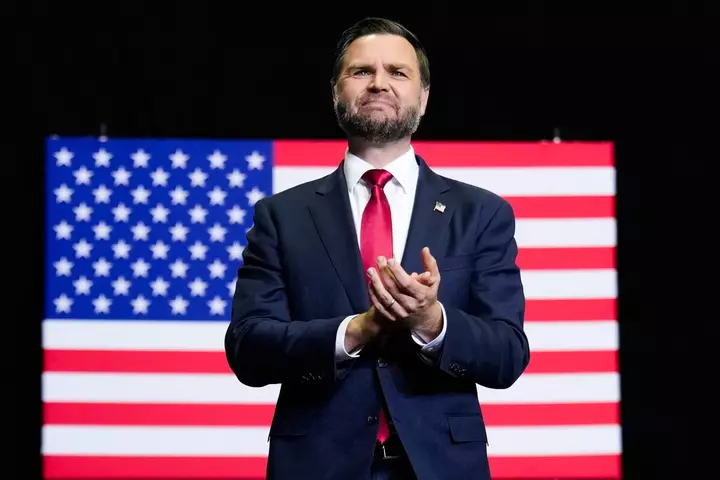
Vice President JD Vance said data centers must be "good citizens" in the communities where they operate, as he defended the benefits of the facilities during a town hall in West Palm Beach, Florida. The exchange, which aired on CBS News on Saturday night, comes as opposition to data center development grows across the U.S., with concerns over electricity demand, water consumption, rising utility bills and the loss of farmland putting pressure on politicians ahead of November’s midterm elections. But the woman raising her issue with Vance was not making a complaint about any of these factors in coverage shared in footage on social media.
She was concerned about the noise from a center in her neighborhood. Newsweek contacted the White House via online form on Sunday for comment. Vance was responding to a Michigan woman who described how noise from a facility across the street had disrupted her family’s life.
She told Vance that her family had endured constant noise from the data center for years, making it difficult to spend time outdoors or open their windows. "Even with our windows closed the buzzing could be heard throughout our home day and night 24/7," she said, adding that her two young children had to sleep through the noise. The woman, who said she was a plaintiff in a class-action lawsuit over the issue, asked Vance what the administration was doing to address the problem.
"Well, it's a great question and I want to assure you that we do very much care about communities like yours," Vance replied, asking how old her children were. After she told him her youngest was three months old and her oldest was 21 months, Vance said data centers could bring benefits but also "cause real problems." "I really do care about this," he said. "We have a three-month-old exposed to constant noise.
It can be a problem for everybody, especially mom sleeping, so I'm very mindful of that." Vance pointed to the administration's Ratepayer Protection Pledge, saying "we've effectively required the data centers to say before they go into community they're going to make sure that they're good community citizens." Vance argued that data centers also bring benefits by powering the AI technology people use every day, saying: "There is a good that comes from data centers too, and what I mean is, you know that whenever we use AI on our phone, like the actual work, that the computation is actually being done at data centers whether it's in Michigan or anywhere else across the country." The vice president said the Trump administration wanted data centers to benefit the communities where they were built, pointing to an example in Louisiana where he said local teachers would receive $50,000 bonuses per teacher from revenue generated by a data center. He also said the facility would feed electricity back into the grid. He also stated that the economic benefits of data centers should not flow only to technology companies and their wealthy owners and also cited rising electricity bills as a concern, saying he had heard complaints about data centers contributing to increases in household power costs.
However, Vance argued that data centers remained important to the United States' technological competitiveness, saying they provide the computing power behind AI applications used on phones and other devices. He warned that China wanted to overtake the United States in the technology race, arguing that the benefits of data center development had to be balanced against the effects on local communities. Michigan has become a focal point in the debate, with communities pushing back against large-scale projects and candidates taking different positions on how the industry should be regulated.
Extract — continue reading at the source.