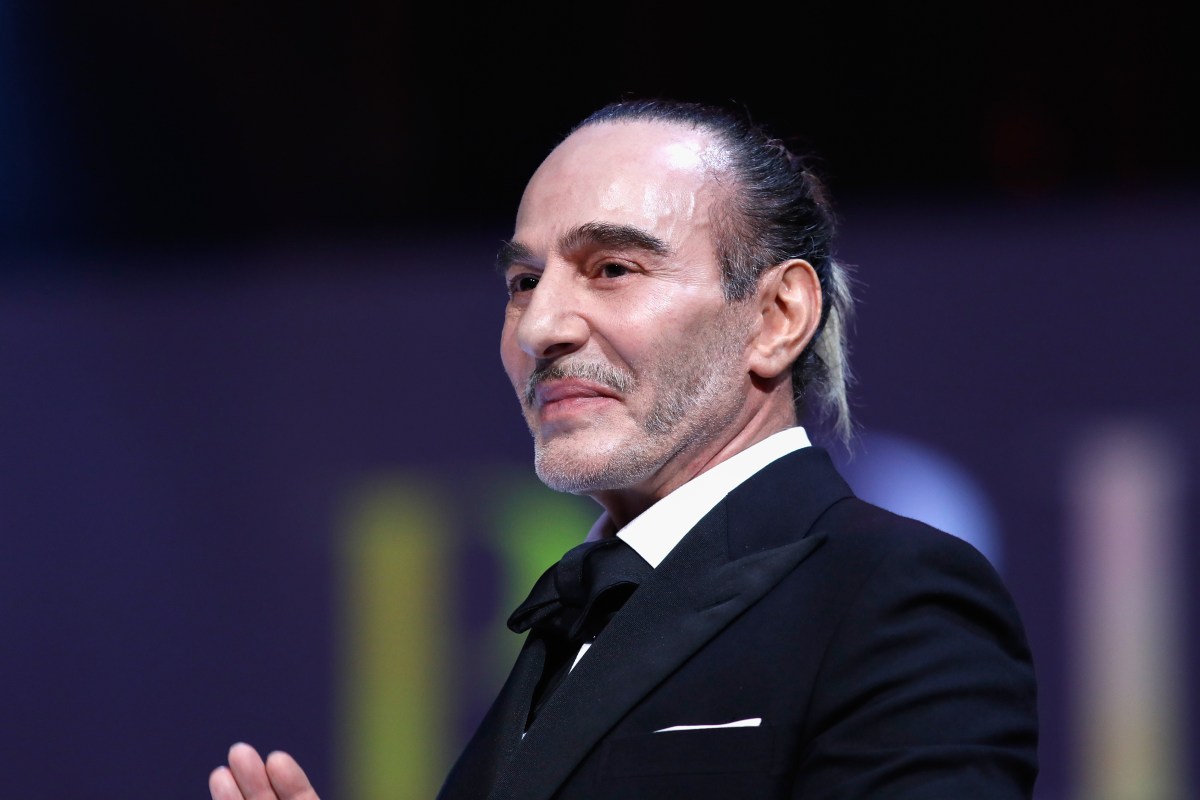
The Metropolitan Museum of Art’s decision to abandon its planned John Galliano retrospective has highlighted something that the fashion world had largely managed to avoid defining: the outer edge of a comeback. The exhibition, scheduled for May 2027, “will not proceed as planned,” the Met and Galliano announced on Monday. In a sense, the Met was the last stop left on the Galliano comeback tour.
After his 2011 collapse, when a Paris court convicted the designer over antisemitic and racist insults, he entered rehab, apologized and reentered the fashion world almost unscathed, according to some. The evidence: he spent a decade at Maison Margiela, where his 2024 couture collection drew enormous acclaim, and this year signed a creative partnership with Zara. The fashion gods had clearly answered a lurking question about Galliano: could he work again?
In the past few months, though, the Met asked a slightly harder question: should rehabilitation end in consecration? Since 2011, Galliano had jobs and collections that could be judged as part of his life’s work canon, but a retrospective at the Metropolitan Museum of Art, attached to the Met Gala, never really felt like a continuation of that legacy. To many, the show was closer to a cultural verdict.
The British fashion guru would have been only the third living designer to receive a solo Costume Institute retrospective, after Yves Saint Laurent and Rei Kawakubo. The message was hard to miss: Galliano had gone from fashion pariah to cultural redemption. But the limit was found at the museum door.
It’s hard to think that the Met didn’t know exactly what it was taking on. Its exhibition plan was unusually explicit: an opening section called “Bearings” would directly address Galliano’s racist and antisemitic conduct, his Dior firing, conviction and later efforts at accountability. The museum’s proposition was sophisticated, directly placing the ugliness beside the beauty and making that collision part and parcel of the show.
After all, a retrospective has the ability to scrutinize its subject while still honoring him. Sure, wall text may complicate canonization but it doesn’t cancel the very fact of canonization, which is probably what became hard to ignore once opposition to the museum’s decision became stronger. New York City Council Speaker Julie Menin called the exhibition a “serious mistake” and urged the museum to reconsider and other voices joined in arguing the same.
Extract — continue reading at the source.