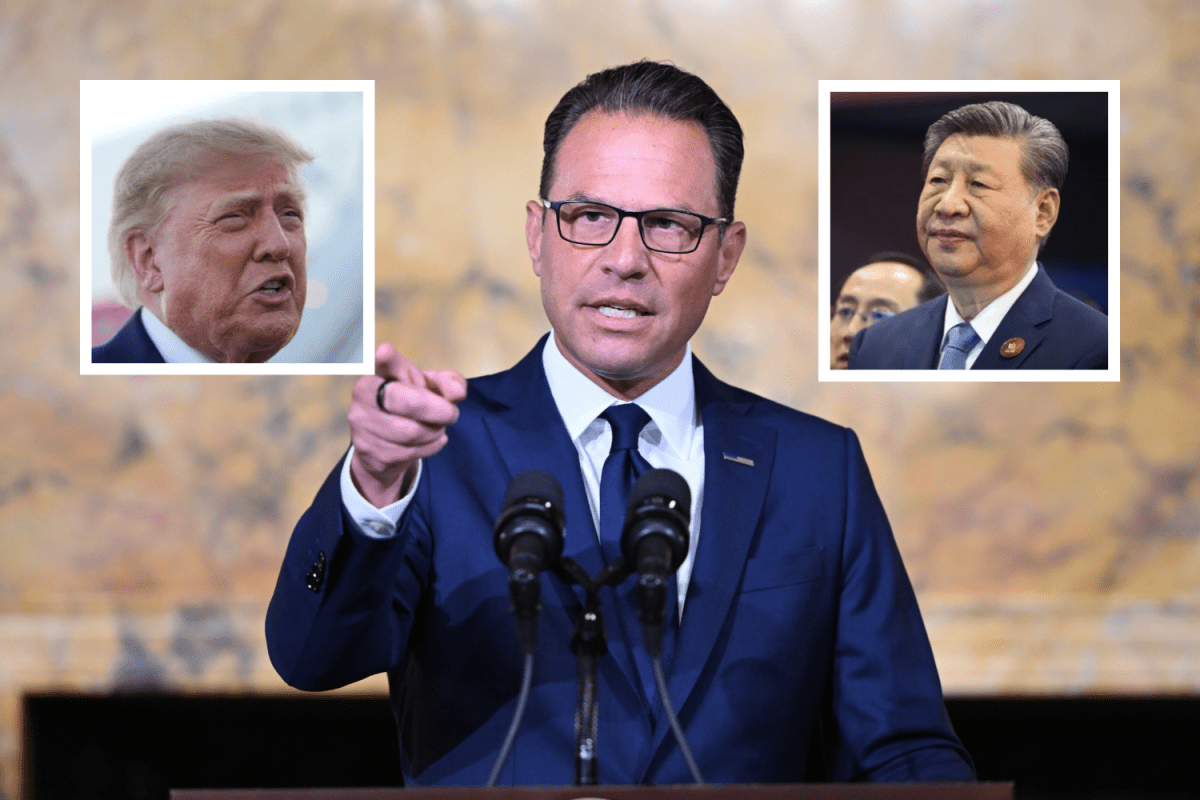
Pennsylvania Governor Josh Shapiro on Thursday accused President Donald Trump's administration of helping China gain ground in the artificial intelligence race by allowing Nvidia to sell advanced AI chips to approved Chinese customers. The criticism comes ahead of a high-stakes meeting between Trump and Chinese President Xi Jinping, where Shapiro says artificial intelligence should top the agenda. The dispute highlights a broader debate over whether allowing chip exports strengthens American companies or risks boosting China's technological capabilities.
Speaking at the AI Horizons 2026 Summit in Pittsburgh, Shapiro, a Democrat, said the Republican administration's actions undercut Trump's own calls for the United States to beat China in AI development. "And while Donald Trump talks a big game about beating China on AI development, his administration cut a deal to sell some of our most advanced chips to Chinese companies, giving them a leg up over American entrepreneurs," Shapiro said. He continued, "That is a mistake.
Real leadership means keeping America ahead of China in AI innovation, pushing Beijing on practical guardrails to reduce risks to the American people, and putting effective safety measures in place here at home." Shapiro appeared to be referring to the Trump administration's decision, announced in December and formally implemented in January, to allow Nvidia to export H200 artificial intelligence chips to approved customers in China under revised licensing rules. Administration officials and the Silicon Valley company have argued the policy allows U.S. firms to compete globally while maintaining safeguards designed to protect national security. Critics, including some congressional China hawks, contend the move accelerates China's AI development and weakens America's technological advantage.
Newsweek has reached out to the White House and Nvidia for comment. The fight reflects a broader debate over how best to compete with China: by restricting access to advanced American technology or allowing U.S. companies to compete in the Chinese market under strict safeguards. The Trump administration has defended the policy to maintain U.S. competitiveness while imposing safeguards on exports.
Announcing the decision, Trump said the sales would be permitted only under conditions that allow for "continued strong National Security." "The administration's critics are unintentionally promoting the interests of foreign competitors on U.S. entity lists—America should always want its industry to compete for vetted and approved commercial business, supporting real jobs for real Americans," Nvidia said in January. But lawmakers from both parties have raised concerns about providing China access to advanced computing power at a time when AI is becoming a critical arena of economic and military competition. Representative Brian Mast of Florida, the Republican chairman of the House Foreign Affairs Committee, warned earlier this year that "Companies like Nvidia are requesting to sell millions of advanced AI chips, which are the cutting edge of warfare, to Chinese military companies like Alibaba and Tencent.” Shapiro, a Democrat frequently mentioned as a possible 2028 White House candidate, aligned himself with those concerns, portraying the administration's export policy as inconsistent with its broader message about confronting China.
The governor used Thursday's speech to argue that artificial intelligence should be a top agenda item when Trump meets Xi next week. "I've said before, and believe to this day, we need to beat China on AI," Shapiro said. However, he rejected what he described as a false choice between competing with China and imposing stricter safeguards on AI development.
Extract — continue reading at the source.