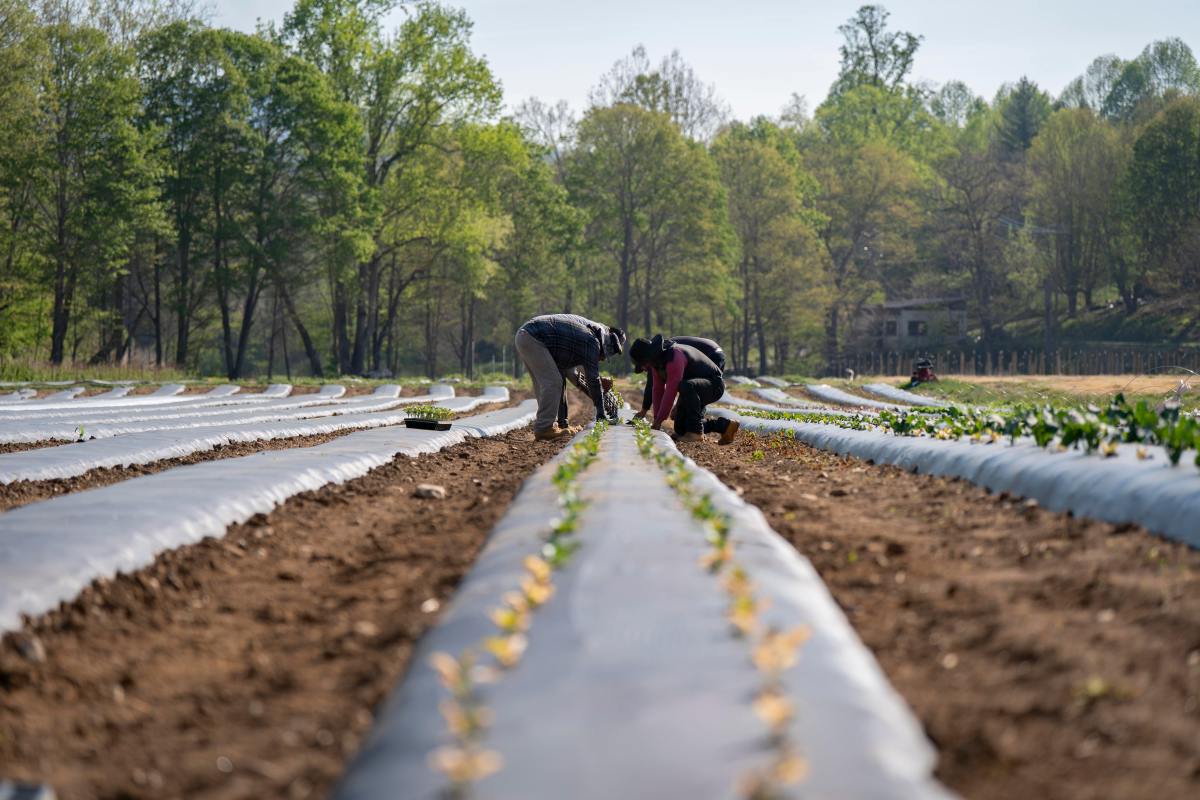
A federal judge has struck down a Trump administration rule that lowered wage requirements for many foreign agricultural workers, ruling that the Labor Department failed to show the changes would protect U.S. farmworkers from depressed wages and unlawfully bypassed much of the normal federal rulemaking process. In a 28-page order issued Tuesday, U.S. District Judge Kirk Sherriff, a Biden appointee, held that the Department of Labor's 2025 overhaul of the H-2A wage system was unlawful.
The administration had argued it was necessary to address labor shortages in agriculture and reduce costs for growers facing tougher immigration enforcement. While the judge stopped short of immediately vacating the rule, citing concerns about disrupting the agricultural labor market, the court ordered the Labor Department to quickly develop a new wage-setting methodology and warned that some employers could eventually face backpay liability if the replacement wage rates are higher. "This decision recognizes the important and essential work of the men and women who put food on our tables and that farmworkers should get paid fairly," Teresa Romero, president of the United Farm Workers, said in a press release.
"The government must move quickly to issue new, legal, wage rates that protect the jobs and wages of local farmworkers, and employers must be held accountable for paying back any difference between the new legal wage and the illegal wage rates still in effect." Newsweek reached out to the Department of Labor for comment via email Wednesday afternoon, The case centered on the Adverse Effect Wage Rate, or AEWR, the minimum wage that most employers must pay foreign workers hired through the H-2A agricultural visa program. Federal law requires the Labor Department to ensure that hiring temporary foreign workers does not "adversely affect" the wages and working conditions of similarly employed U.S. workers. For decades, the government generally set those wage rates using USDA farm labor data and relied on statewide or regional averages.
But after USDA discontinued its Farm Labor Survey in 2025, the Labor Department issued an interim final rule that immediately changed how wages were calculated. According to United Farm Workers (UFW), the rule cut many farmworkers’ wages by up to $7 per hour, depending on the state. The DOL estimated the rule would annually transfer $2.46 billion in wages from workers to employers.
The rule also introduced a new two-tier wage structure, shifted to a different government wage survey, created a new "housing adjustment" that effectively lowered required wages to account for employer-provided housing, and adopted new job-classification standards that critics said could reduce pay for workers performing higher-skilled duties. The department acknowledged at the time that the changes would generally reduce wage rates for H-2A workers and likely result in "wage transfers" to employers. The ruling repeatedly returned to a central question: whether lower H-2A wages would undermine wages for American farmworkers.
The judge found that the administration failed to adequately justify setting wage rates for the overwhelming majority of H-2A workers at levels well below historical market averages. Under the rule, roughly 92 percent of H-2A positions would fall into the lowest skill tier, with wages based on the 17th percentile of workers in that occupation rather than average earnings. "By setting the AEWRs for the vast majority of H-2A workers well below the relevant market wages through its use of the tier system, the IFR failed to reasonably consider whether its methodology could fulfill DOL's statutory duty," the judge wrote.
Extract — continue reading at the source.