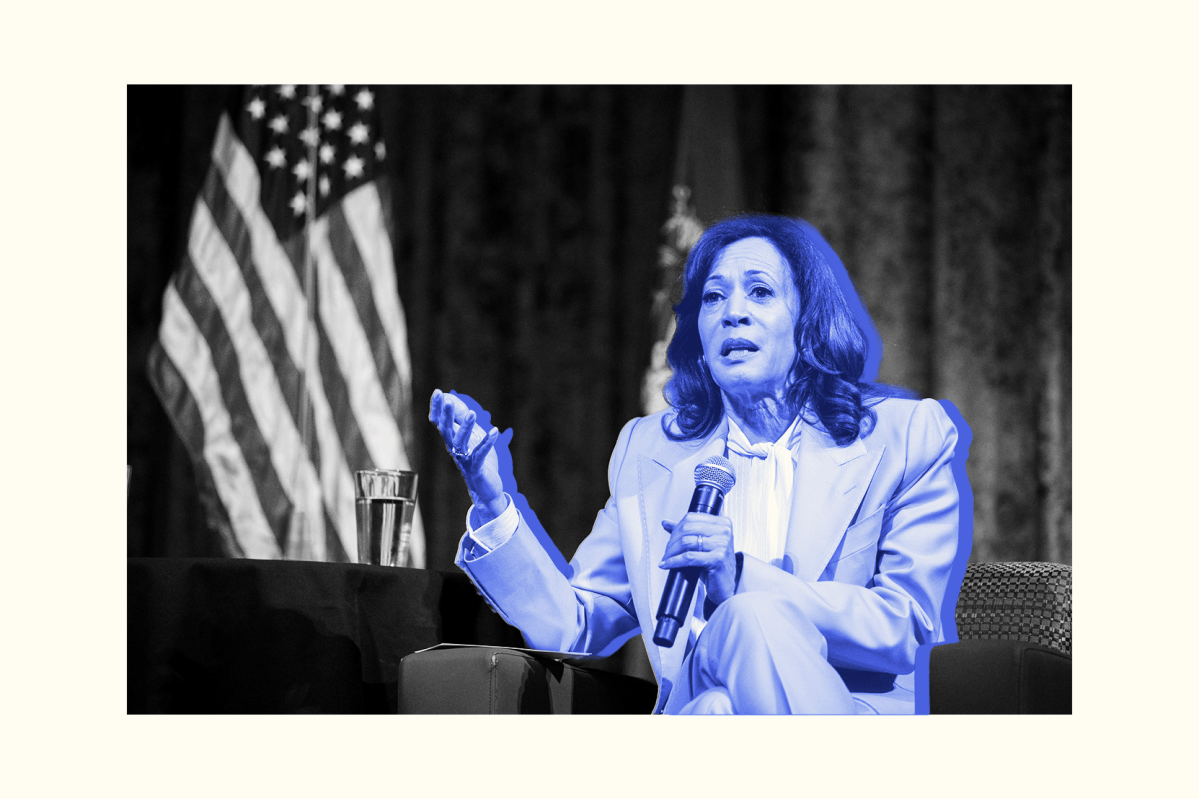
Kamala Harris has yet to announce a 2028 presidential campaign, but Gavin Newsom's declaration that he would stay out if she runs has exposed her peculiar standing in Democratic politics: a former nominee with no office, no campaign and enough influence to make other ambitious Democrats plan around her. The former vice president may be the only politician in America enjoying some of the privileges of incumbency without having won the presidency. Other Democrats must account for her ambitions before pursuing their own, while she remains free to decide whether she wants another shot at the job.
It's a rather enviable position for someone who lost the last election. The arrangement has a catch, though, given the strange position that Harris occupies. She was the party's most recent presidential nominee, served four years in the White House and can plausibly argue that 2024 was an exceptionally poor test of her political abilities: 107 days to rescue a candidacy she had never expected to inherit under circumstances no presidential nominee would willingly choose.
But the same resume that gives her a claim on the party's future ties her to its immediate past. Democrats who want to turn the page on the Biden years must first contend with the woman who spent four years at his side and then lost the election to succeed him. In September, Newsom, California's Democratic governor, told CNN, "I wouldn't run if she ran." He described a contest between the two Californians (Harris served as the state's attorney general and U.S. senator before the White House) as "mutual assured destruction," arguing that their rivalry would benefit other candidates.
Newsom's calculation is obvious: they come from the same state, have spent decades cultivating overlapping donors and political allies, and would risk dividing their own California base while rivals from elsewhere benefited. Why spend millions fighting someone whose supporters you may eventually need? By promising to stay out if she runs, Newsom has effectively given Harris a say in his political future.
But Newsom has specific reasons to avoid Harris that other potential candidates don't. A governor from Kentucky or Maryland has a different political base and considerably less to lose from challenging her. Newsom's deference may therefore reveal more about the peculiarities of California politics than about Harris' command of the Democratic Party.
Elsewhere, Harris' influence takes a different form. Pennsylvania Governor Josh Shapiro has left open the possibility of a 2028 run, while Illinois Governor JB Pritzker has established a $20 million political action committee and visited battleground states. Neither has promised to defer to Harris, and both are pursuing their political futures while she considers hers.
Extract — continue reading at the source.