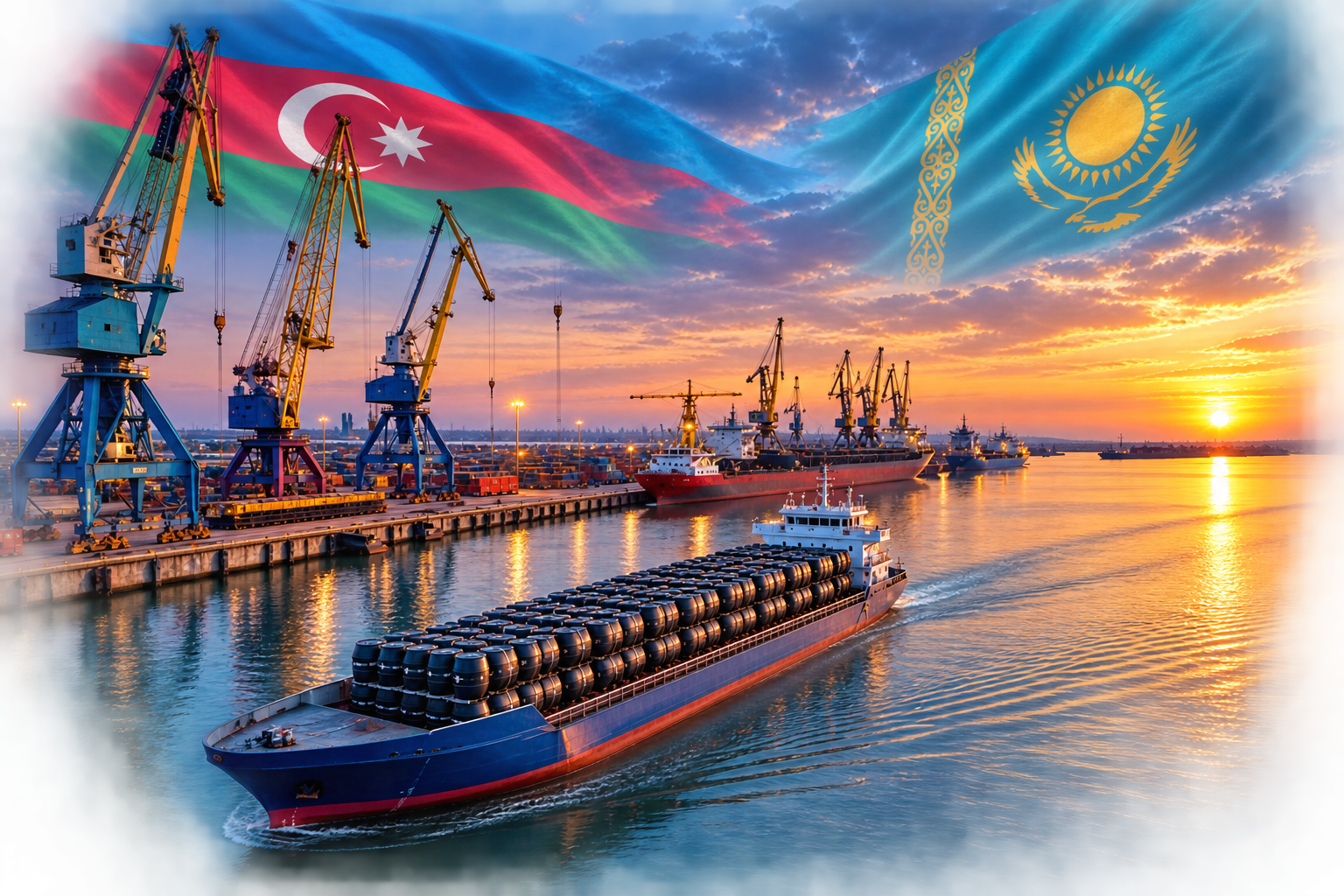
With Europe rushing ahead in developing nuclear energy and Western utility companies seeking to reduce their reliance on Russia’s infrastructure, the international nuclear fuel market has reached a crucial point. Right at the heart of it all stands Kazakhstan, the world’s largest uranium producer, accounting for more than 40 per cent of global uranium production. Having large amounts of raw material is just half the story; the second half involves getting it to the Western countries without going through Russia.
This is where the Trans-Caspian International Transport Route (Middle Corridor) serves as a vital strategic bridge. Buried inside Fitch Ratings’ latest credit assessment of Kazatomprom sits a single sentence that illustrates this new reality: "The main alternative is the Trans-Caspian International Transport Route through Azerbaijan and Georgia, where Kazatomprom shipped 48% of its deliveries to western customers in 2025." This was a credit assessment comment about the riskiness of sovereign transit. What it was doing, potentially inadvertently, was identifying Azerbaijan as an integral link in the Western nuclear fuel supply chain.
Not a potential link and not even an aspirational one. An existing one, currently transporting almost half the uranium fueling Western nuclear plants, passing through the Alat Port on the Caspian Sea's western shore. The Middle Corridor has been called the key alternative trade route in Eurasia for many years now.
Usually with pictures of shipping containers and grain volumes. Uranium takes it to a whole new level. To understand why the routing question matters, start with the market structure it operates within.
The share of Kazakhstan in the global production of mined uranium is about 40-45% – which, for any other commodity, would prompt a desperate search for diversification in the importing countries. The current market share of Kazatomprom in the contracts of Western nuclear utilities is 17-18% – another key indicator for the utilities in Western countries and managers of their mining assets amid increasing geopolitical risks and growing cost of diversification through 2026. Thus, when it comes to the possible disruption of Kazatomprom's logistics chain, it will not be an issue of the commodity market anymore.
It will be a matter of energy security and will have an immediate impact on the electric power grids operated by nuclear power. It is an energy security event, with direct implications for the electricity grids that nuclear power underpins in France, the UK, the Czech Republic, Slovakia, Finland, and the United States. The renaissance of nuclear energy in Europe exacerbates this risk, as aforementioned.
Extract — continue reading at the source.