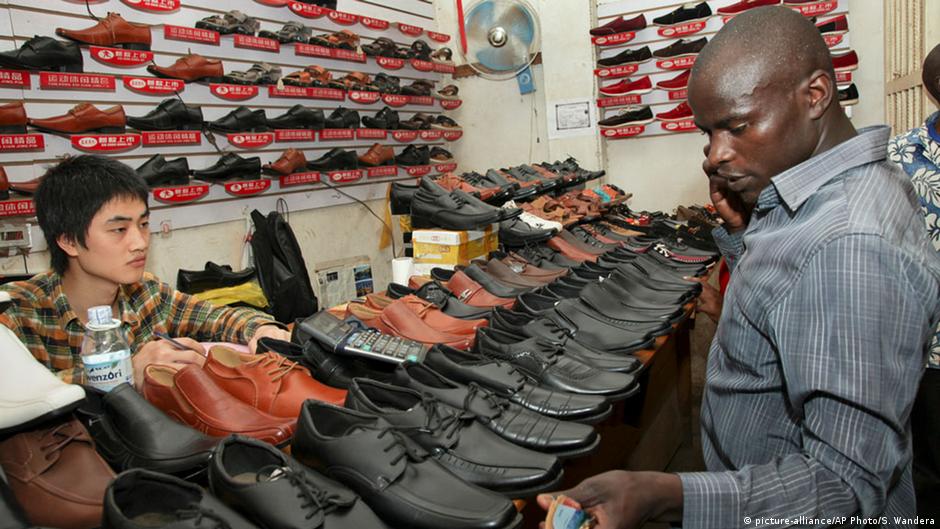
Kenyan authorities are moving in on some foreign nationals working in the country's informal economy after President William Ruto called for small-scale businesses focused on hawking and petty retail to be primarily reserved for Kenyan citizens. "We have a bill in parliament [requiring] that there are some trading activities that foreigners can't do in Kenya," he explained, adding that foreign nationals should not come to Kenya to compete with citizens in business settings which need little capital. The government had announced that the enforcement of this law would begin on Monday, September 7 — and appears to have made good on its pledge.
Ruto framed the latest move as a protection measure for Kenya's economy, highlighting that the focus in the country's economic development should shift to foreign investors who bring capital, create jobs and contribute to local production. "The investor confidence we have built is for investors, not traders and hawkers. From next week, all traders doing those small businesses should close them," Ruto emphasized, highlighting also that there has been a step increase in informal traders from China in the country.
Reactions among Kenyans to these developments have been mixed; some welcomed the crackdown, arguing that foreign traders have been taking away job opportunities in a struggling economy. "We have been suffering for long. Our jobs are taken," said Nairobi resident James Mwaurah, adding that many Kenyans are unemployed, competing with foreign workers who often are willing to work for lower wages.
"We say thanks to the president for what he has done," Mwaurah added. Others meanwhile have expressed support for the government's initiative to enforce immigration laws and business regulations, but reject the idea of simply sending foreigners home. "We accept to have foreigners in our country.
Legally, we live with them very peacefully," another local resident, Babu Claudius, told DW on the streets of Nairobi. In his view, Kenya continues to need foreign workers as well as international business, warning that "chasing them away might scare investors." Many Kenyans — including Claudius — however seem to agree on one thing: Foreign nationals "have to be here legally." To view this video please enable JavaScript, and consider upgrading to a web browser that supports HTML5 video There are some 17.4 million people who work in Kenya's informal sector, according to official numbers published in 2024; eight in ten of those workers engage in registered business dealings. For many people, hawking or running a small shop in the informal economy — with or without papers — remains one of the few accessible ways to make a living — including foreigners in the country.
Political economist Sheila Owigo Olang says that there is little evidence suggesting "that if you were to kick out the traders, that would immediately result in Kenyan nationals having more opportunities." According to Olang, there may be other motivations at play, as the new policy appears to come at a "convenient" moment ahead of elections. In her view, "a lot of it is also just populist," describing the current crackdown on foreign traders as a "feel good policy" ahead of the polls; she highlights that the policy could also serve as a message to external players at this moment: "Foreign investors coil back or they freeze or they wait until the election is finished." Olang argues that since Kenya wants to keep making itself more attractive to serious foreign investment, it should rather concentrate on tackling broader structural problems instead of focusing on smalltime foreign traders. "We need to work on corruption.
Extract — continue reading at the source.