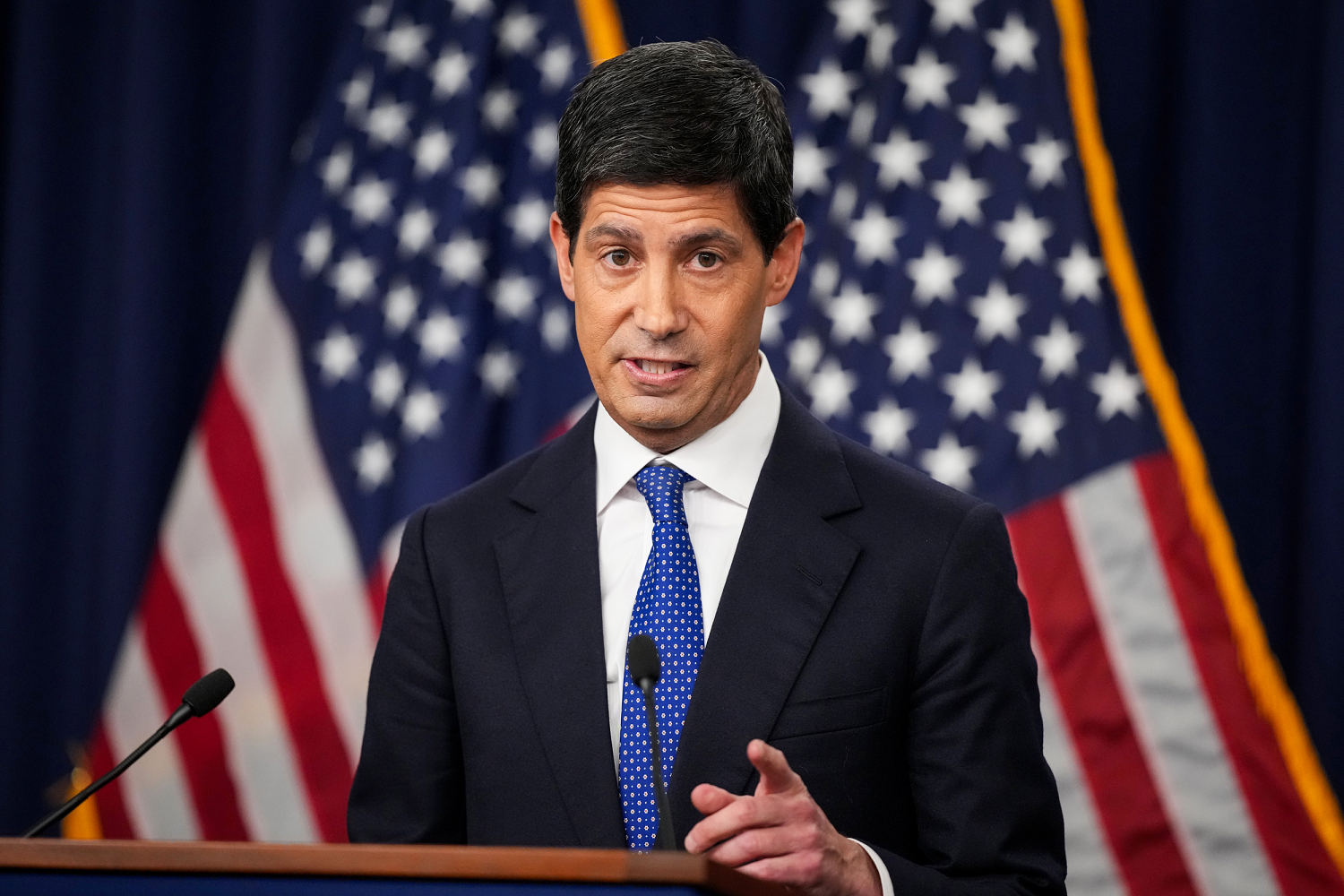
Federal Reserve Chairman Kevin Warsh on Friday said that the U.S. economy has “broadly” moved in the direction that the central bank expected during its last meeting in September, when it raised rates for the first time since 2023. In the weeks since, inflation as measured by the consumer price index jumped to 3.7%. For businesses, inflation has hit even harder.
That turned investors focus to Warsh’s appearance at the annual meeting of the International Monetary Fund and the World Bank for a signal about whether the Fed would hike rates in October or December. But Warsh stuck to a familiar tone and refused to give any clear hint about how soon that might come. However, Warsh, the head of the world’s most important central bank, spoke at length about one major economic force that is causing prices to rise across the economy.
To fund all that building, trillion-dollar companies are spending, and borrowing, big sums for servers, memory and other components. Companies including Apple and Nintendo have raised prices for consumers as a result. Companies are also tapping the public debt markets in an unprecedented way.
Data center companies and associated utility firms, chipmakers and cloud providers are expected to raise between $300 billion and $570 billion from the debt market this year, according to Vanguard. Those firms are also offering highly attractive interest rates, sometimes better than U.S. Warsh said AI could also “change the real economy,” though he acknowledged not knowing how deeply it would impact employment.
But he projected optimism about the technology’s prospects, predicting that “it will make economies and countries that put it to good use more productive.” He said it should also generate “more wealth.” “But the path from where we are to there is likely to be a very bumpy one,” he warned. Warsh said a Fed task force of outside experts studying the impact of AI on the labor market would hold a public hearing on the topic in November. Already hammered by soaring interest rates, rising energy prices and stagnant wage growth, American consumers could get an extra dose of financial strain if the Fed raises rates again this month.
Voters are already dissatisfied with President Donald Trump’s handling of the economy, polls show, so another rate hike could add to Republicans’ headaches as they face potentially losing their congressional majorities in the midterms. In recent weeks, Trump has tried to pull multiple policy levers to lower gas and diesel prices, which have pushed inflation higher in recent months. But none of them have yet slowed prices meaningfully.
Extract — continue reading at the source.