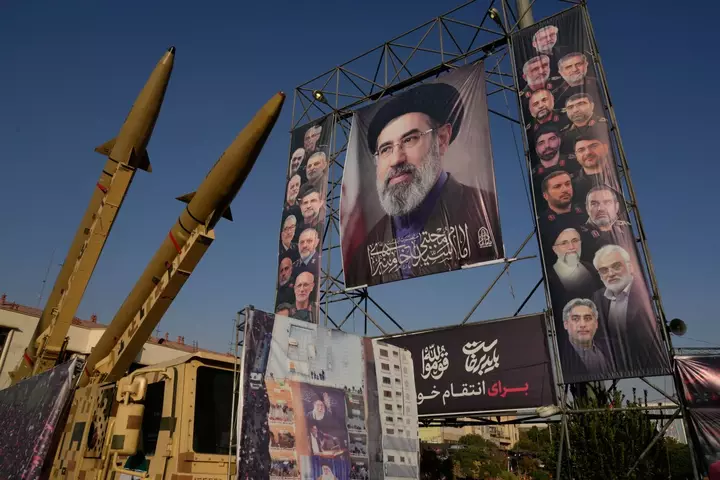
Iranian Supreme Leader Ayatollah Mojtaba Khamenei has ordered military commanders to update target lists of U.S. and Israeli assets and called for an immediate armed response to any renewed threat, state media reported Saturday, amid growing concerns over a potential escalation in the regional conflict. The directive comes as regional mediators race to broker a diplomatic solution between Washington and Tehran, eight months after a joint U.S.-Israeli bombing campaign sparked full-scale hostilities. The opening strikes killed Iran's longtime Supreme Leader Ayatollah Ali Khamenei, whose son, Mojtaba Khamenei, was subsequently selected as the country's new supreme leader.
In response, Iran and its aligned regional forces have engaged in a campaign of missile, drone, and maritime strikes against neighboring Gulf states hosting U.S. military bases and commercial shipping lanes in the Strait of Hormuz. Speaking during a meeting with senior military commanders, Khamenei said “any kind and level of threat” should face an immediate response, according to Iran’s official IRNA news agency. Tasnim News Agency, a state-aligned outlet affiliated with the Islamic Revolutionary Guard Corps (IRGC), reported that Khamenei called for “an immediate and effective response without geographical limitations” to place U.S. and Israeli “material and immaterial assets” within potential reach of Iranian forces.
His statement did not identify specific countries or targets. The report added that Khamenei ordered improvements to Iran’s intelligence infrastructure, military doctrine, tactics, and use of modern technologies. Iranian army spokesperson Mohammad Akraminia echoed the supreme leader's warning in a post on X.
The escalating military rhetoric coincides with indirect diplomatic efforts aimed at averting further clashes. Saudi Vice Minister of Foreign Affairs Waleed Elkhereiji said efforts were underway to prevent another military escalation and reach an agreement ending the crisis. Iranian Foreign Minister Abbas Araghchi told Al Jazeera that Tehran had reviewed a letter from Vice President JD Vance.
Araghchi said an aide was in Qatar to continue consultations, while Qatari and Pakistani mediators were discussing Iran’s conditions. Iranian negotiators arrived in Doha Saturday after more than 12 hours of talks between mediators and Iranian officials in Tehran, reported. The Qatari team remained in frequent contact with U.S. negotiators during those discussions, according to an official briefed on the negotiations.
When asked by reporters on Thursday if Vance's letter was an outreach to restart peace talks with Iran, President Donald Trump said that it was about helping the country get medical supplies. The following day, the president said that “Iran is finished” and predicted the conflict would “end soon,” while describing the deaths of 18 U.S. service members as “far too many.” The president's remarks came just a few days before the November 3 midterm elections, as questions persist about how and when the war will end, with American personnel still at risk, tankers facing attacks and mines in the Strait of Hormuz, and escalating Houthi strikes threatening Saudi Arabia from neighboring Yemen. Newsweek’s reporters and editors used Martyn, our AI assistant, to produce this story.
Extract — continue reading at the source.