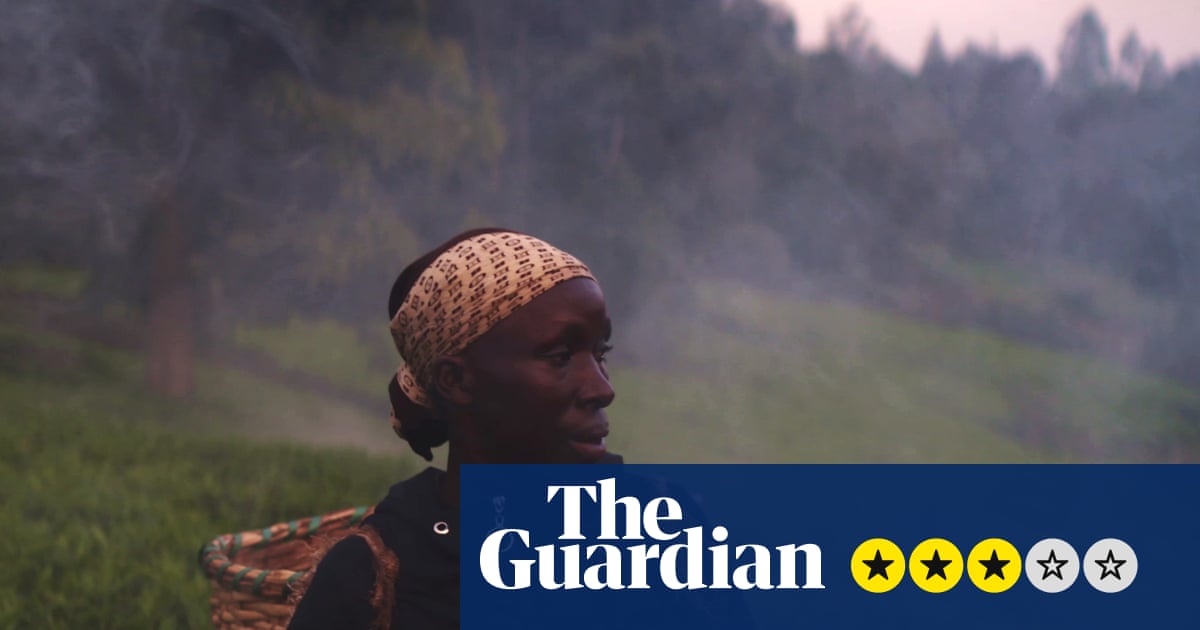
The central highlands of Kenya are renowned for their lush tea plantations, which stretch as far as the eye can see. Most of the field workers come from the Kikuyu community, whose farming traditions span centuries. In Andrew Harrison Brown and Bea Wangondu’s sobering documentary, these resplendent vistas are also enshrouded in misery.
Opening with a televised speech by Evelyn Baring, the colonial governor of Kenya during the 1950s, the film lays out the imperialist impetus behind Britain’s agricultural development of the country. The Kikuyu people were stripped of their ancestral lands, their labour extracted to enrich their colonisers. This system of inequality continues until now, with multinational corporations taking up the playbook of exploitation left by colonial control.
An investigative journalist, Wangondu also appears on screen weaving together a multitude of narratives. There’s the decades-long struggle for justice undertaken by Mr Mungai, a pastor and activist who has fought numerous court cases to reclaim his family land. Wangondu talks to plantation workers of past and present, whose harrowing ordeals of physical and sexual violence have been swept under the carpet by both corporate indifference and government corruption.
We also hear from an officer in the national intelligence service, who reveals the gruesome methods used by the state to dispose of its critics. These interviews conjure a menacing atmosphere of intimidation and retaliation, from which there seems no way out. The film then takes a dramatic turn when Wangondu discovers an uncomfortable family secret: her beloved grandfather, a well-respected landowner, was also a perpetrator of colonial abuse.
The shattering revelation not only collapses the distance between Wangondu and her subjects, but also points to other forms of complicity. For lovers of tea worldwide, Kikuyu Land suggests that ordinary consumers take a cold hard look at where their product comes from.
Extract — continue reading at the source.