Arlinda Zekaj repeatedly asked the Kosovo police for protection. They believed she was exaggerating. On October 25, the 49-year-old once again reported her husband to the police.
This time, he was arrested. But Zekaj also asked the police for additional protection — this time against her husband's family. The police drove Arlinda Zekaj home, where her killer was waiting.
At 8:58 p.m., Zekaj got out of the squad car. A short time later, the police received an emergency call. When officers arrived at Zekaj's house at 9:10 p.m., they found only her body.
The 49-year-old had been brutally murdered in her bedroom with an axe. By that time, the alleged perpetrator — her brother-in-law, Albert Sylaj — had fled. The murder, which took place in the village of Vitomirica near the city of Peja in western Kosovo, has sparked numerous public protests and demonstrations involving thousands of people across the country.
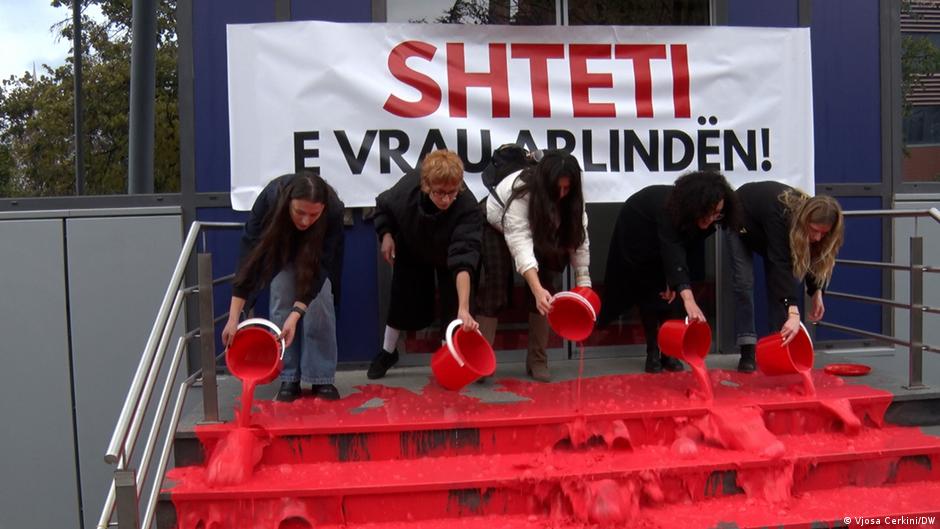
This was the eighth femicide in Kosovo this year — and apparently the most brutal. More so than almost any other femicide in the country in recent years, Zekaj's death showed that one of the things that made her killing possible was the fact that police and prosecutors ignored the victim's pleas for help . One of the first protests took place the following day, on October 26, when a group of feminists emptied buckets of red paint on steps outside the seat of Kosovo's government in the capital, Pristina.
"The state killed Arlinda," read a banner the activists hung at the entrance to the building. In the days that followed and on November 1, public anger brought thousands of people onto streets across the country. Many carried photographs of murdered women.
Extract — continue reading at the source.