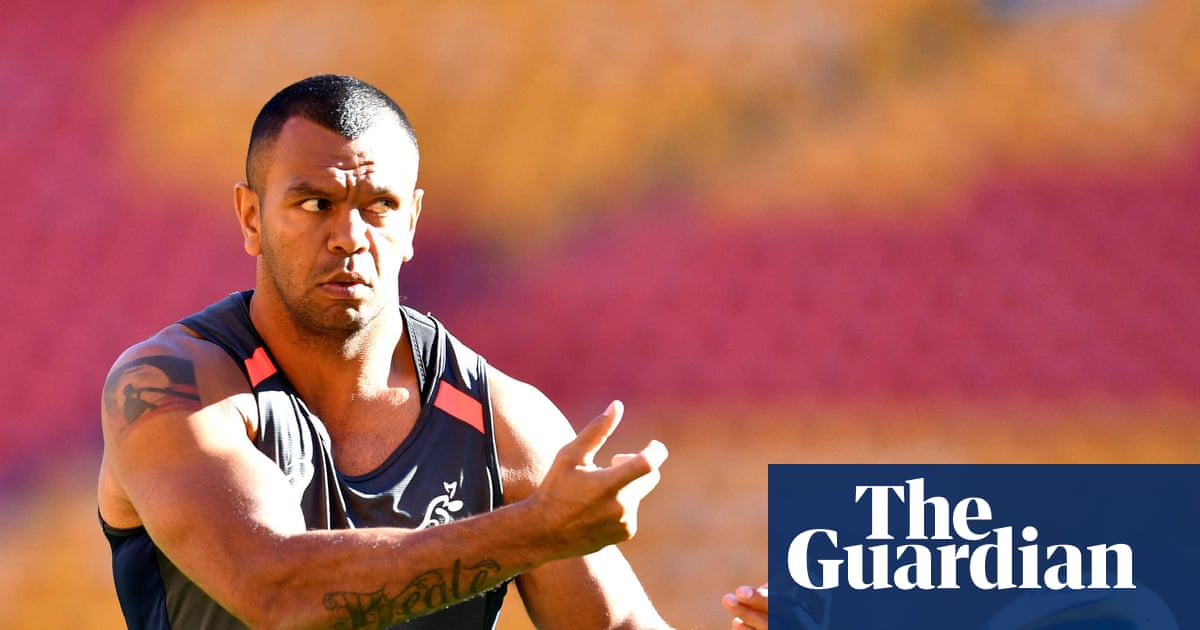
Rugby Australia have been open about their ambition to revive union’s golden past at next year’s men’s World Cup. Wallabies coach Les Kiss appears to have taken it literally. His recall of Kurtley Beale, who turns 38 in January, for the Nations Championship this month is the final sweep in the playmaker’s staggering story arc.
One that began with birth in Blacktown in the late 1980s, through a childhood in Mount Druitt, that loops through his private high schooling and debut for the Waratahs in – check that date – 2007. The surprising thing is how his body has managed to just about keep pace. In the days after the last time he was recalled to the Wallabies, at age 35, Beale suffered an Achilles rupture playing club rugby.
It’s the kind of serious injury that can cruel the careers of those in their athletic prime, worse typically than a leg break or even the dreaded tear of an anterior cruciate ligament. Most believed it to be the end for one of the Wallabies’ entertainers of the 21st century. His retirement then might have been poetic, a career which never fulfilled its early promise, brought to a close after a noble, final acknowledgment by Wallabies selectors.
At the time, he told then-Wallabies coach Joe Schmidt he would be back. Less than a year later, he was playing Super Rugby again. Lining up at No 12, Beale helped the Force to a Super Rugby Aus title last month playing outside flyhalf Harry McLaughlin-Phillips, who debuted for the Wallabies against the All Blacks.
Beale has only been given a train-and-trial contract with the Force for next year, after they signed his former Wallabies teammate James O’Connor. It might be considered a slight, but Beale regards the arrangement as another chance. I’m glad that I’ll be able to do that with the Force and hopefully, I’ll push along there too.” He returns to a Wallabies team desperate for a sure hand among their most influential ball players.
The merry-go-round at flyhalf still spins, suspension and injury has ravaged at centre, and full-back in Tom Wright has yet to produce his best form under Kiss. In his 95 caps for Australia, Beale has seen peaks like few others, having won the John Eales Medal in 2011 and played at three World Cups, including in the final in 2015. Yet through a succession of off-field controversies in those early years he gained the reputation of a wayward star.
Extract — continue reading at the source.