There may be three reasons why the Labour government has hesitated until now to reheat the Tories’ decade-long help-to-buy scheme. First, the inflationary risks of throwing subsidies at the housing market at a moment when wider inflation, driven by energy prices and the Iran war, is on the march. Second, the political awkwardness of turning to George Osborne’s playbook.
Third, the spectre of Jeff Fairburn, the shameless former boss of Persimmon who bagged a £75m bonus in 2018 as help to buy turbo-charged the value of his share-based incentives. The government would look foolish if, in its desperation to meet its housebuilding targets (or just miss them by a smaller margin), it created more Fairburns. So is Your First Home – Labour’s incarnation – justified?
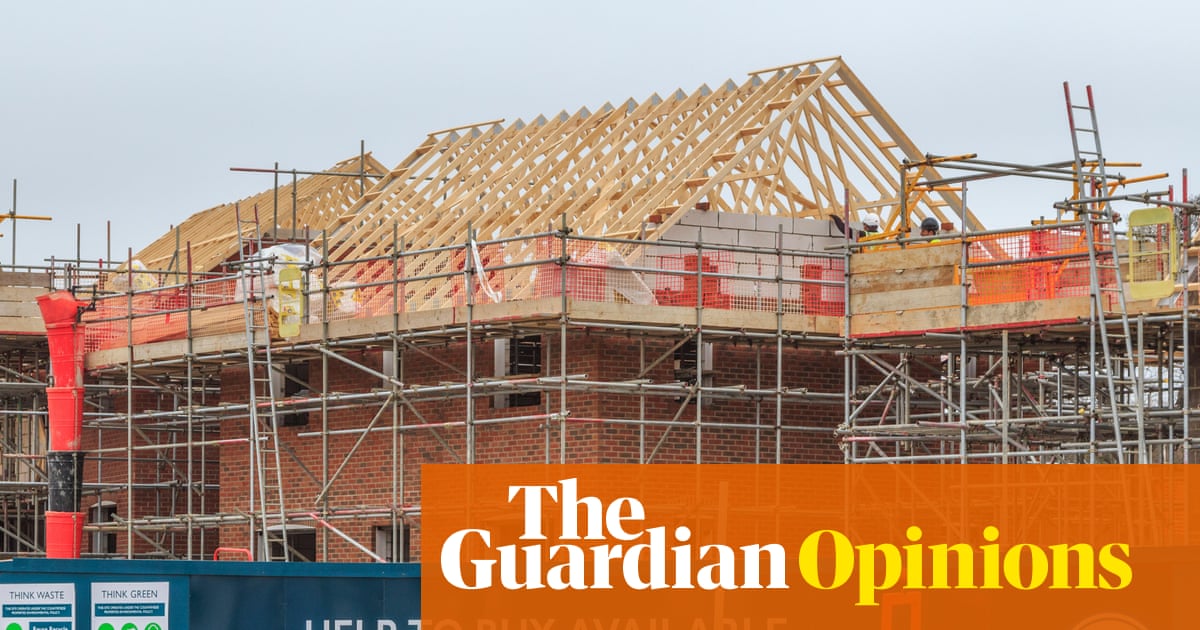
On balance, it’s probably worth a punt. Something has to happen to try to shift the housebuilding sector out of its current funk. The way things are going, and the way mortgage rates are heading, Labour won’t merely miss its target of 1.5m new homes in England in this parliament, it will be short by a few hundreds of thousands.
Like it or not, the government needs the private firms to boost construction. At the moment, the prevailing narrative is grumbles over labour costs, raw material costs, tax, regulation and more. Share buy-backs are being preferred over new projects.
A tweak on the “affordability” dial at least has the virtue of getting results. Or, at least, that was a top-line conclusion in the official independent report published by the housing department earlier this month on help to buy. The scheme represented “very high value for money”, it said, with a net present social value of £25.1bn, in 2025 money, over its 2013-2023 lifetime thanks to the increase in housing supply.
As for the inflationary impact, the report put it at two percentage points – far lower than popularly believed. From the government’s point of view, those trade-offs will look attractive when there is little else to excite in the economic outlook for 2027. Being seen to do something for aspiring first-time buyers unable to get on to the housing ladder is rarely a bad political look.
Extract — continue reading at the source.