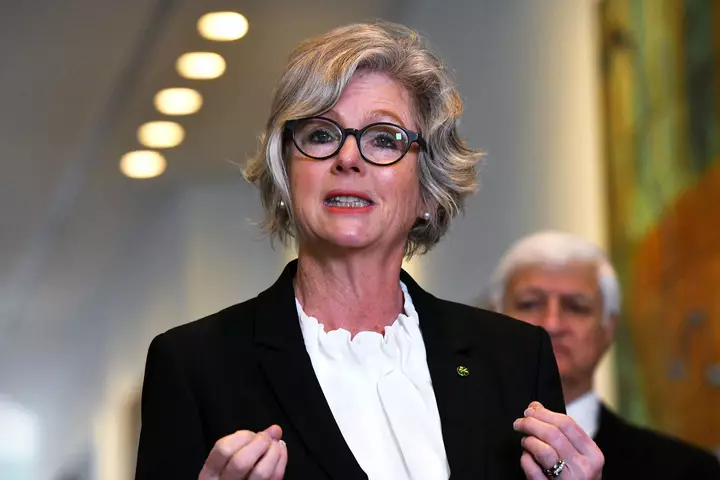
An Australian lawmaker was in critical but stable condition Tuesday after being hit by a car in what authorities said was a deliberate attack, shocking a nation where political violence is extremely rare. Helen Haines, a 65-year-old independent member of Parliament, was struck Monday by a white Toyota Land Cruiser outside her electoral district office in Wangaratta, a town of about 30,000 people in the southern Australian state of Victoria. She underwent surgery overnight after being airlifted to a hospital in the state capital of Melbourne, about 150 miles away.
Local media reported that one of Haines’s legs had been amputated and that she was fighting to keep her other leg. The Alfred Hospital in Melbourne did not respond to an NBC News request for comment on the reports. Police charged the driver, who they said was a 43-year-old local man, on Tuesday with intentionally causing serious injury, dangerous driving causing serious injury and causing harm to a federal official.
Prime Minister Anthony Albanese said earlier Tuesday that according to eyewitnesses, the driver had passed Haines and then performed a U-turn, hitting her as she was standing by the trunk of her parked car. This wasn’t an accident, someone, you know, just skidding off the road,” he told the Australian Broadcasting Corp., adding that the motivation was not yet clear. Home Affairs Minister Tony Burke told the ABC that witnesses had described seeing the driver reverse and then hit Haines a second time.
The suspect’s father said the family knew Haines well. She was a “deeply respected, valued and much loved member of our local community,” Brendan Nugent’s father Rod Nugent and Rod’s partner Christine Cunningham said in a statement Tuesday. Political violence is extremely rare in Australia, where lawmakers are often out in public with little or no security and their accessibility is a point of national pride.
But threats are rising as political rhetoric becomes more extreme, officials and experts say, particularly since the Covid-19 pandemic. According to the Australian Federal Police, there were 1,067 incidents of threats, harassment, nuisance or offensive behavior against senior officeholders, parliamentarians and protected locations in the 2025-26 financial year, a 12% increase over the previous year and twice the number five years earlier. In a 2023 study of Victoria state parliamentarians, 82% reported harassment and 85% reported threats of harm, said Josh Holloway, a senior lecturer in government at Flinders University in Adelaide, with female politicians more likely to face abuse.
Holloway said that Australian federal lawmakers, especially those in rural areas, typically work from “shopfront-style offices,” hold regular community meetings and attend local events without security. Those practices may now come under scrutiny, “but reducing public access to their representatives can come with significant democratic cost,” he said in emailed comments. Albanese said Tuesday that it was everyone’s responsibility to “turn the temperature down.” “We can disagree with each other, but do it in a respectful way,” he told Australia’s “Today” show.
Extract — continue reading at the source.