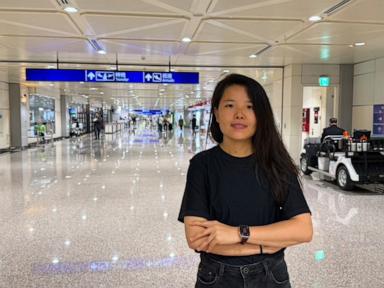
A Chinese lawyer who defended an underground church in Beijing has fled to Taiwan and is seeking help for resettlement HONG KONG -- A Chinese lawyer who defended a prominent underground church in Beijing fled to Taiwan and is seeking help for resettlement, following mounting pressure from Chinese authorities on her firm and her colleagues. Ruth Wang, partner at VDoor Law Firm, is part of a legal team that has represented pastors and others from the Zion Church in Beijing since October 2025. In an exclusive interview with The Thursday, Wang said she is now facing direct pressure from Chinese authorities, who told her that she and her colleagues must dissolve their firm or be shut down by authorities.
Last October, 18 members of the Zion Church in China, including its founder, pastor Ezra Jin, were arrested in one of China’s largest crackdowns on a single church in decades. Jin was freed two months ago, after U.S. President Donald Trump brought his case to his Chinese counterpart Xi Jinping during a May meeting.
Zion Church, founded by Jin in 2007, is among the largest so-called underground or house churches that are unregistered with the Chinese authorities. They defy Chinese government restrictions requiring believers to worship only in registered congregations. Sean Long, a Chinese Zion Church pastor currently studying in the United States, told the AP last year that its membership includes over 5,000 people, with over 100 worship sites in apartments, restaurants, and even karaoke bars in around 40 cities across China.
Under Beijing’s tightening grip, lawyers assisting those who authorities viewed as dissidents also have faced pressure. VDoor has recently encountered a series of challenges. The license of the firm's founder and Wang's mentor, Zhang Kai, was revoked, and he was barred from leaving the country; other lawyers at their firm were suspended from practicing for six months, Wang said.
Judicial authorities have requested the firm's lawyers to stop representing cases linked to Zion Church and leave the company, she said. When some of the firm's lawyers wanted to switch to other firms, they faced restrictions, she added. While on summer vacation in Japan with her family last month, Wang said Chinese authorities called and asked her to come meet them in person.
She told them she couldn't as she was not in Beijing, and then decided not to go back. Bob Fu, founder of ChinaAid, a nonprofit human rights organization based in the U.S., said Wang’s case demonstrated the enormous pressure facing lawyers who dare to defend persecuted Christians and “other prisoners of conscience.” “Attorney Wang sought to fulfill the most basic responsibility of a lawyer,” he said. He also called on the U.S. and other democratic governments to be prepared to assist Taiwan in finding a solution.
Extract — continue reading at the source.