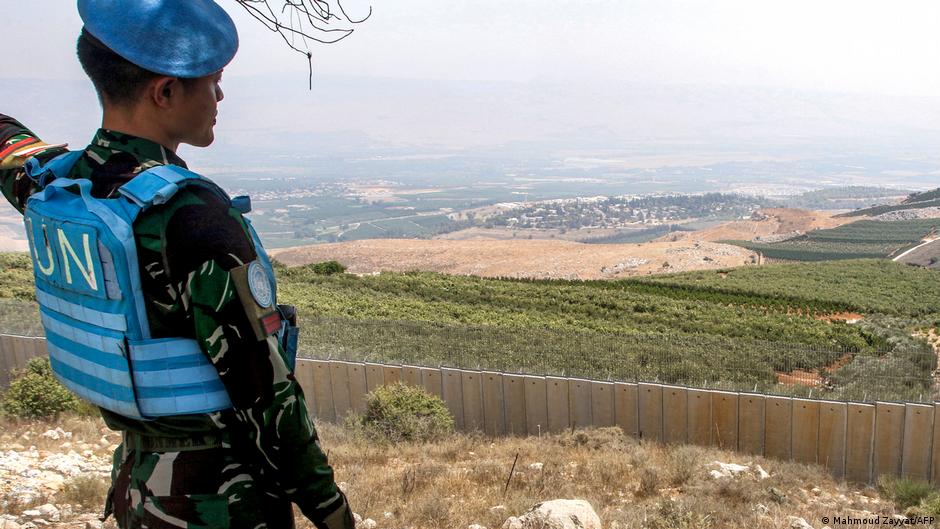
As the mandate of the United Nations Interim Force in Lebanon, or UNIFIL, nears its end, uncertainty over the future of southern Lebanon is growing. Lebanese Prime Minister Nawaf Salam has warned of the need to "avert the vacuum that UNIFIL's withdrawal could create, were it to take place without agreement on a new international force to replace it." The Lebanese government has also been pushing for a last-minute extension of UNIFIL's mandate, but so far without success. It is most likely that the 7,565 peacekeepers from 46 countries will begin withdrawing from the UN-patrolled so-called Blue Line zone on December 31, 2026.
The Blue Line, which stretches for 120 kilometers (75 miles), is a UN-identified line of withdrawal between Israel and Lebanon, not an internationally agreed border. It was established in 2000. However, as early as in 1978, multinational UNIFIL troops were deployed to this region to monitor the area after Israel invaded Lebanon in response to attacks by Palestinian armed groups.
After the 2006 Israel-Hezbollah war, the mandate was expanded to support the Lebanese army in implementing UN Security Council Resolution 1701. The resolution calls for an area between the Blue Line and the Litani River to be free of armed personnel, assets and weapons other than those belonging to the Lebanese government and UNIFIL. It also calls for the withdrawal of Israeli forces from southern Lebanon.
However, following cross-border attacks by Hezbollah in October 2023 and the ensuing war in 2024, Israel has been occupying large swaths of Lebanese territory in a self-declared security zone called the Yellow Line, which is located north of the Blue Line. Of the more than 1.2 million people displaced in Lebanon during the renewed conflict in 2026, around 329,000 remained internally displaced as of September 29, according to the International Organization for Migration. Israel has also caused extensive destruction to homes and key infrastructure in southern Lebanon, saying it needs to protect its citizens in northern Israel from attacks launched from the area.
Hezbollah — which is designated as a terrorist organization by several countries, including the United States and Germany, while the European Union designates its armed wing as a terrorist organization — continues to reject disarmament, citing the need to defend itself for as long as Israeli forces remain in Lebanon. Hezbollah is also closely linked to Iran, and in case of renewed conflict between Iran and Israel, it's likely that Hezbollah would open a second front in Israel's north in support of Iran. "The situation in southern Lebanon remains tense," Kandice Ardiel, UNIFIL's spokesperson, told DW.
"We are seeing continued Israeli military operations, including overflights of Lebanese airspace by jets, helicopters and drones, airstrikes, artillery strikes and mortar fire." "Until our mandate ends on December 31, we continue to monitor and report what is happening, and we are liaising between the parties on a daily basis to ensure safe movements of civilians, humanitarian aid, and peacekeeping patrols," she said, adding that the drawdown and withdrawal would then take place in stages. The end of the mandate also means the end of the mission for thousands of UNIFIL troops in southern Lebanon. "People have built careers, friendships, skills and a sense of purpose together," Ardiel said.
Extract — continue reading at the source.