Directed by Frank Berry, the powerful drama details the tireless work of local historian Catherine Corless that helped uncover a secret mass grave at a mother-and-baby home. Liam Neeson was in his home in upstate New York in late 2017 when he was sent a link to a New York Times article about a shameful episode in Ireland’s history. Almost a decade on and he tells Variety he’s “still coming to terms with my reaction to it.” The piece, written by Dan Barry, laid bare the shocking revelations from a Catholic home for mothers and babies in County Galway on Ireland’s West Coast, where over the course of several decades until the early 1960s almost 800 infants and children had been buried in unmarked graves, unceremoniously dumped in a sewage tank and forgotten about.
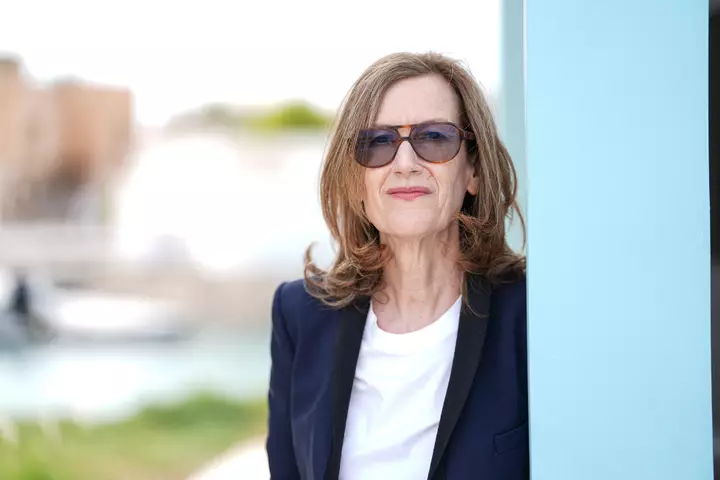
At the center of the article was Catherine Corless, an amateur local historian whose tireless dedication and unwavering sense of moral justice, often in the face of indifference (and, in the case of the Catholic Church, resistance), would help bring the appalling story to light. Corless’ work had already sparked national fury in Ireland, but Barry’s words would bring it to a wider, international audience, including one of the Emerald Isle’s most famous stars. I was an altar boy for a bunch of years, and I was kind of staggered by it.
And, for the first time in my professional life, I remember thinking: ‘Whatever my celebrity status is in this business, I want this story to be shown to more people.” So “viscerally struck” was Neeson that he decided to take a leap from his prolific on-screen career (he passed 100 film credits a few yearsa go) and turn producer for the first time, optioning the article for what would become “The Lost Children of Tuam” (the same name as the article), which now screens in Toronto having had its world premiere on home soil at the Galway Film Fleidh. Directing from a script by Rebecca Lenkiewicz (“She Said”) is acclaimed Irish filmmaker Frank Berry, best known for “Michael Inside” and, more recently, “Aisha.” “When I saw those films, I thought — this is the man to tell this story,” says Neeson, who would also bring on board producers including frequent collaborator Jules Daly and Irish powerhouse Element Pictures. And especially with this, you do not want to highlight the horror.
You just let the story breathe, and the horror will reveal itself.” Berry may have been brought onto the film a few years after Neeson acquired the rights to the article, but says he was instantly “aware of the immense responsibility” involved. How would survivors feel when they’re watching this scene or when they’re listening to this dialog?,” he says. Neeson would eventually go to meet Corliss in her home (“I did not arrive by helicopter,” he notes).
But it was wait everyone was prepared to make to get it right. Much of the film was shot in on location in and around the town of Tuam itself — “it was very important for us to be authentic,” says Berry — where the director met a number of survivors of the home. Some of them would go on to appear as extras (Neeson says that, beyond a period where “it was in my head for about 10 seconds,” there was never any question about him starring on screen).
A lot of that pain is is hidden in Ireland and there’s a lot of wounds in Ireland that need air.” For Corless, her devotion to the story and her support for the film came with on core goal: to excavate the area around the home, to have the children reburied respectfully and for them to be remembered. And she’ll rest when that happens,” says Berry. For Neeson, who asserts that “The Lost Children of Tuam” may be his solitary producer credit, he cites a a line from someone else to underline the importance of Corless’ work.
Extract — continue reading at the source.