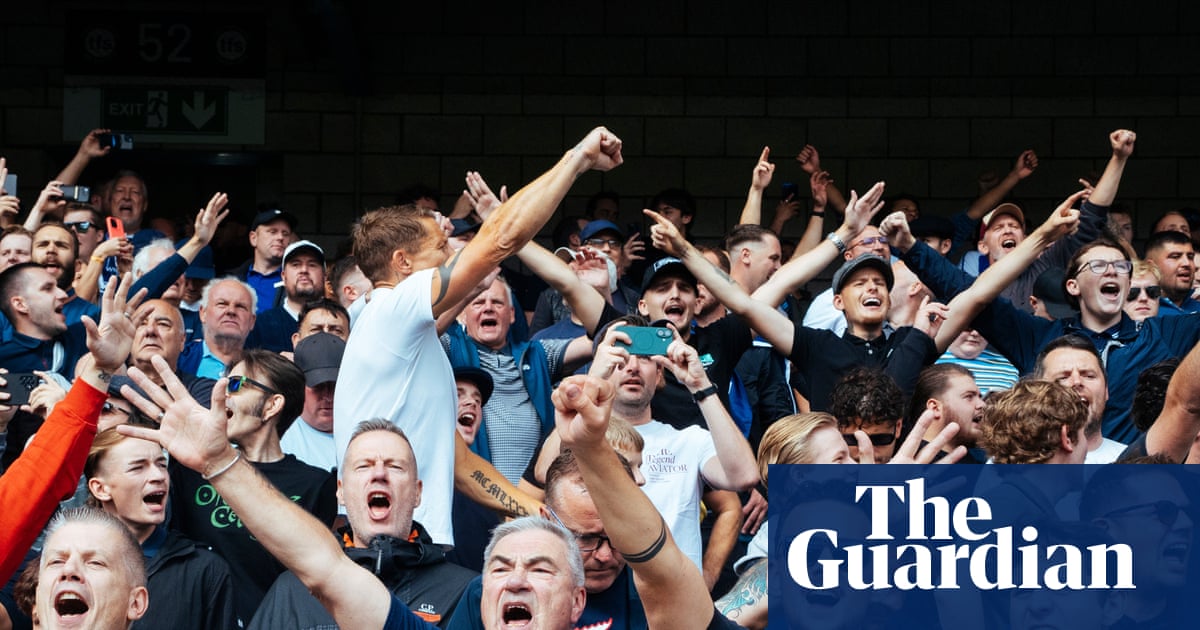
It was the 100th competitive meeting between the clubs, and the first in 14 years. The two teams are separated and connected by the Thames. They were formed around the heavy industries of east London’s docklands in the late 19th century and were geographically much closer then – Millwall on the Isle of Dogs and Thames Ironworks, from which West Ham emerged, around Canning Town.
Before Millwall relocated south of the Thames to New Cross in 1910, both were north of the river and only a little over two miles apart. Now the Lions, Millwall were known as the Dockers during their formative years. West Ham’s nickname, the Irons, refers to their origins among workers at the Thames Ironworks and Shipbuilding Company.
Dock work was precarious and physically demanding. Men could turn up each morning with no guarantee of being chosen for work, and competition for a day’s labour could be fierce. That world fostered ideas of toughness, loyalty and hard work which still form part of how both clubs understand and present themselves.
With histories stretching back so far, it can be difficult to separate fact from folklore. One enduring story places the origins of the rivalry in the General Strike of 1926, when West Ham dock workers supposedly supported the strike while those at Millwall did not. Historians David Sullivan and Brian Belton dispute that version.
Belton says the strike was solid in the Millwall docks, while only a handful of workers broke ranks around Canning Town. Yet the story has survived for a century and become part of the mythology surrounding the fixture. The clubs’ histories first crossed in the 1890s, when Millwall Athletic played Thames Ironworks.
Belton cautions against treating Thames simply as an earlier West Ham as the company team was dissolved before the new club was formed in 1900. Sullivan and Belton both question the idea of an ancient Dockers Derby. Much of the hostility associated with the fixture today developed later, particularly during the 1970s.
Extract — continue reading at the source.