Coffee shops are more than just a staple stopover on Americans’ way to work. They’re a massive part of the U.S. economy, contributing over $300 billion annually, approximately 1.3% of the total GDP, according to the National Coffee Association Economic Impact data summary. That’s more than the economic impact of the motion picture industry and the video game sector.
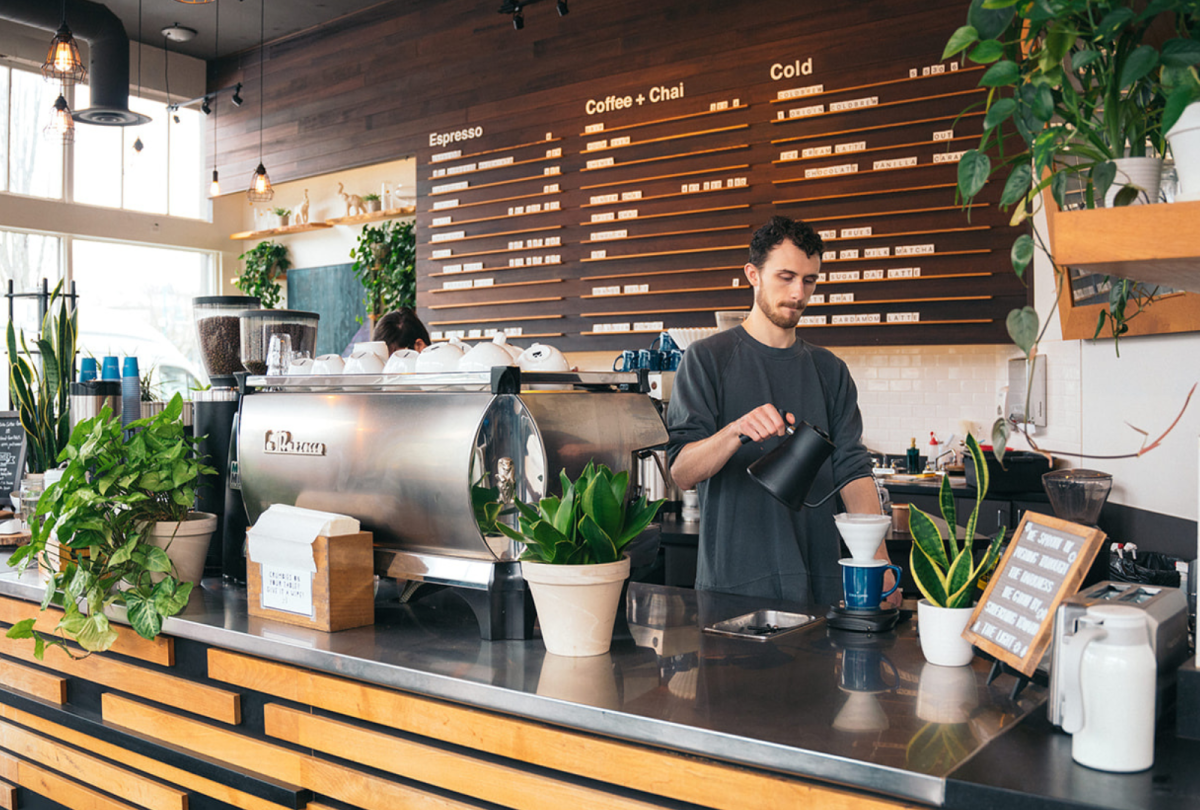
Despite Starbucks and Dunkin’ dominating the conversation, there are nearly as many independently owned coffee shops in the U.S. as there are coffee chain stores. Data from Statista shows that in 1990 there were 1,650 specialty shops. That number reached 31,490 by 2015 as coffee drinking was adopted by 73 million Americans during that time.
Today, there is nearly double that number, out of a total of approximately 125,000 total shops. Local coffee shops aren’t just operating in today's challenging economic conditions, they’re operating without the large financial safety net that large corporations have. While those corporations add structure and sameness that is appealing to some, smaller operations are able to be agile and deliver a more personalized experience for their customers.
After two decades in business, Ike Escava, the owner of The Bean coffee shop in New York City has seen it all. I was operating, making some money and using whatever money I was making to open another location and it was wasn't going that smoothly. I opened and closed two locations over a course of about five or six years," he told Newsweek.
Toward the end of his 10-year lease at his original East Village location, he alleges that he was mislead by the business' then-landlord into thinking that the Manhattan location of his shop on was the permanent home of The Bean. He says that he offered to pay his landlord a year’s rent in advance to ensure that he was able to continue operating out of that space, but despite consistent reassurances from the landlord, something felt off so he began looking at other possible locations. There’s this store on the corner of First Avenue and Second Street, boarded up, and there's a sign on the boards that says ‘Call Crazy Landlord,’ and I never called because I never had any reasons.
But that day, I felt like maybe I had a reason. So, I called the number, and the crazy landlord picks up and he says, ‘Yeah, this is the crazy landlord,’” Escava said. After some back and forth, Escava and the so-called crazy landlord made a contingent deal to move The Bean to the boarded-up storefront.
Extract — continue reading at the source.