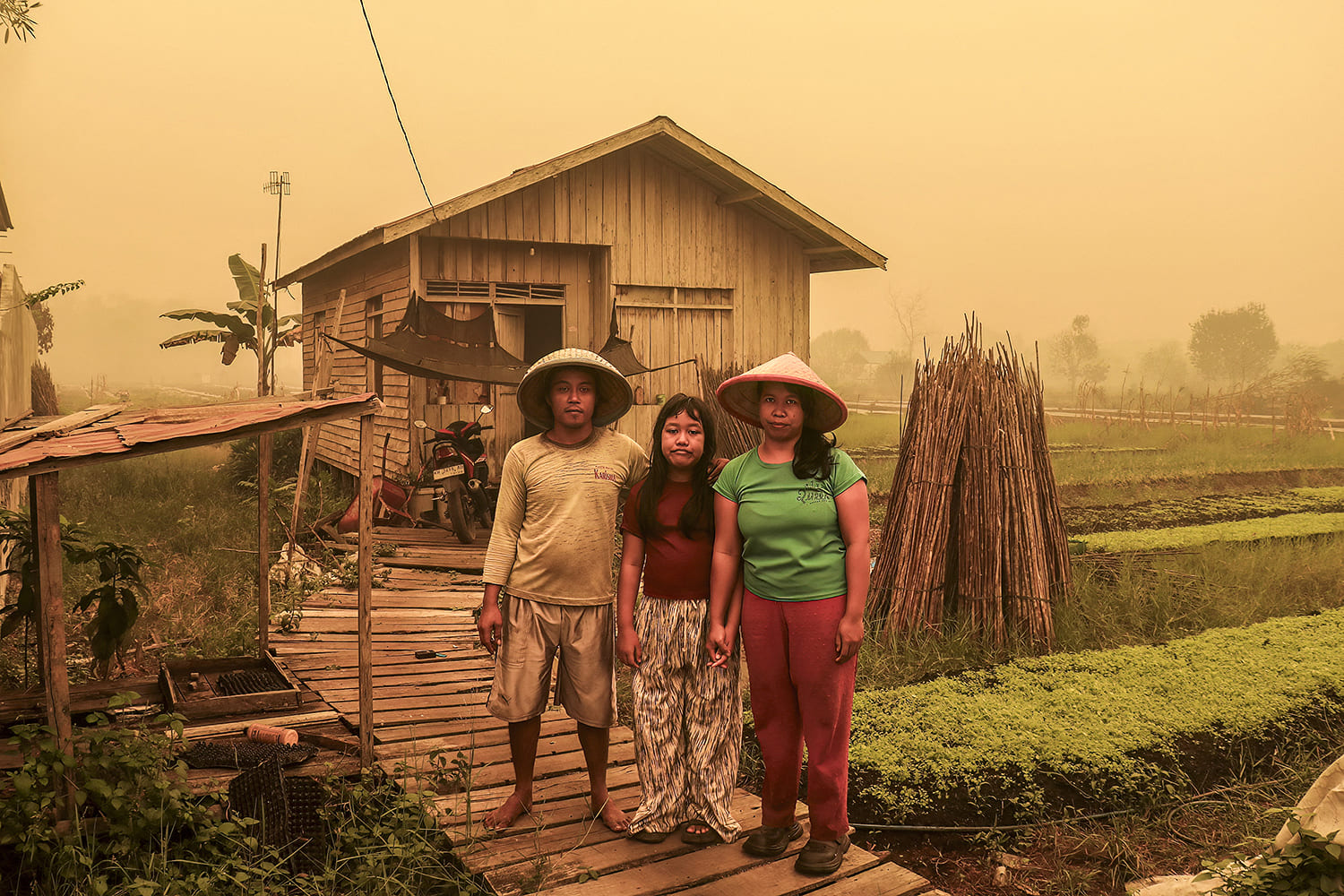
Almost every day for months, Indonesian schoolteacher Natanael Undas has gazed up at smoke-filled skies in apocalyptic shades of yellow and orange. Although his family keeps the windows shut at all times, the noxious smoke penetrates the house anyway, sending Undas’ 2-year-old daughter into constant sneezing fits amid a spike in respiratory illnesses in haze-affected regions. Wildfires are nothing new in Indonesia, whose forests and peatlands are set ablaze each year as family and commercial farms clear land using traditional “slash and burn” methods.
But the fires this year are far worse than usual, said Undas, who has been documenting Indonesia’s air quality on Instagram since 2014, as heat and drought aggravated by a “super” El Niño weather pattern make this the country’s worst fire season in over a decade. Wildfire smoke covers Indonesia skies in orange haze The unrelenting haze from the fires has affected millions of people in the region since they started in July, closing schools in multiple countries and spurring arguments about who is to blame. Indonesian protesters have accused their government of insufficient action, while other countries are threatening prosecution.
On Wednesday, hundreds of Indonesian students and members of civil society groups protested in the capital, Jakarta, and other cities against the policies of President Prabowo Subianto, including his resistance to declaring the fires a national disaster. The fires have also caused frustration in countries such as neighboring Singapore, where air pollution this month reached its highest level since 2015, when Indonesian wildfires were also intensified by El Niño. Singapore officials have threatened to prosecute companies seen as responsible for the devastation, and on Tuesday the foreign ministers of Singapore and Indonesia said they were considering a joint task force to combat illegal land burning.
Indonesia’s neighbors and other countries have been accused of contributing to the problem. In a report this month, the Indonesian environmental organization Walhi named 66 companies with links to Singapore and 27 companies with links to Malaysia that it said were associated with fire hot spots. On Thursday, the Indonesian government said police had identified 20 corporations suspected of being involved in the fires, including four from Singapore, Malaysia and South Korea.
The Malaysian government has denied that any Malaysian companies are involved, while the government of Singapore did not respond to a request for comment. Even as fingers are pointed across borders, the fires have been causing disruptions across the region, even threatening 67,000-year-old cave paintings on the Indonesian island of Sulawesi that are the oldest in the world. The haze also marred Singapore’s annual Formula One night race this month, obscuring the city’s iconic skyline during the globally watched event.
A Singapore-focused study published in September found that short-term increases in airborne fine particulate matter were associated with increased emergency department visits for asthma and other chronic respiratory illnesses. According to the study, spikes in such visits in 2016 and 2019 coincided with periods of haze caused by Indonesian wildfires. In Indonesia, more than 283,000 cases of respiratory illness linked to the current fires had been reported in seven provinces as of Oct. 13, more than double the 113,000 cases reported as of Sept. 9, reported, citing Health Ministry data.
Extract — continue reading at the source.