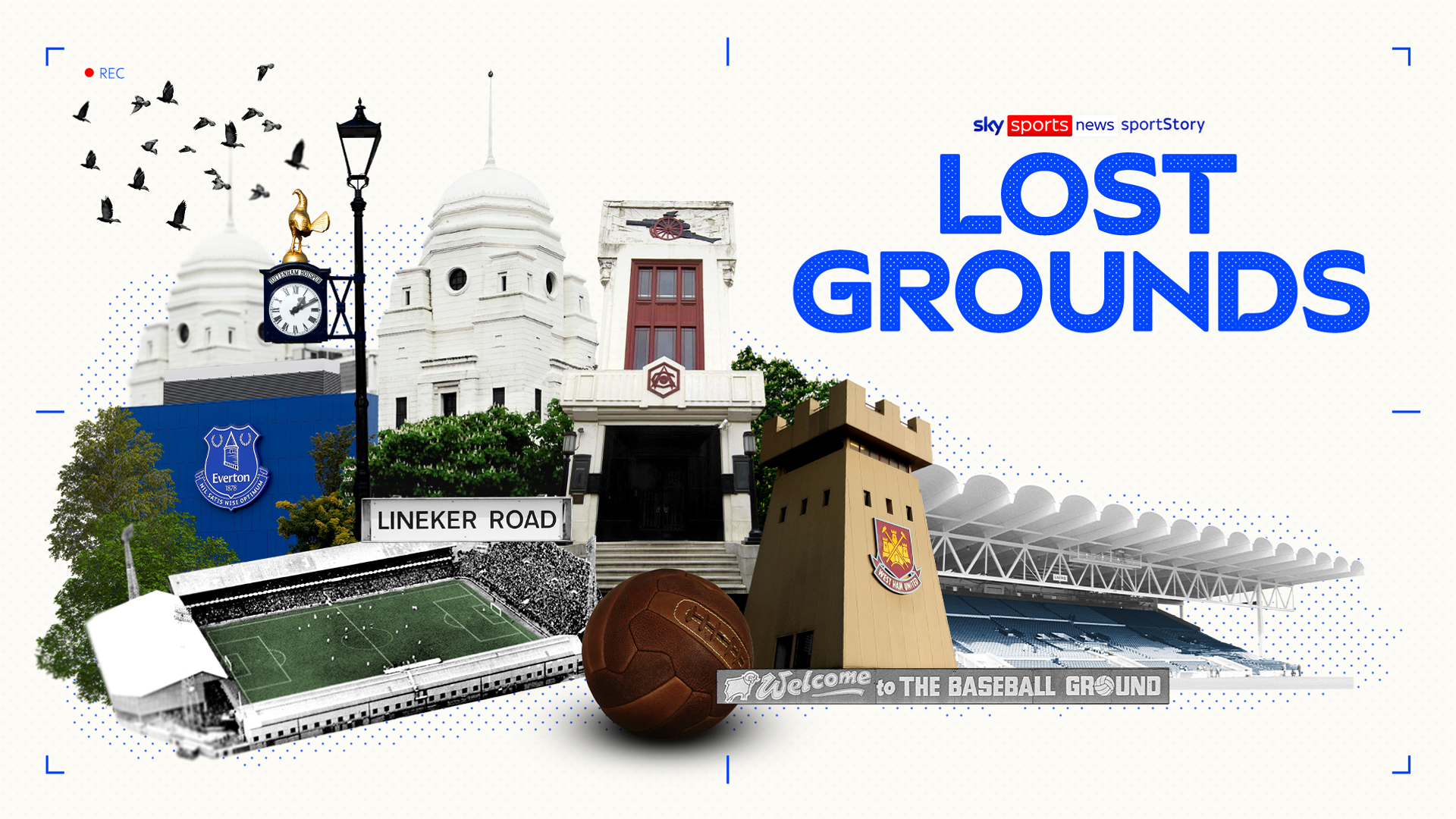
Football grounds are not just where the game is played but where it is remembered. They are the places where generations return to the same turnstiles, climb the same steps and take their place in the same stands. They become landmarks in their own right — woven into the identity of a club and the neighbourhood around it.
But football is always changing. Stands and terraces have been demolished beneath new developments. Clubs have moved across towns and cities.
Where thousands once gathered on a Saturday afternoon, there may now be a supermarket, a housing estate or nothing at all. Yet a football ground rarely disappears completely. Its name survives in old photographs.
Its outline remains faintly visible in the streets around it. Supporters remember where they stood, where they celebrated, where they watched their team win — and where they said goodbye. These are the stories of football's lost grounds: the iconic stadiums that once formed the backdrop to the game, and the traces they left behind.
Manchester City played at Maine Road for 80 years before moving to the City of Manchester Stadium built for the 2002 Commonwealth Games. Maine Road had a capacity of 35,150 but its record attendance was more than double that when 84,569 supporters watched their FA Cup sixth-round tie against Stoke in 1934. Man City beat Man Utd in the final Manchester derby at Maine Road with help from a mistake by Gary Neville.
Maine Road was demolished in 2003 and is now a housing estate with a circular plate symbolising the centre spot. Women and children are passed over the heads of the crowd during the Burnden Park disaster The supermarket that has been built on the site of Burnden Park One of the most iconic aspects of the ground was the railway track where trains would run behind the stand and it was captured in the 1955 film The Love Match. Burnden Park was also the scene of one of the worst tragedies in British football history when 33 Bolton fans were crushed to death and another 400 injured during an FA Cup quarter-final second-leg tie against Stoke City in 1946.
Extract — continue reading at the source.