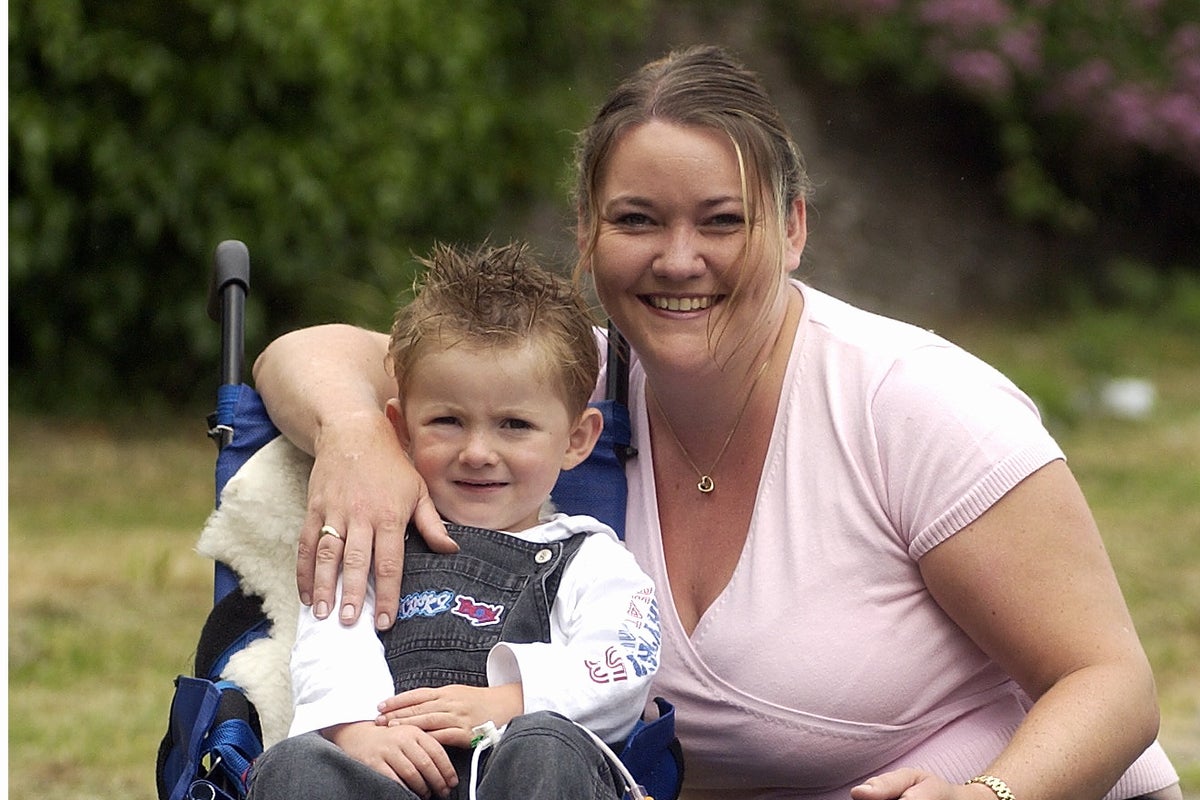
It is a rhetorical question; she is not really interested in the answer. Over three episodes, Love You to Death unfurls a troubling story of control, abuse, narcissism, delusion and, ultimately, denial. When Matthew Hayden-Johnson was born prematurely in 2001, his mother Lisa was, understandably, concerned.
These concerns turned into a nightmare: Matthew suffered from a range of debilitating intolerances, as well as conditions like diabetes and cystic fibrosis, and needed a stroller to help him walk, earning him the nickname “buggy boy”. But his resilience proved inspiring. He won a Pride of Britain award and met Tony Blair at Downing Street.
There was just one problem. When doctors looked more closely at Matthew, they couldn’t find evidence that he had any significant medical issues. In fact, it seemed increasingly likely that his doting mother, Lisa, had fabricated everything, endangering her son’s life with invasive medical procedures.
The three-part documentary series, directed by Sophie Robinson, is upfront about its subject. Her daughter Laura, who believes her mother is guilty of Munchausen by proxy (an outdated clinical term which has been replaced by “fabricated or induced illness” or FII), also appears as a talking head, as does Matthew himself. It is a real coup to have these key players – both perpetrator and victims – sit for extensive interviews, allowing Love You to Death to tell the full story and reflect on both ends of the abuse.
In a world swimming with mediocre true crime, this should be a clear differentiator. And yet, Love You to Death stumbles from the off. Munchausen by proxy, as it was, has become a subject of fascination in recent years, especially on the internet.
Perhaps this is because it inverts the traditional dynamics of violent crime, where the destruction is caused by hatred. Here, the damage is done with an apparent abundance of love. It is also a crime overwhelmingly perpetrated by women, which offers a break from the relentless misogyny of serial killers.
Extract — continue reading at the source.


