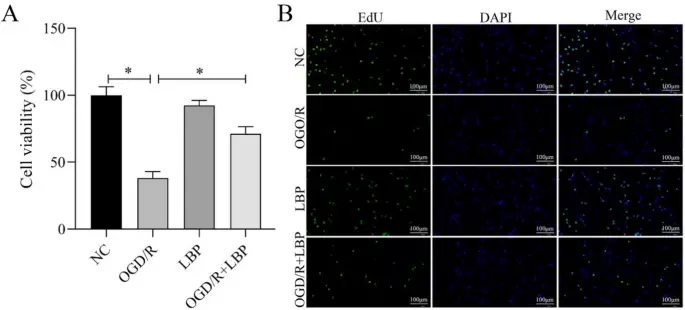
Ischemic stroke is a major neurological disorder characterized by the sudden interruption of blood flow to the brain, leading to neuronal injury and death. This study investigates the protective effects of lycium barbarum polysaccharides (LBP) on neurons subjected to ischemia-reperfusion injury and its regulatory role on ribosomal protein lateral stalk subunit P1 (RPLP1) expression. Using in vitro cell models, we demonstrated that LBP significantly inhibits apoptosis in ischemic-reperfused neurons.
Additionally, LBP treatment resulted in a notable upregulation of RPLP1 expression, indicating its potential to restore ribosomal function compromised during ischemic events. Further mechanistic studies revealed that the neuroprotective effects of LBP may be mediated through the Akt/mTOR signaling pathway, which plays a crucial role in cell survival and metabolism. These findings suggest that LBP not only enhances neuronal viability but also promotes recovery by modulating key cellular pathways involved in neuroprotection.
Our results highlight the therapeutic potential of LBP as a candidate for ischemic stroke management, providing insights into its mechanisms of action and paving the way for future research aimed at developing effective interventions for ischemic brain injury. Ischemic stroke is a leading cause of disability and mortality worldwide, resulting from the interruption of blood supply to the brain1. This interruption leads to neuronal death, neurological deficits, and a significant decline in the quality of life for affected individuals.
The pathological processes involved in ischemic stroke encompass oxidative stress, neuroinflammation, and excitotoxicity2,3,4, which collectively exacerbate neuronal injury during and after the ischemic event. These multifaceted mechanisms contribute to the severity of the injury and the subsequent neurological impairment, underscoring the urgent need for more effective therapeutic strategies in clinical settings. Current treatment options for ischemic stroke are limited, primarily revolving around thrombolytic therapy and supportive care5.
While these approaches can be beneficial if administered promptly, they are often constrained by time windows and patient eligibility. Consequently, there is a pressing demand for novel therapeutic agents that can not only protect neurons during the acute phase of ischemia but also promote recovery in the post-ischemic environment. Natural products have garnered attention in this regard, particularly those with a long history of traditional medicinal use6,7.
Lycium barbarum, commonly known as Chinese wolfberry or Goji Berry, has been utilized in traditional Chinese medicine for over two millennia. It is reputed for its various health benefits, including the enhancement of muscle and bone strength, liver protection, and overall vitality8,9. Recent studies have expanded the profile of Goji Berry, demonstrating its potential in reducing the adverse effects associated with radiotherapy and chemotherapy10.
Extract — continue reading at the source.


