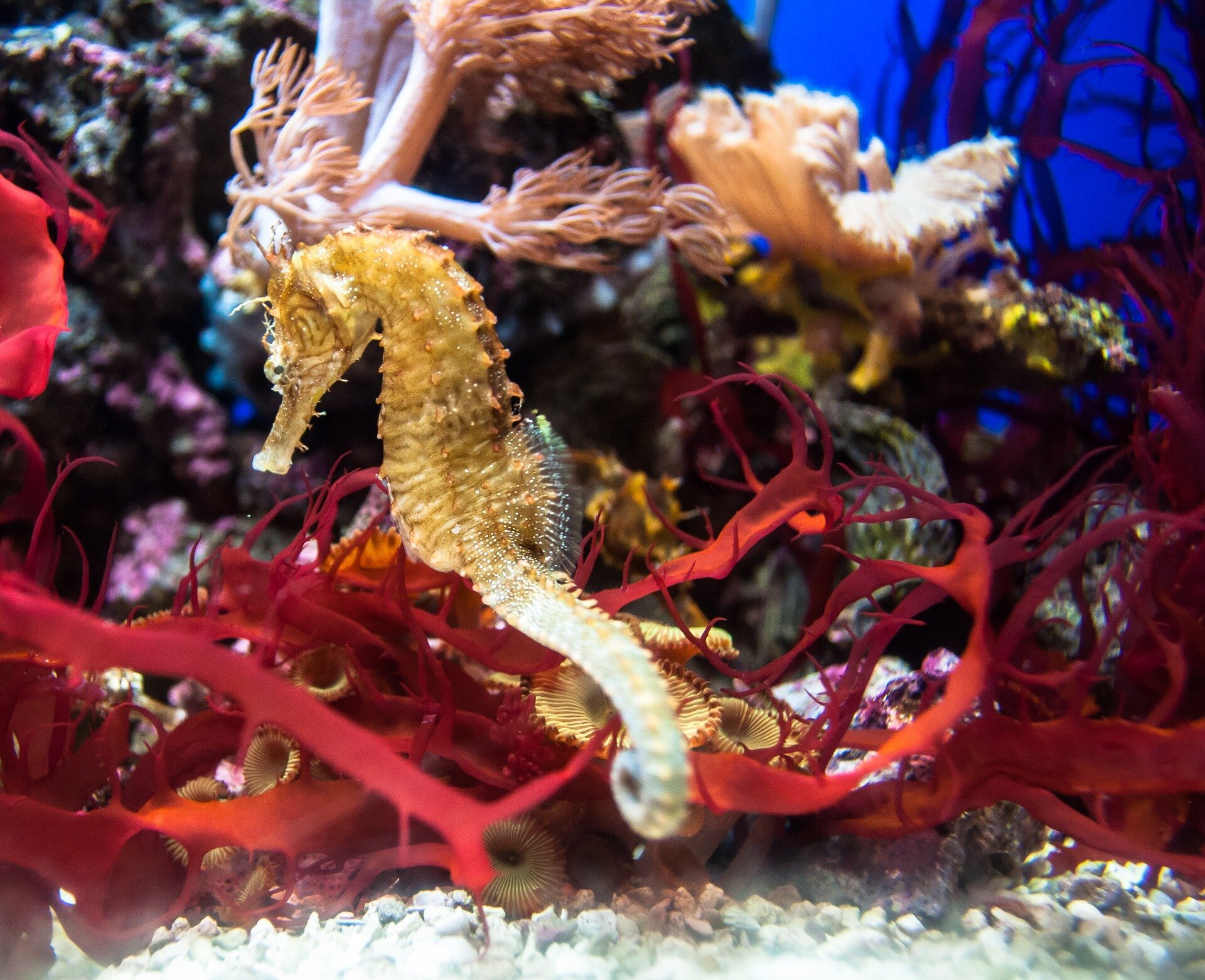
This article has been reviewed according to Science X's editorial process and policies. Editors have highlighted the following attributes while ensuring the content's credibility: Male seahorses, fishes that belong to the Syngnathidae family, show a distinctive reproductive strategy in which males carry developing embryos in a brood pouch. Their most distinctive feature is the brood pouch on the ventral side of the male fish, into which the female fish transfers her eggs.
The male seahorse carries and protects the developing embryos and is suggested to provide them with nutrients. As development progresses, metabolic waste produced by the developing embryos must be removed from the enclosed brood pouch. Ammonia is a major nitrogenous waste product in fish and is toxic at high concentrations, making its removal essential.
In vertebrates, ammonia is transported across cell membranes by rhesus (Rh) glycoproteins, which function as ammonia-transporting gas channels. Protein isoforms of Rh proteins have been identified in fishes as well. However, it remained unclear whether Rh proteins are expressed in seahorse brood pouches and could contribute to ammonia removal.
Addressing this question, a study led by Professor Mari Kawaguchi from the Department of Materials and Life Sciences, Faculty of Science and Technology, Sophia University, Japan, investigated the expression and localization of Rh proteins in the brood pouch and gills in seahorses. Kawaguchi and her colleagues, Hiroki Yamazaki and Professor Shigeki Yasumasu, who share the same affiliation, collaborated with Professor Junya Hiroi from the Department of Anatomy, St. Marianna University School of Medicine, Japan.
This study was published in Cell and Tissue Research. Sharing their motivation for the study, senior author Kawaguchi says, "Understanding how material is exchanged between father and embryos provides important knowledge for the evolution of reproductive systems and parental care and may contribute to conservation efforts and breeding programs for seahorses." The team started by examining the brood pouch of the pot-bellied seahorse Hippocampus abdominalis for expression and localization of Rh proteins, which are expected to function as ammonia transporters. Reverse transcription-polymerase chain reaction confirmed the expression of the RhAG, RhBG and RhCG2 genes in the pouch, while immunohistochemistry revealed the localization of the corresponding proteins.
In situ hybridization and immunohistochemistry revealed that RhBG and RhCG2 were localized in the inner epithelium that surrounds the placenta in the pouch, while RhAG was present in erythrocytes and the endothelium of the blood vessels within the pouch and the gill. RhBG was localized to the basolateral side of the double-layered inner epithelium, whereas RhCG2 was localized to the apical side of the outermost layer of the inner epithelium. Based on these findings, the authors propose that ammonia may be transported via Rh proteins from the brood pouch to the gills through the paternal bloodstream before being excreted into seawater.
Extract — continue reading at the source.