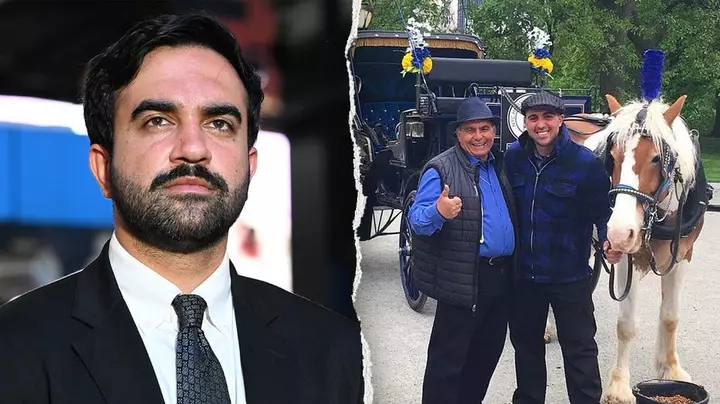
A century-old tradition is on the line in New York City, and horse carriage drivers are speaking out about who will ultimately pay the price if Mayor Zohran Mamdani succeeds in ending the iconic industry. Mamdani and City Council Speaker Julie Menin announced Tuesday that they had reached a deal to phase out horse-drawn carriages in the Big Apple, with a vote expected next week on a bill that would ban carriage operations beginning in June 2028. A longtime source of controversy, the horse-drawn carriages lined up at Central Park to take families and tourists for rides are at the center of a public safety debate after 18-year-old Romanch Mahajan was killed from a fall in June.
The bill was later renamed "Romanch’s Law." Animal rights activists have targeted the industry, accusing carriage drivers of mistreating horses and even heckling some on the streets over concerns about proper care, food and water. Viral videos of horses collapsing and escaping into traffic have prompted calls to terminate the industry for good. MAN KILLED AFTER HORSE-DRAWN CARRIAGE BOLTS AND FLIPS NEAR POPULAR NEW YORK CITY TOURIST DESTINATION But Fox News Digital spoke to leaders in the industry who pushed back on the criticisms and argued that the New York City tradition is being unfairly maligned, and that livelihoods will be destroyed thanks to Mamdani's efforts.
"You have pedicabs flying around, so why are they permitted to have a business?" Frank Riccobono, owner and manager of NYC Horse Carriage Rides, told Fox News Digital. "And now a 168-year-old tradition, attraction is being forced to surrender, which is very taboo. I want my investment to stay there for the next 20 years, 50 years, 100." Riccobono, who owns 12 horses and three carriages, said raising horses is like raising a child, and that "non-horse people" will never understand that bond.
"I had horses give birth in front of me," he said. "I've owned their mom and I have their baby and it's like taking a child away from me." The bill would not take the horses away from their owners. Owners could keep, sell or transfer them as long as they are not sent to slaughter, another carriage business or an "inhumane purposes," but Riccobono could no longer use his horses for carriage rides in the city.
He called the criticism "brainwashing," adding his horses receive "the most perfect lifestyle" and regularly see certified veterinarians. "That's what this bill shows," he said. "It shows they're trying to criminalize us because a horse is working." Riccobono said he will also lose a huge investment after purchasing a medallion for nearly $400,000.
Medallions are licenses that allow horse carriage drivers to legally operate in New York City. "I am going to take a very, very big loss here and there's no reimbursement in this bill," he said. MAMDANI, CITY COUNCIL MOVE TO END ICONIC NYC HORSE-DRAWN CARRIAGE INDUSTRY AS WORKERS FACE UNCERTAIN FUTURE The ban means much more than just losing a business, according to Riccobono, who said it threatens a family legacy with horses spanning generations.
Extract — continue reading at the source.