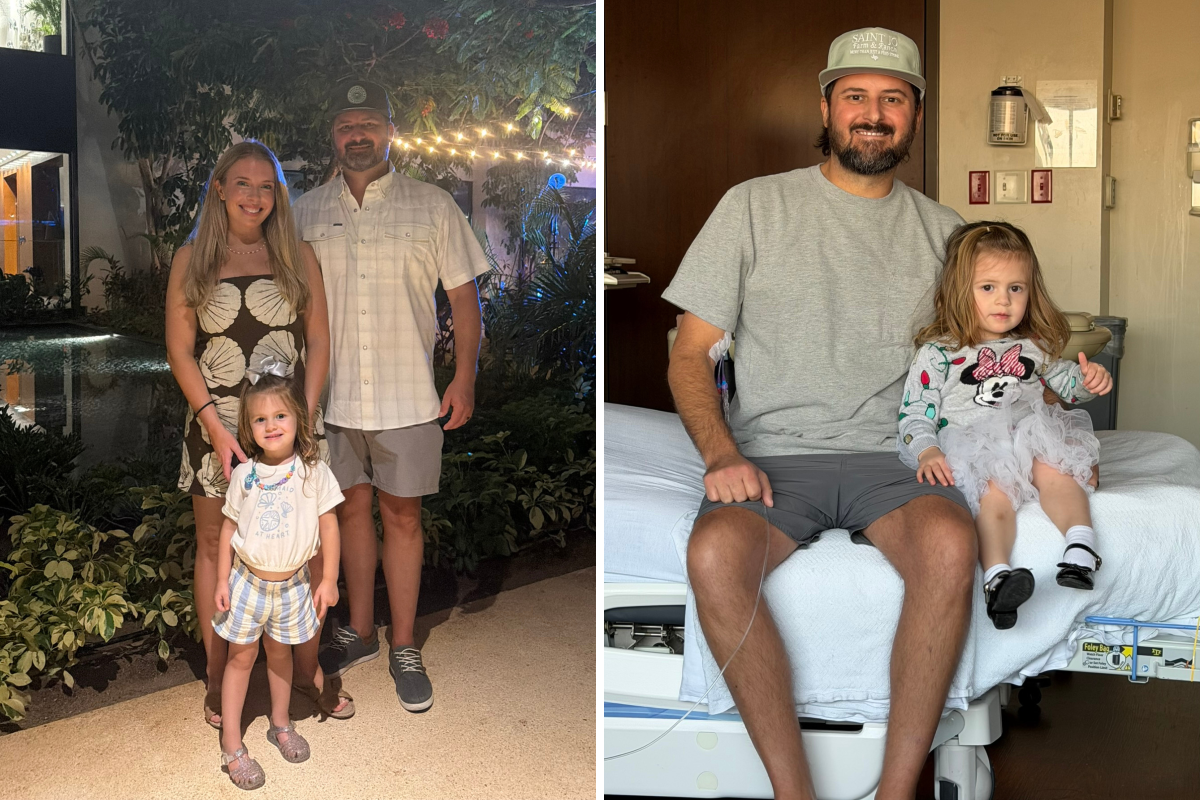
A millennial dad who tried to explain the subtle symptoms he experienced had no idea just how much his health was deteriorating, only for a blood test to reveal the horrifying truth. For several weeks, Reese Willard, 40, could not shake the mounting differences in his body. It started with fatigue, and despite his best efforts to go to bed earlier, no amount of sleep seemed to help.
Over time, Reese, who resides in Dallas, Texas with his wife Sarah Willard, began experiencing night sweats, petechia and rapid weight loss. Sarah, 39, told Newsweek that her husband was “quietly deteriorating for months,” but each symptom was “subtle enough” to explain away. When Reese initially showed his wife the cluster of red dots on his side, she pressed a glass to the skin to see if it blanched.
She took a photo and put the resultant image into ChatGPT which said it looked like petechia, caused by bleeding from broken capillaries. The couple was not overly concerned by that, however, when bruises appeared on Reese’s body six weeks later, that was the final straw. Although this time around, it was clear to Sarah that the situation was much worse.
Concerned, Sarah returned to the previous ChatGPT thread about her husband’s symptoms and added that he now had “giant bruises everywhere.” The response was that he needed to get checked out immediately. We are so thankful for that because his platelets ended up being 5,000 and he was at risk of catastrophic bleeding,” Sarah said. Reese went to the emergency room, but he was nonetheless optimistic that doctors would figure out the problem and send him home shortly after.
A complete blood count was taken and that was all they needed to know that something was “terribly wrong” with Reese’s health. He was instantly admitted and doctors conducted more tests to reach a diagnosis. The following morning, Reese was informed by an oncologist that 87 percent of his white blood cells were myeloblasts, a common indicator of leukemia.
A subsequent bone marrow biopsy was also required before Reese finally understood what was going on. Just a few weeks before his fortieth birthday and after completing a 27-mile hike, he was diagnosed with acute myeloid leukemia (AML). People diagnosed with AML often experience fatigue, fever, weight loss and night sweats, according to the American Cancer Society, along with other symptoms from low blood counts such as easy bruising, frequent infections, and shortness of breath.
Extract — continue reading at the source.