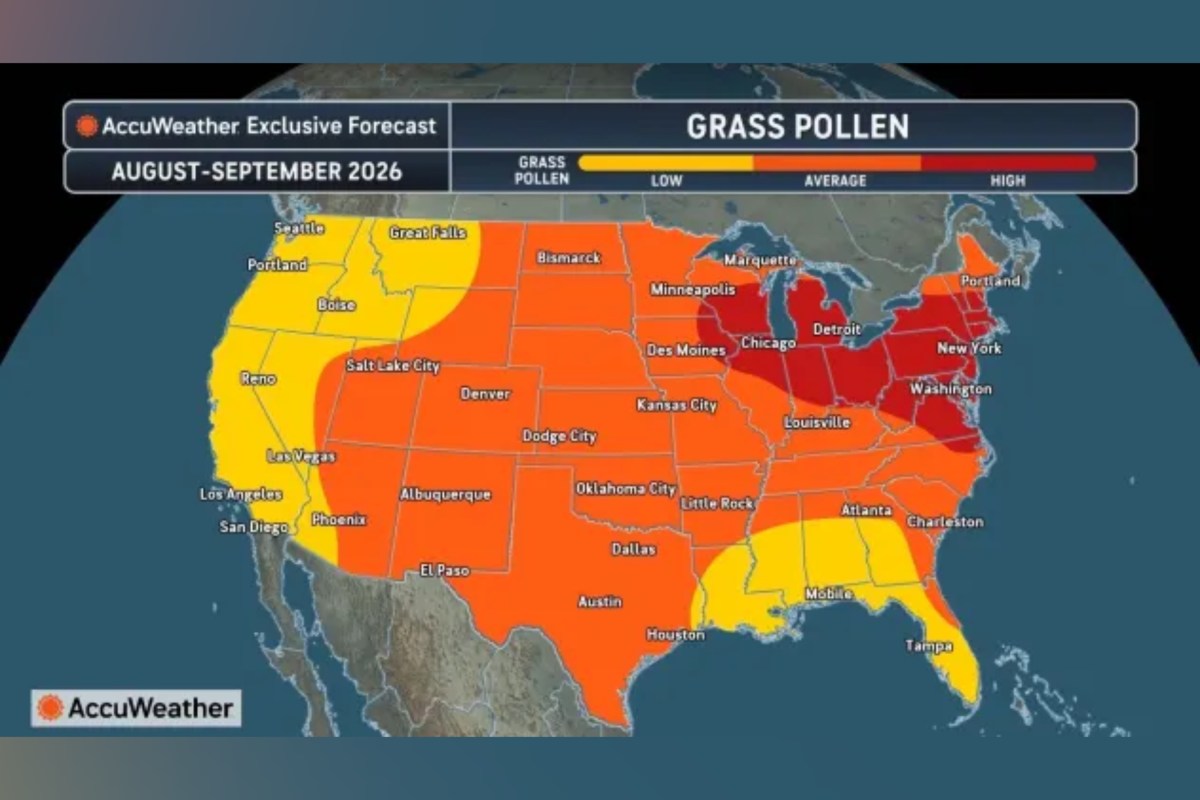
Millions of Americans could face elevated pollen levels this fall, with parts of the East, Midwest, Southeast and southern Rockies expected to experience some of the season’s most difficult allergy conditions. AccuWeather’s 2026 fall allergy forecast indicates that weed pollen will be the most widespread concern, while lingering grass pollen is expected to cause problems in several heavily populated parts of the country. Warm temperatures and wet weather are helping pollen levels increase, particularly across the eastern half of the U.S., AccuWeather reported.
The areas at greatest risk from grass pollen include parts of the mid-Atlantic and Midwest, as per AccuWeather’s forecast. Elevated levels are predicted around New York City, Philadelphia, Detroit and Chicago. AccuWeather Senior Meteorologist Alan Reppert said sufficient moisture and warm overnight temperatures could keep levels elevated, even as the worst part of the grass pollen season normally begins to ease during August and early September.
Conditions are expected to be less severe across much of the West, where drier weather should restrict grass growth outside irrigated areas. The Southeast may also experience lower-than-usual grass pollen due to dry weather, AccuWeather said. Weed pollen is expected to create a broader problem and could remain in the air into October, according to the outlet.
AccuWeather predicts some of the highest weed pollen concentrations across the Southeast and southern Rocky Mountain region. Cities highlighted as potential hotspots include Raleigh, Nashville, Atlanta, Little Rock, Denver, Salt Lake City and Albuquerque. Rainfall associated partly with El Niño is expected to encourage weed growth in some of these locations.
Although rainfall can temporarily remove pollen from the air, weeds may respond to the added moisture by growing and releasing more pollen several days later. Meanwhile, relatively dry weather across parts of the northern U.S. could suppress weed growth and keep the overall season below its historical average in some locations. AccuWeather cautioned that widespread warmth may still produce occasional sharp increases in pollen.
Pollen exposure can cause allergic rhinitis, commonly known as hay fever, with symptoms including sneezing, congestion and a runny nose. It can also cause red, watery or itchy eyes and may trigger attacks among people whose asthma is sensitive to pollen. The Centers for Disease Control and Prevention (CDC) says the amount and type of pollen in the air depend on both the season and geographic region.
Extract — continue reading at the source.