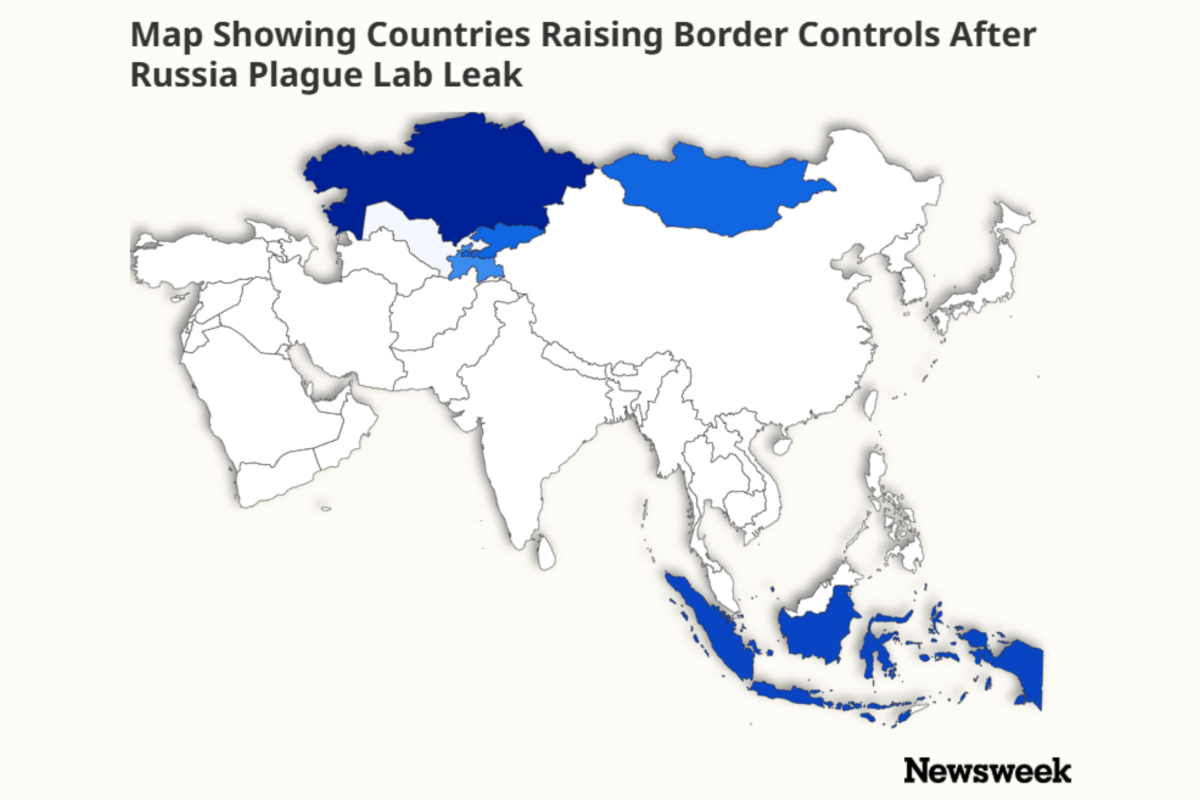
A number of nations in Asia have tightened their border health measures and disease surveillance after the death of a scientist at an anti-plague research institute in Siberia. Kazakhstan and Mongolia, which share long land borders with Russia, took action after Daria Shipilova's death triggered international concern and speculation about a possible pneumonic plague incident. The Central Asian nations of Tajikistan, Kyrgystan and Uzbekistan, plus Indonesia in southeast Asia, have taken similar measures.
These come amid lingering questions about the death of Shipilova, a 28-year-old laboratory technician at the Irkutsk Anti-Plague Research Institute in Siberia. Initial reports linked her death to suspected pneumonic plague, prompting quarantines, contact tracing and widespread anti-epidemic measures in Russia. While the World Health Organization (WHO) said on Tuesday that Russian authorities had informed it that "no case of plague has been recorded in Irkutsk," the exact cause of Shipilova's fatal pneumonia remains unknown, and the agency is still seeking information about the pathogen involved.
A WHO spokesperson told Newsweek on Tuesday that Russian authorities had told the organization that "the woman's illness first looked like a typical acute respiratory viral infection." Nearly 200 contacts were placed under medical observation and tested, with no dangerous infectious pathogens detected among them. The incident has nevertheless sparked concern because of the scale of the reported response. Biosecurity experts have questioned why hospitals were reportedly quarantined, contacts isolated, and senior health officials dispatched if the case was just a routine, treatable plague infection.
Pneumonic plague, historically called the Black Death, is the lung form of plague caused by the bacterium Yersinia pestis. It can spread between people through respiratory droplets—breathing, coughing, or sneezing—and can be fatal if left untreated, according to the WHO. WHO said its initial assessment found the risk to be "moderate to low" for Irkutsk, low for Russia overall and very low for the WHO European Region.
It hasn't publicly released a separate risk assessment for Asia. Despite the low risk warnings, a number of countries have introduced additional border controls and precautions in recent days. Officials have described the steps as preventive measures while monitoring developments in Russia, rather than responses to a confirmed plague outbreak.
Kazakhstan's Health Ministry said it has strengthened sanitary and quarantine controls at state border crossings and is monitoring the situation in Irkutsk. According to local news outlet infohub.kz, the ministry issued this statement: "Sanitary and quarantine control is being carried out at checkpoints across the state border. No individuals with elevated temperature, signs of illness, or suspected highly dangerous infections have been identified on any mode of transport." "According to preliminary assessment, the risk of the infection being imported into Kazakhstan remains low," it added.
Extract — continue reading at the source.